Louise Vale: “A Fragment: SACHED Grahamstown”
-
by

All the people I met and worked with – so many and so different – university lecturers and postmen, hawkers and nurses, the angry unruly young and the resigned proud old. With the clever strategic, dogged, persistent 30 and 40 year olds in between. All of our lives were unusual to each other – the genius of apartheid.
At times there was just too much pain.
Remembering 1
We always met in meetings, meetings, meetings. A time of intense political activity in which none of us could quite believe we were involved. I kept on wondering how I got here and felt aghast at how serious it all was. This really was about life and death, imprisonment, petrol bombs through bedroom windows, dead cats on doorknobs. Branding irons used as torture weapons, bullets through the rearview window, phone calls in the middle of the night, knocks on the door too. None of it was fun. There wasn’t much laughter except when drunk or stoned.
All the people I met and worked with – so many and so different – university lecturers and postmen, hawkers and nurses, the angry unruly young and the resigned proud old. With the clever strategic, dogged, persistent thirty and forty year olds in between. All of our lives were unusual to each other – the genius of apartheid.
At times there was just too much pain.
REMEMBERING 2
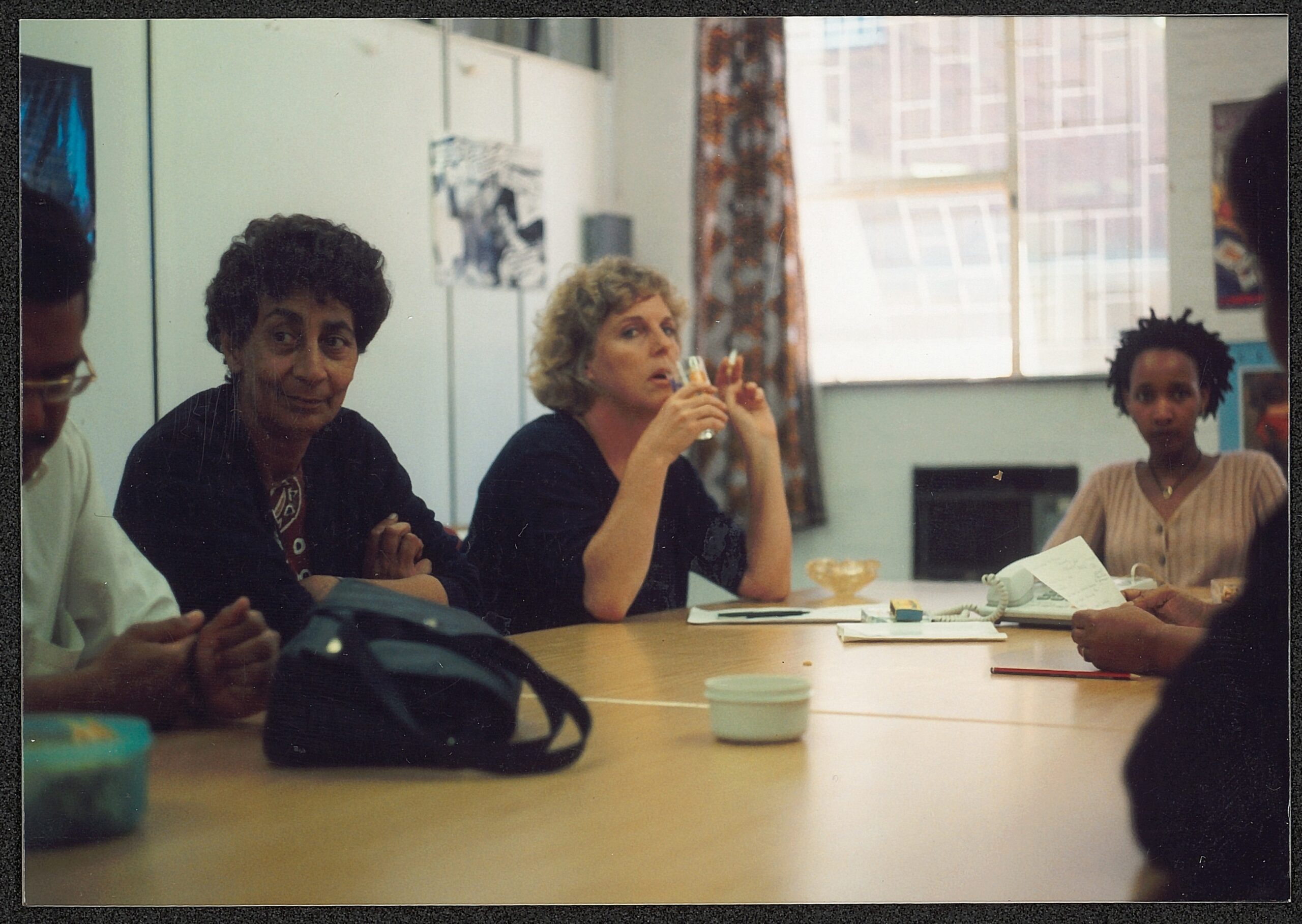
I worked in a non government, educational organisation called the SACHED Trust. The organisation had centres in 9 towns across the country. Our centre was located in Grahamstown.
Noma – Afrika was my secretary – the size of a house, clever, charming, generally efficient and extremely gregarious. She was making it, had a decent job and fair salary, could contribute to the family, had lots of friends and some status in the township.
Sipho, only 26, with his slight limp, lots of women and already two children to whom he was a very good father. He was a fierce administrator who demanded that deadlines be kept, minutes taken, recorded, distributed and filed. Money had to be accounted for, reports had to be written. Detention was one thing, but keeping the information flowing was another.
Lunga, the crooked librarian who was selling off the library books for his own profit.
There was also Priscilla, intense, deeply, caring, indefatigable. ” Drive one around the bend” Priscilla who thought a 5.00am ” state of the nation” phone call was totally acceptable under the circumstances.
David the son of an English Professor who had become a local institution. A very sharp tongue had David.
And strategic, persistent, determined, thoughtful Jonathan
We also met in so many meetings. Meetings with each other, meetings with learners, meetings with teachers, meetings with other NGO’s, meeting with funders and foreign diplomats. Meetings locally, meetings regionally, meetings nationally. God! There were so many meetings.
REMEMBERING 3
” Louise, its Priscilla,” called Noma – Afrika.
” Oh hell! Put her through. ” I sighed and threw down my pen. Our offices were next to each other and we always talked through the open doorway. Noma- Afrika laughed and my phone rang. I knew that the relative peace of my sunlit office was over for the day. My stomach fluttered as I leaned forward and picked up the receiver.
” Mrs Magopeni … old … shebeen queen … lives in Kenton …. sent message …. A meeting to discuss water ….one tap…….2500 people ….. police, teargas, rubber bullets, kicked in doors….. Grannies of 78 and children of 11……100 people arrested…..R100 bail ………. 70% unemployment. ….average wage R150 per month …… need R10,000……,” as usual Priscilla gave a wide range of detail, fast.
The Kenton I knew belonged to English – speaking South Africans. A summer place filled with children from private schools and their comfortably wealthy parents. Our family didn’t have the money, nor did we go to private schools – our parents taught in them, except for my dad who was in the navy, and so we had the right connections.
But behind the bushes behind the holiday homes, apparently, it was different.
I put down the phone, yelled at Noma – Afrika to come and listen, picked up the phone again and called Sarah Christie, the local Back Sash lawyer and law lecturer at Rhodes. The sun warmed my back and fell on Noma – Afrika’s gorgeously plump, soft, black hand. We watched each other as I spoke.
By lunchtime, Sarah and I were helter – skeltering down dust roads in her scratched, muddy – blue, half-of–it–not–working Ford Escort in a race to get the new Alexandria Court of Justice by 2.00pm. Sarah lent forward in her seat, hands clenched on the steering wheel. The small window on the passenger’s side was broken and heat and dust filtered in.
As we arrived, four yellow police vans came in fast, swaying from singing and stomping inside. Songs familiar from funerals – fighting soldier songs, laughing, threatening songs. The vans lurched to a halt and the heavy steel doors at the back were unlocked. Steel on steel in a high walled courtyard is a harsh noise. As the prisoners climbed out we saw a young woman seven months pregnant, a child with no shoes, an old man on crutches, the parents – and the swaggering young men and women. They stretched and spread themselves out, soaking up the sun.
We settled down to wait. I don’t remember much about our surroundings. I know it was hot and we were in the stark rural beauty of the Eastern Cape. Stillness, orange – red soil, green after the rains. In the yellow walled, open only to the sky courtyard, people milled and called and cried, laughed and shuffled and sat and sighed, and whispered angrily. Hundreds of people – many dressed in the bright colours of summer.
A big bulky man, the only other white there, wandered over and stood next to me.
” What are you doing here?”
I looked at him suspiciously. ” Finding out. What are you doing here?”
I gave him our names and explained that we were from the Black Sash and were here to help set up a bail fund. He looked at me briefly and wandered off. Sarah and I set about the business of getting names and case numbers. A long, painful, tedious task.
Two hours and many names and numbers later, the big bulky man walked up with a paper bag crumpled in his hand.
” I’ve got R 3000 here – from the cash register in the store – what do we do now? ”
We set up the bail fund. It turned out to be a much bigger exercise than intended. More towns held meetings, more people were arrested, more bail was needed.
After that, Graham Warren, the bulky man, was in regular contact with our offices. During the consumer boycott his was the only shop blacks would buy at in Kenton. He taught the junior secondary Afrikaans class. He stored our textbooks at the back of his shop.
REMEMBERING 4
The Kenton Cash Store stood on a windy exposed hump of a hill not a mile’s distance from the sea. The salty free smell and feel of it was all around. The Indian Ocean covered the horizon – greeny blue, wind ruffled white. The sun was uncertain. The sea was its overwhelming vast, powerful, uncontrollable self.
Noma-Afrika and I staggered through the front door carrying boxes of books and stationery. Sipho limped behind. Embarrassed, Graham took off his glasses and tried to hide the Bible he was reading. His wife, Helen, who was brown haired, freckled, plump and wore more make-up than one expected, was packing tins into shelves at the back of the shop. She turned to see who it was. The stink of charred wood and smoke caught us at the back of the throat.
“So, how’s it going?” Noma-Afrika panted.
“It smells like burning in here,” said Sipho looking around.
Helen howled and bent over holding herself, she turned and we saw angry tears. We put the boxes down as gently as we could.
“You shouldn’t come here. They shot the dog and set the store on fire. You shouldn’t come here. It’s you they don’t….It’s your….If they see you here. They will come again.”
They shot the dog, that enormous black lolloping beach bum of a dog.
She stared at the door. “We don’t know where Amos is.” She looked at us hopefully.
I saw her many times after that but I never saw her cry again.
Graham stopped fumbling around with his glasses and the slightly embarrassing Bible. Helen left and he told us what had happened as we packed the books away at the back of the store. Sipho sat at the counter taking notes.
Amos walked in – torn coat, stained white shirt, dusty khaki trousers, bruises starting to show on his nineteen year old face – and sat down. Sipho took the notes as Amos, leaning forward with his elbows on his knees and his brown felt hat shielding his face, told us how the police had bundled him into the back of a van, beat him up around the head and shoulders, driven eight miles out of town and dropped him off. He had walked back and was here now.
REMEMBERING 5
Amos recovered but, like many others, Graham and Helen didn’t.
We lost touch for a while. We had troubles of our own. I was imprisoned under the state of emergency laws for a relatively short 4 months and then released with restriction orders, Peter’s passport was seized, the car was stolen, shit was smeared inside the other one. Everyone seemed to be in prison or dying. It was utterly bewildering. Stumbling from funeral to meeting to prison and back.
Then one day Graham phoned. The security police had visited all his creditors and advised them to call in their debts as it was rumored that Graham was about to go bankrupt. They called the bank and told the bank manager to foreclose on Graham’s loan. Graham went bankrupt and the family moved in with Helen’s parents.
The next time I saw Graham he was delivering rolls and sausages to a hot dog stand. Then he got a job running the beach cafe at Port Alfred. The predominantly ” coloured” staff told him to leave as he was endangering their safety. He tried to become a traffic officer but the security police intervened.
Peter and I used to go and visit the family every now and then. We saw the slow disintegration of his marriage.
The last time we saw Graham Warren was when he came to say goodbye. He was on the road to Umtata where he was going to work as a travelling salesman of woman’s clothing. A tiny trailer attached to his battered red car, he parked outside our house on hot Saturday afternoon. He didn’t come in. We spoke for a bit, I don’t remember what we said. I only remember Graham starting the car, leaning out of the window, shouting goodbye and waving. And then the quiet hot Saturday afternoon cicada buzz again.
It was rather like that other South African love story of the same time. A man was shot by the police while committing a robbery in Port Elizabeth. His common law wife and two children lived in harsh poverty in Grahamstown. She tried to raise the money for a burial – she approached her neighbour, the many human rights, development, charity and educational organisations that littered the town, people in the street. She was unsuccessful.
One hot summer night she sent her two children to the corner stone. She poured paraffin over herself and lit a match. The neighbors say she walked around the yard on fire for several minutes, making no sound, and then crumpled to the dirt floor.
Quite a few of us remember Graham Warren. None of us know where he is.
REMEMBERING 6
Chris Mbekela was the leader of the Grahamstown Youth League. An excellent rheterotician, wise cracks delivered from the corner of his mouth in a deadpan face. A strategic thinker with a solid
practical knowledge of politics. About 5ft 10ins, pale honey skin, he usually wore a fawn shirt,
round – necked green and red jersey and brown trousers. A good – looking, amused face.
Chris was in and out of the SACHED offices. He usually came to see Jonathon, a SACHED staff
member and Chris’ equivalent in the “Coloured” part of town. But sometimes he came to see Priscilla or me, and we always exchanged jokes in the corridors. He helped a lot with everyone,
jollied us all along.
On an April night, at 11.00pm or thereabouts, Chris and his long term live – in girl friend, Nomboniso, were asleep in his single bed at home. A home – made petrol bomb crashed through the window and flames rose from the blanket, sheets, their skin. A room of fire. Screams and shouts from the bedroom. Searing pain, scrambling and rushing into the cold black night. Rolling and turning in the dark earthy road.
Headlights. Round the corner came the grumble of a clapped – out student car and Olivia jumped out.
” …….. in my car ……….. to the hospital, ” she screamed.
Chris walks with a limp now. Nomboniso died – she sustained 90 degree burns all over her body and there was no chance of recovery, ever.
Three months later, this was 1986 after all, Chris was detained and spent close to three years in St Alban’s prison under the state of emergency laws. In February he came out after the last 90 prisoners had gone on a hunger strike.