Sue Krige: “Wimpy and Other Bars”
-
by

I got used to security police raids. The offices provided my daughter with one of her earliest memories – a woolen capped Rasta called Nhlanganiso, who scooped her up at reception and took her to play on the typewriters while I signed up for the Struggle.
The thing I like most about Wimpy is the coffee. It’s not the real foamy, medium-strength, large, skinny latte coffee available next to my favourite bookshop. The latter gives me terrible indigestion. I associate it with a break from being ‘on the road’. The roads taken include the Ben Schoeman Demolition Derby to Pretoria and the relentlessly straight blacktop that is the N1 South to Bloemfontein and beyond.
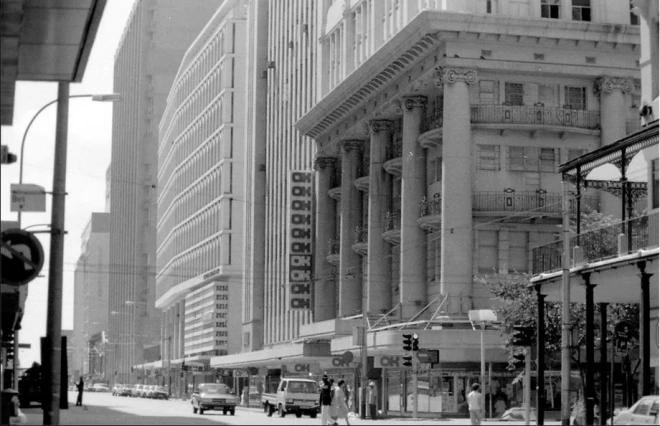
When I’m in the Joburg CBD, I wander past FNB’s Bank City, checking that a Wimpy near the Library Gardens is still functioning. Under the foundations of Bank City lie the ruins of a building which housed one of many NGOs active in the late 1970s and 80s. Here I had a part-time job writing history material and teaching kids who had dropped out of school in the aftershocks of June 16, 1976. I worked in a non-racial environment for the first time, rubbing shoulders or discussing nappy rash with future cabinet ministers, ambassadors, and corporate giants. I got used to security police raids. The offices provided my daughter with one of her earliest memories – a woolen capped Rasta called Nhlanganiso, who scooped her up at reception and took her to play on the typewriters while I signed up for the Struggle. On the last Friday of the month, we had a staff meeting followed by a huge lunch. Together we sang Nkosi Sikelel’ iAfrika, fists raised as a kind of grace. If we wanted to be together outside the building, we had to go to the Sunnyside Hotel, designated as an ‘international’ venue and therefore free of discrimination. It was an expensive and ambivalent outing, and not one we often chose.
In 1985, in the thick of the most repressive attempts to keep the apartheid system going, Wimpy’s management decided to open its doors to all races. It is hard to convey the extreme pleasure that came from being able to drink a cup of coffee together at a nearby Wimpy whenever we liked. It sounds sentimental and banal. Wimpy as a struggle site? Ironically, most people remember that the branches were targets for the ANC bombs in the late 1980s.
Wimpy franchises were originally called Wimpy Bars, and the first opened in Durban in 1967. The brand was introduced by British tea and coffee company, J Lyons, which had bought the rights from the founder of the Wimpy Bar in Chicago, Eddie Gold. Wimpy was part of our cash-strapped student days in edgy Hillbrow. A fading Wimpy sign glows in Johannes Kerkorrell’s haunting tribute to Hillbrow:
Die boemelaar raas by die Wimpy bar
En Fontana is oop tot laat in die aand…
[The hobo is noisy near the Wimpy bar
And Fontana is open until late at night]
Another place emerged as a sanctuary in the CBD. Jameson’s in Commissioner Street was everything Wimpy wasn’t. The menu in this seedy club-cum-bar was not coated in plastic and they didn’t serve coffee. ‘Alternative’, jazz and rock bands and artists such as Johannes Kerkorrell, the Aeroplanes James Phillips, Bright Blue, and Jonas Gwangwa performed in a venue with fewer amenities and more atmosphere than a dome or fortress lined with plush seats and carpets. By day or night, the colour of the audience was happily invisible in the threads of smoke and smudged light.
I’d like to see the Wimpy in Pritchard Street and the remains of Jameson’s declared as heritage sites. They eptiomise the heart of any culture – music, food and friendship.
SOURCES:
Aeroplanes photos: cover and sleeve notes of the Best of the Aeroplanes
Wimpy trademark: One Nation One Burger: The Wimpy Story as told to Sue de Groot by the management and franchisees of Wimpy