
Koni Benson and Asher Gamedze, “A short note reflecting on the process”
-
by

A few years ago we started a series of interviews/conversations with people who had been involved in struggles against colonial apartheid in the past, and who remained involved in various ways, since 1994. These interviews were set up as conversations about what happened ‘then’, what they were involved in, and how they came to be involved; as well as about the demobilization period (what we understand the ‘democratic transition’ to be); and about how and why they chose to remain involved. We were trying to get at the question of how ‘now’ grew out of and might be similar and different from ‘then.’ These conversations, that we called Living Histories, also included or were often started or centered on discussion on student organizing now and various responses to that.
At the time, we were also involved in developing educational materials, we were designing and running Know Your Continent (KYC), a popular education series on African history. Some of the materials we used in KYC were developed by a team lead by Neville Alexander in the 1980s while he was the Cape Town director of SACHED. We wanted to know more about the context of that work which had been developed for a number of different spaces – for high school students in and out of school, for activists, for teachers and community discussion sessions; we understood this work to be important, urgent and radical both then and now. So it was through these conversations with people involved in various ways then, as well as through research for KYC, and for a section of a UCT course on histories of race and education, we were exposed to many radical education initiatives and the important work of SACHED.
We also became aware of how big and wide SACHED was and the range of political orientations and approaches taken under its banner at different historical moments. By the 1980s, SACHED had 250 staff working in at least 9 cities and towns across South Africa. Not all, but many of these initiatives were committed to establishing participatory, non-discriminatory and non-authoritarian learning practices. It was interesting to learn about creative and flexible approaches to education which allowed them to respond to the ongoing crisis in education; with various people taking initiative and being given space, with relative autonomy and a minimum of bureaucracy, to use resources and to create projects and spaces of learning and building.
We were/are interested in where this orientation to education work is now and what tactics/strategies/approaches from then remain important for us today. In this line, it seems important to think about how SACHED worked across so-called formal and informal spaces – doing educational work in schools, colleges, universities, community organizations and trade unions – and took on various publication and arts initiatives to produce and make available and accessible alternative resources to state-authorized education.
Ultimately, we wanted to know both about the range of projects but also about the political debates, which in some ways have fallen off the map of our timeline. There were, in many ways, many SACHEDs. There was a reluctance on our part to attempt to learn or piece together and write a conventional history of SACHED (that has partly been done by EP Nonyongo whose 1998 piece we draw on heavily for ours). Instead, ours attempts to sketch out the changing context over time and the various initiatives involved in challenging and building anti-colonial cultures of resistance that can contribute towards a more radical imagination of education today.
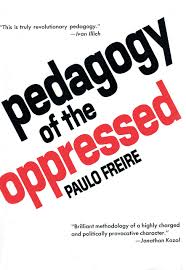
Conversations with people lead to reading articles and articles lead to speaking to people. We researched a time line, although we know that history is far from linear. And then it was time to narrow it all down, and select what to put in and what to leave out, this was difficult because there is soooooo much! But we wanted to make space for what Paulo Freire calls the creative practice of reading. So while much more can and will be said or written, the piece intentionally tries to make space for more to be written and heard by others and by us. In and between the details, the debates, and the what’s-nexts, many of the moments on this map are here as dots to spark conversations about the ongoing history of Radical Education Collectives. This can only happen in conversation with the future, and hence the ideas of writing from an imagined future and of leaving space- as an imaginative invitation, for people to fill in what we are missing from then, and where these stories land now.