Musing about my participation int he South African Committee for Higher Education (SACHED) from its birth in 1960 until my banning in May 1978
-
by

Introduction and Explanation
The history of the founding and early years of SACHED by Evie Nonyongo, xx and its annexures covers the growth and achievements of SACHED comprehensively and admirably. There is additional information, discussion and comment in other sources (some in my list of attachments).
I will try to offer subjective insights and explanations regarding some of the many developments, and also acknowledge the incredible contribution of so many, in no way all named here, whose energies contributed to the beginning and growth of what was has been recognised as “the most successful of the education related oppositional NG0’s during Apartheid” (Aitchisonxx).
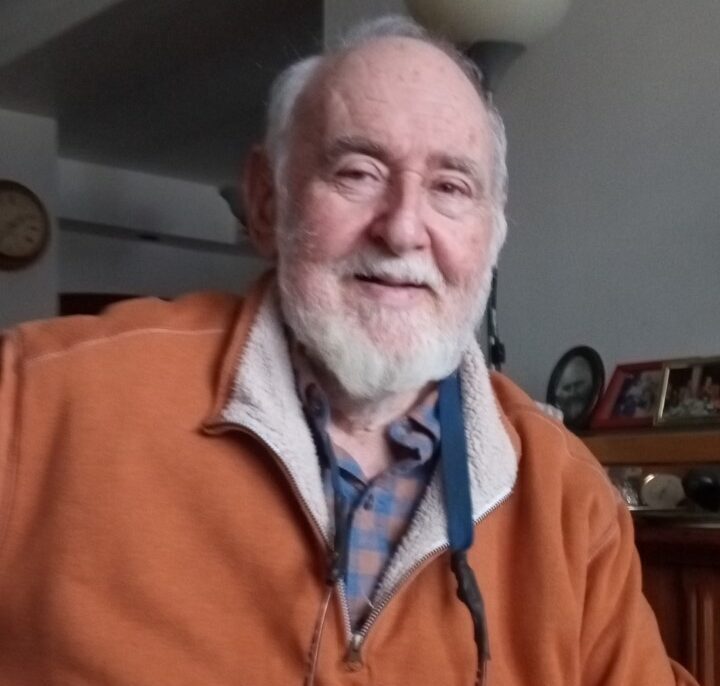
At 83 years old I am among the few still alive who was intimately part of this growth. My involvement in SACHED came about as follows:
- 1962-1964 – I was NUSAS Regional Secretary and Vice President for International Relations, with SACHED as part of my portfolio responsibilities;
- While teaching I was a member of the SACHED Jhb Committeee. Part of my responsibility was to assist the Committee to set up and find funding for Turret College;
- 1971- Turret College co-Director with Anne Welsh;
- SACHED TRUST: Trustee and Co- Director with Theo Derkx, also a Trustee. My position was terminated by being “banned” (along with Clive Nettleton) on 7 May 1978.
The stimuli for the creation of SACHED were several. Protest against the enactment of the Extension of University Education Act was the prime motivator. Some saw SACHED as an alternative to meet the needs of already-registered students and others coming who would be denied entrance place in the “Open Universities”, and be forced into ethnic-based institutions. Others saw it as a possible avenue to start an education programme creating a skilled cadre to develop leadership in a future non-racial society. A further view was that it could create an opportunity to promote a revolutionary group.
These “streams” were recounted to me by Anne Welsh (see later- “Mother of SACHED”) when I spent time with her in her last days. I checked this with two former SRC presidents who had been part of the discussions prior to setting up the organisation. They confirmed that there had been these streams, but the common issue was strong enough to bring them together and the plan to fruition.
I highlight this point because the presence of these three streams continued and featured in all the diverse programmes that grew from the original SACHED project. However, even when division was strong to the point of threatening disruption, the broad thrust of the SACHED project was exciting and compelling, growing and becoming stronger so that people found their own comfortable place to work within the programmes without undermining the organisation.
In a relatively short period after establishing SACHED’s bursary/support project and setting up SACHED TRUST to purchase Britzius College, further opportunities were identified in fulfillment of the Trust’s goals.
Turret College was set up to develop alternative delivery systems for open education, now at school level – mainly based on the growth of more effective use of print and community- based learner support systems which could make more effective education programmes available to a larger community.
I will refer later to SACHED programmes which not only improved the situation for “Correspondence College” students but also to communities spread around the country. Nowadays these systems fall under the rubric of “Distance Learning” and “Open Education”.
A further aspect that allowed the organisation to weather ideological differences and money challenges, was the relationship of management to its board, whose members from the outset comprised what was, at the time, an unusually diverse range,in their experience, skills and beliefs, political affiliations (and race!). The management was unique, having two directors of equal status who had “not many overlapping skills” who trusted and encouraged each in their respective spheres (a good marriage).
The clear demarcation and equilibrium of authority between board and management is often paid lip service, seldom effected. Now, in Canada, I have had some insight into the local approach to the management of NGO’s. Canadian Boards are educated to a firm “hands off management approach.” Boards only make policy and review/approve financial reports, and assist in crises. This approach requires both narrative and financial reporting of a high calibre and honesty. This existed from the outset in SACHED and there was commitment, skills and systems to ensure this.
The clear division of responsibility between financial management/administration and the operation/methodology/content of programmes was firmly settled in SACHED Trust (after its near bankruptcy/closure in early days – see later). There was no “NGO” approach to finance. Financial administration and management was firmly secure and openly reported on. This developed a strong relationship of trust between the Board and management, and also confidence in the relationship with all (not highly paid) staff. It raised and sustained SACHED’S credibility and reputation with donors.
Finally, the original creators of SACHED laid a foundation of respect and emotional intelligence in interaction amongst staff and with students as well as in the implementation and delivery of programmes. Programmes and materials were conceptualised and devised to support self-confidence, esteem and independence so that students and programmes would produce skilled and competent graduands.