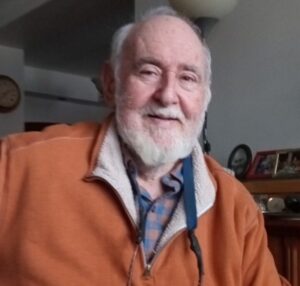

JUDY FAVISH, LACOM
-
by

I believe that certain key principles which underpinned the work of Lacom continue to be relevant today, such as the importance of integrating theory and practice, democratic decision making, learner centred and participative pedagogy and enriching knowledge generation through drawing on different epistemologies and knowledges. Finally, the importance of using education to build strong democratic organisations which can effectively advance the struggle to eliminate poverty and challenge the pervasive inequality which continues to characterise SA remains pertinent.
- what drew you to work with Lacom/Sached?
In 1984 I received a British Council Scholarship to do a Master’s in English Second Language Teaching. I enrolled at Warwick University for the Masters. After one term I changed to a 100% research-based Masters. The topic of my research was “The Possible Aims and Objectives for, and the Organisation of, an Adult Basic Education Programme in South Africa”. The primary purpose of my research was to examine the role of ABE in helping to equip people to transform an oppressive and exploitative society and build a democratic one.
For twelve years before going to England I was involved in various adult education activities in South Africa including 4 years working with non-governmental adult literacy organisations. For 6 years I was involved in trade union education programmes organised initially by the Western Province Workers’ Advice Bureau and later by the Western Province General Workers Union.
The research involved analysing and critically reflecting on my prior practical experiences in the field of adult education which were illustrative of theoretical perspectives on empowering adult education.
I returned to South Africa at the end of 1986 during the state of emergency. My research had demonstrated that that the contribution of educational projects to the process of facilitating radical change in society can be enhanced if the methodologies of popular education are utilised in organising and implementing empowering education programmes. My aim on my return was to identify an educational organisation committed to the principles of empowering adult education that would be keen to explore discussions with representatives in the union movement about setting up a democratically controlled experimental second chance to learn project which would be shaped by a democratically elected committee and organised around a set of key principles such as relating the educational material directly to the everyday life experiences and concerns of the participants in the educational project and enabling working class people to ‘draw on the stock of traditional knowledge’ to help build an understanding of problems and issues affecting them.
I decided to approach the Director of Sached, John Samuel to discuss the possibility of joining Lacom, to explore the feasibility of launching an Adult Basic Education Programme in conjunction with the union movement. I was attracted to Lacom because of its links with unions affiliated to Cosatu, and the Project’s commitment to strengthening the labour movement through popular education.
2) what was your particular project/involvement in Lacom?
As stated above I joined Lacom to pursue discussions about launching an adult basic education with Cosatu affiliated unions. However, through discussions it became clear that the main educational focus of the unions at that stage was on organising programmes to help build strong, democratic unions. So, I and others in Lacom were drawn in by several union educators to assist with workshops and the production of learning materials related to building organisational skills and the political economy of South Africa. We did, though, run awareness programmes about the importance of promoting literacy amongst union members and exploring ideas on how literacy education can be incorporated into worker education. For example, on international literacy day in 2000 Cosatu produced a poster which was widely distributed based on a poem by Bertolt Brecht on “Praise of Learning”. I also worked with colleagues from several NGOs on a book “Never to old to Learn”, written in accessible English, to encourage leaders to initiate literacy programmes in work places.
From 1989 the focus of my work in Lacom changed. I was invited by the Numsa Education Officer, Adrienne Bird, to assist her with facilitating a participative research project on education and training. The aim was to provide a vehicle for workers to help shape future education and training policies in a democratic South Africa. About 20 workers were elected to participate in a Training Research Project which was divided into different phases. The programme was shaped by the participants and included inputs from researchers and practitioners in the education and training field, visits to education and training institutions, research conducted by the participants in the programme, tasks for the participants to carry out in order to solicit the ideas of other workers on the topics being discussed, international visits and a 3-day workshop in Zimbabwe organised by the ILO on comparative approaches to vocational training. The project culminated in the development of principles for a future education and training system, which were ultimately approved at a Numsa Congress. Subsequently Numsa drew up a proposal for COSATU to organise a similar project. The proposal was accepted by the office bearers and Cosatu launched what was called a participatory research project involving two groups of workers – one focus on training and the second focused on adult basic education.
Cosatu requested Sached to second me to Cosatu to coordinate the adult basic education project. The secondment lasted from March 1991 – June 1993. The project was shaped and monitored by members of the Cosatu National Education Committee. Representatives from other mass based organisations such as the ANC Youth League, the ANC Women’s League, an unemployed workers organisation and a literacy NGO were invited to participate in the ABE programme. The programme included inputs from researchers and practitioners in the education and training field, visits to education and training institutions, research conducted by the participants in the programme, tasks for the participants to carry out in their workplaces and communities in order to solicit the ideas of other workers on the topics being discussed, and international visits. The project culminated in a set of set of guiding principles for adult basic education that were approved by a Cosatu Congress. Whilst working at Cosatu I was also asked to assist affiliates to set up ABE programmes in workplaces. I developed a manual to assist workers in their efforts to set up ABE programmes and ran workshops for worker leaders. Several unions negotiated the establishment of adult basic education programmes using the manual and the Cosatu principles as the basis for their demands.
3) what do you see as the major highlights, achievements and strengths of the work you did when in Lacom?
For me the highlight was definitely the organisation of the participatory research projects in Numsa and then subsequently in Cosatu. The projects demonstrated the benefits of a participatory approach to policy development. The programmes were shaped around the experiences and concerns of workers and drew on academic and participative research and comparative experiences to enable critical reflection on current provision and the generation of ideas for future policies which workers believed would advance their interests and provide knowledge and skills needed for a new approach to education and training.
Many of the ideas from the project were integrated into the ANC’s proposals for future education and training policies, known as the ANC’s Yellow Book, the National Training Strategy, approved in April 1994 and subsequently the National Skills Development and Human Resource Development strategies.
4) what were the key debates, issues of contestation and challenges in the work you did?
There were very big debates between the ABE and the training groups in the Cosatu project. The debates largely revolved around different approaches to thinking about knowledge and the purposes of education and training.
The training group was very focused on individual mobility and career path planning within a market paradigm.
In contrast, the adult basic education group was very influenced by radical pedagogy defined by Giroux as “centering around a critical analysis of the subjective and objective forces of domination, and at the same time revealing the transformative potential of alternative modes of discourse and social relations rooted in emancipatory interests (Giroux 1983). It was also recognised that an empowering approach needed to redress inequalities associated with differences in levels of general educational backgrounds.
Hence the proposals from the adult basic education group emphasised the importance of providing a general basic education to enable people to develop their full potential and a greater understanding of the underlying basis of the social relations in society and equipping them to play a more active role in transforming their situation. The training group was focused on core and fundamental skills and knowledge to enable career progression. Many members in the Training Project were opposed specifying elements of a general and empowering basic education in the proposals and emphasising the importance of linking adult basic education programmes with community mobilisation around changing the conditions under which most black people lived and worked. The same debates continued in the processes facilitated by the ANC Education Desk and the Centre for Education Policy Development where I worked from July 1993 to May 1995.
Because of the need to embed empowering ABET programmes in community and/or other mass based organisation, the ANC Education Desk pushed for the organisation of a conference to reach consensus on future policy principles for ABE and to establish a Council to maintain the popular momentum around ABE. At the same time people who had been involved in the training side of the Cosatu Project moved into government to promote the approach to training which had been adopted by Cosatu and actively embraced by several of the unions. The struggles around different approaches to education and training continued after 1994 as manifested in the totally different approaches to the design of the NQF between the Departments of Education and Labour, and many organisations in the NGO sector around adult education.
5) how do you see what was achieved in Lacom/Sached as having impacted or shaped
– your own personal career and contributions to social justice efforts in SA
– social justice in educational contexts and with respect to curricula and pedagogical practices more broadly
My involvement in policy work in the labour movement had a fundamental impact on my own personal career as all my jobs afterwards revolved around education policy and planning. I also continued to play a role in national education policy development largely through my involvement in in a range of structures and activities of the Council on Higher Education and from time to time through work with the Department of Higher Education and Training.
I have used a social justice lens to inform my approach and engagements in policy work. The CHE policy work was informed by a set of principles intended to advance national goals of transformation, redress and equity and the accountability of institutions to promote national goals. In my work at UCT I focused on building a community of practice in the area of social responsiveness/community engagement and lifelong learning and opening up spaces for UCT staff and students to engage through research and teaching in participative and respectful ways with multiple constituencies to address the needs of our society, particularly the needs of the most marginalised sections of our society. We challenged dominant notions of scholarship and the recognition thereof. I published several articles on engaged scholarship in higher education, helped to support two institution wide strategic initiatives – one on schooling and one on poverty and inequality. We also became involved in the development of policies to advance student equity in access and success and access for adult learners such as a lifelong learning policy and an RPL policy
6) what contributions did this work make to contemporary SA and current educational challenges?
– in what ways does the work live on, resonate with and offer valuable insight for current challenges for social justice?
– In what ways does the thinking and praxis we engaged in then have any relevance for today’s local and global challenges?
At the time of the democratic election the discussions around ABE and Training were heated and polarised. The unifying element was a commitment to an integrated approach to education and training. However, after democracy this idea and/or goal was reduced to a technical exercise around setting standards for levels within adult education and new programmes in the training system, such as learnerships. The popular momentum that had been built up around embedding adult education programmes in community organisations and linking them to community mobilisation around struggles for changing the living and working conditions of ordinary people was dropped and the formal approach to adult education as associated with the night schools under apartheid continued to be the dominant form of adult education. In a nutshell the neo-liberal Agenda triumphed over popular education for social change.
As a result of fees must fall and associated calls for the recognition of indigenous knowledge and decolonisation of higher education curricula, I think that the flame of popular education has been re-ignited amongst young activists with some youth activist groupings again producing reading materials related to building a conceptual understanding of key social issues and discussing these in civil society formations as we used to do in Lacom.
I believe that certain key principles which underpinned the work of Lacom continue to be relevant today, such as the importance of integrating theory and practice, democratic decision making, learner centred and participative pedagogy and enriching knowledge generation through drawing on different epistemologies and knowledges. Finally the importance of using education to build strong democratic organisations which can effectively advance the struggle to eliminate poverty and challenge the pervasive inequality which continues to characterise SA remains pertinent.