Carohn Cornell: Recalling SACHED Jo’burg in the 70s
-
by

Overview of working at SACHED
I worked for SACHED Jo’burg and Cape Town from 1973 to 1982, from age 27 to 37. Full-time in ’74-5, part time for the other years. Being at SACHED was an intense and unforgettable experience – very important in my life and overwhelmingly positive. Colleagues and students and events are vivid in my memory though the sequence/chronology may sometimes be a bit shaky – apologies for where I’ve got it wrong.
In 1973, when I was doing the Wits Higher Education Diploma, I was hired very part-time as an English course writer for Turret/SACHED. Over the next couple of years, my full-time job as an English course writer sprawled in different directions. Tutoring was familiar ground but I had to learn on the job to write and edit learning materials and I ended up training tutors/facilitators, course writers, and editors. Editing some ‘people’s education’ materials on African history and other topics for ‘Weekend World’ and ‘Learning Post’ was a highlight though always rushed to meet deadlines.
After I moved back to Cape Town in ‘77, I carried on working at SACHED, I think as a volunteer? For several years a small team of us developed and facilitated courses to give students a foundation in critical thinking as they began university study. Most were enrolled as correspondence students with the University of South Africa. I tutored English for UNISA groups and for a small A-level class; worked on alternative teaching materials with a small group of fellow-teachers from Cape Flats schools; and in ’77 and ’78 was invited back to work with the English course writers in Jo’burg for a few weeks at a time.
The back story
I came home to SA in ’73 after living and breathing in the UK and the USA for two and a half years. I was 27, with five years’ experience in night schools and as a classroom teacher of English to students for whom English was a second or third language (at Inanda Seminary, a girls’ school in KZN with a strong academic and political tradition; and two adult night schools, at the time illegal, one in the basement of the Catholic church next door to Wits), plus a year or two at a rowdy boys’ comprehensive in London where most of the boys couldn’t wait to leave at 15, in contrast to the Inanda girls who valued education as ‘the key’.
When I came back to South Africa I looked for a space for ‘education for liberation’, not education for individual upward mobility. SACHED was the closest I could find. To quote from the Education dissertation I wrote years later, ‘What we were doing [at SACHED] was an attempt, with others, to make a space for liberatory education within the oppressive system of Bantu Education but outside the schools.’[i]
People in and out of the Jo’burg office
Above all, I remember the people at SACHED Jo’burg – in their offices with the doors usually open, talking in the corridor or the lift and over coffee or at lunchtime. I remember regular R&D/Research and Development meetings but there must have been other meetings. Dave Adler and Theo Derkx, Dutch Dominican – both of them friendly, approachable if not always comprehensible – were I think directors/the directors, pioneers certainly.
Angela Norman was already there as an English course writer and we worked together. We’d got to know each other through mutual friends in the national Catholic student organisation and later, when she was teaching at Mariannhill and I was teaching at Inanda Seminary north of KwaMashu. Angela was interested in applied linguistics, I was interested in interactive drama-in-education. She was brilliant, highly-strung, talkative, generous with time and ideas, and she could be exhausting. (We met up again around ‘82 in Zimbabwe at a rural Catholic school where she was living and teaching at the height of the repression in Matabeleland. Sometime before ’94 we met again in London, where she seemed to be involved in underground political work.)
Paud Murphy, maths course writer, had a strong interest in materials development especially for distance learning – he was ex-Cork and Dublin, ex-Zambia, later director of Lesotho and World Bank education projects. David Perlman came in for a short time to write a lively English grammar workbook. Evie Nonyongo handled student and tutor queries, with Arthur sometimes dropping in to accompany her home. Later, Snooks Desmond was at reception – she was married to Cosmas Desmond who, as a Franciscan priest, had alerted the world to the terrible forced removals to the dumping grounds of Dimbaza and elsewhere. Ma Orkin – Dave’s mother-in-law – came in to do the accounts, the only white-haired person around. Mrs Flucker, greying, had custody of workbooks and materials. Denise (surname?) and sometimes her daughter handled medical aid. For a while Rita Preiss helped with admin. (Rita is now 93, living in Toronto, and she recently wrote to say what an interesting and welcoming place SACHED was to work, kaftans and all.)
The women in the typists’ pool, Maud (Mavuso?) and others, did heroic work. It was many years before personal computers and we’d type on our elderly typewriters, write corrections and hand over terribly messy text to be impeccably typed. Joe and Felix Setloboko, brothers, ran the printing machines, their wives came in to do the collating and stapling, and a young man whose name I also forget worked the photocopier and did errands. I remember his Florsheim shoes, beautifully polished, and his Pringle jersey. Artist Thami Mnyele was next door to the printers, at his drawing board, doing illustrations and the tedious layout for workbooks. Dawn Butler came to work on business/accounting materials. Robin Lee came from Wits for a time to be director of the Bophuthatswana Teacher Upgrading Project.
Klaas Mashishi, who had spent years on Robben Island, joined as an English writer, and we met his wife Letta Mashishi who had been a nurse and then qualified as a teacher and became a school principal by the time Klaas came home, his eyes damaged by years of work in the lime quarry. I think both Klaas and Letta were doing English Honours. (In 2019 I reconnected with them via one of their sons who is a Wits academic, and discovered that Klaas was about to publish his second novel though still plagued by eye problems.)
On return visits to Jo’burg in the late 70s it was interesting to meet other staff members. Jenny Glennie, busy I think with project planning and distance education. Fanyana Mazibuko, science teacher from Soweto. English course writers Gail Cretchley and Jenny Stacey who brought out Read Well and Write Well, and Lucia Thesen. Jill Schmidt, experienced Maths teacher, busy with Maths materials. John Samuel, a South African who had been a teacher in Zambia for years, who came I think as the/a new Director. We’d met in Zambia in late ‘76 when I visited a mutual friend, Fr Cas Paulsen a Mariannhill priest from Detroit who had been kicked out of South Africa as a ‘political priest’.
It was clear, though never spelt out, that SACHED was a space where people might find work if, for political reasons, they struggled to get jobs elsewhere. Zeph Mothopeng, the most genial of men, ex-teacher, PAC leader, banned person and later Robben Island prisoner, would breeze in with his briefcase to report on his study centre – was he a study centre administrator? I think Klaas had not been allowed to continue teaching and was working as a bus conductor before he came to SACHED. Was Fanyana, Soweto teacher and maybe principal, now banned from teaching? Sheila Weinberg did occasional work in the office with her baby on her back – was she banned like her father, struggle photographer Eli Weinberg? There were others in the category whom I did not know, or whose names I don’t remember, including two of the women typists. I’m not sure when Dave Adler was served with a five-year banning order and there may have been others whom I did not know/know of who were banned and/or detained. On a return visit to Jo’burg I heard about but never met staff member Lybon Mabasa of AZAPO who was in detention at the time.
**
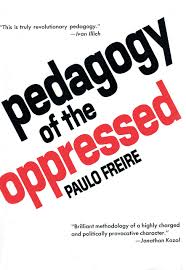
There were always interesting conversations in the office, often about the work we were doing and the contexts in which it would be used, but about other topics too. What did it mean that Frelimo commanders wore European style suits for the victory parade into Maputo? How to apply Freire’s ‘Pedagogy of the Oppressed’, banned at the time, in adult literacy classes. Thami Mnyele’s precious collection of township music on those very small records. How to cope with petrol restrictions. Where to shop in Diagonal Street. I remember being told off by Joe when I showed him the two shirts I’d bought as a Christmas present for my partner, Mike McLean. I was pleased with them but he scolded me about the quality: ‘better to buy one really good quality shirt’. Later when I came back to Jo’burg for short spells I remember long discussions with Klaas over supper in my sister’s Yeoville flat, about James Joyce, and on another occasion with John Samuel about Zambia and his return to South Africa.
My initial brief
I could go on about the (hardworking friendly) people at SACHED, some of whom are friends to this day, but let me write about the work as well.
My initial brief from Dave Adler was: ‘Write a matric workbook on ‘A Man for All Seasons’ for someone in internal exile in somewhere remote like Witzieshoek, under a banning order, with no dictionary, no library, no study partner, probably nobody at all to talk to’. In 2022 it’s difficult to imagine the situation fifty years ago: no internet, no cell phones, no video calls, no Zoom, no TV, no radio, only printed workbooks and maybe occasional correspondence with the course writer/tutor – but there was a postal service in those days, censored of course. As a result my first course book was terribly big and bulky – in a good cause but not a good model!
Developing a model with others: Stages along the way
Crowded Race Relations winter schools for matrics
In the midyear school holidays 73-’75, I was happy to be roped into Race Relations winter schools for hundreds of matric students in the Catholic Cathedral Hall – one time it was 600, another time about 1000. I think the invitation came via Jonathan Paton, Wits English lecturer, whom I’d met through the Higher Education Diploma (HDE) course that I was doing. At the winter school we offered a series of four or five long English sessions, ‘comprehension and essay writing’. The sessions were based on materials I’d written for pair work, and then the foursome at each table would join forces for a discussion. To pace things I had a cake tin to bash at intervals with a wooden spoon, and five or six facilitators circulated, all Soweto teachers with links to SACHED. It felt as though the model worked, even in a huge group, because the students were so keen, in fact desperate for something beyond Bantu Education.
On the question of models: I was convinced way back then and remain convinced that if you want to develop materials for a specific audience you need to be working with similar students at least part of the time. Winter school and night school were valuable opportunities to learn about students and to try out materials and methods.
St Anthony’s Night School, Reiger Park, Boksburg, East Rand
At St Anthony’s, Reiger Park, where Dominican nuns offered literacy classes by day, we had matric English night school classes of up to 200 – tired adults on the way home from work, miners, nurses, domestic workers, clerks, construction workers, gardeners, jobseekers. Once a week for 2 hours, I think. Angela handled the English language classes, I wrote materials for pairs and small groups on the books prescribed for matric – including Shakepeare’s ‘As You Like It’! As in the winterschools, the aim was to get people talking to a partner and/or in small groups of four – to help them stay awake and focused after long hours of work. I think we had a recording of the play, I hope so, but no other resources apart from the students and printed worksheets every week. Unimaginable now.
The preparation was often rushed as the night school was an after hours addition to our usual workload. I remember with gratitude that Joe never complained about the extra printing jobs and would sometimes put aside other work to help us meet our deadline. He never explained, that wasn’t his style, but it was clear that he understood and sympathised with the night school situation and was quietly supportive of what we were trying to do.
I think it was Angela who made the connection with St Anthony’s. At first she gave me a lift there after work and after class ended about 9pm she’d drop me at Boksburg Station. It was scary catching the empty train back to Jo’burg station where Mike would fetch me, and a relief when he volunteered to teach basic numeracy, and we could travel together in his bakkie. Barbara Hogan (later a political prisoner, and still later a brave and outspoken Health Minister in the Cabinet) came with us to teach a night-time literacy class. At that time all African night schools were illegal – suspected of being communist-inspired – and we heard that the police sometimes came by day to complain about the literacy classes. The story was that one of the old nuns blithely told the police she’d put up notices to tell people they had to stop coming but unfortunately they couldn’t read so they kept coming. For some reason, we never had police disturbing the night classes. We learned a lot from those valiant students but after a year we were told that a nun was available to ‘take over the English teaching’, so that was the end of that.
Study Centres and BTUP: similar methodology?
First induction, then materials-based pair and group work, with limited tutor support
I think the Study Centres that SACHED set up in different parts of what is now Gauteng used a similar methodology – no teacher-talk, but pair and group work based on materials designed for the purpose. I think each centre had an administrator and perhaps an occasional visit from a tutor. Crucially, there was an initial day or longer to give students some induction, immersion, orientation into the method which was strange to those who were used to sitting and listening to teacher talk.
And I think the Bophuthatswana Teacher Upgrading Project was based on much the same methodology. This was an ambitious project headed by Robin Lee – was he seconded from Wits? It operated in a number of the far-flung parts of the so-called ‘homeland’ of Bophuthatswana, including Mabopane and Rustenburg. The aim of the project was to help teachers with the old Junior Certificate to upgrade to Matric – and I guess to improve the quality of education for their students in turn. I wasn’t privy to discussions about dealings with the ‘homeland’ authorities but I guess the movers and shakers saw this as an opportunity to work with a big cohort of teachers to some extent outside the central control of the Bantu Education Department. I remember travelling with Robin Lee and some centre administrators to help with the induction in centres. There must have been subjects other than English on offer but my memory is vague. There was plenty of enthusiasm, and lots of teachers studied through the project and passed matric, but I believe the Boph Dept of Education failed to raise their pay and quite a few dropped out of teaching into better paid jobs, some in factories.
I think Klaas and I also facilitated some materials development writing workshops with a few qualified teachers in Mabopane and perhaps elsewhere, with the aim of involving them as part-time writers, but I think that fizzled out.
Newspaper projects
Of course, all this was long before internet, and even before television was all over the place. Newspapers were big and you’d see newspaper sellers on street corners reading and discussing what was in The Rand Daily Mail and The World. Overlapping with the writing of workbooks and other materials, there was lots of writing of ‘People’s Education’ materials for newspaper and supplements, as mentioned earlier. Quite a few SACHED staff were involved in this. It was a welcome departure from the content of the school syllabus – an alternative history of South Africa and Africa as a whole; a focus on struggle history including workers’ struggles; how the economic system works; and some lifeskills/survival skills. I think my role was mostly as a ‘plain language’ editor’ working with people who had the content expertise The articles appeared every week in Learning Post – was the other supplement Weekend World? I think both were banned in ’77? Were some of the materials later published elsewhere?
Political context
The 70s were a time of great repression, bannings, censorship. The organisations were banned, the ANC, PAC, SA Communist Party. When we celebrated Frelimo’s victory in Mozambique in 1975 it was hard to imagine that South Africa would ever be liberated.
**
I don’t recall explicitly political discussion in the office but I’m sure it was happening (and why would it be in English?) ANC, PAC, AZAPO, Black Consciousness and Black Community Programmes, SACP, Unity Movement, and more. I’m pretty sure older colleagues were aware of each other’s histories and who was what. I was just picking up stompies, as we say in Cape Town.
**
More than once I remember seeing Thami with his visiting friend, Wally Serote, Joe and perhaps Felix, in the lunch break in intense discussion of a book in a brown paper cover, no doubt banned.
**
After Bram Fischer died in 1975 I picked up a flyer in the street about a memorial event in an obscure hall in Jo’burg and went by myself because I knew a little about Fischer and admired him. A woman whom I afterwards learned was Lillian Ngoyi gave an impassioned eulogy. The audience included black workers with their delivery bicycles behind their chairs. Everyone sang ‘The Internationale’, the first time I’d ever heard it. It was very moving and I felt as though I’d stepped into the ‘50s before the banning of organisations. I also felt terribly ignorant of our history and eager to learn more.
**
At the start of the school year, not far from the SACHED office in central Jo’burg, we’d see how black people queued for hours around a city block, desperate to buy school textbooks and stationery (supplied free in white state schools). Was it Juta’s or the CNA that had the monopoly for black schools? We watched in horror as police with dogs bullied and harassed the long queues of parents and guardians. It was outrageous, unspeakable, a time bomb waiting to explode, as of course it did in 1976.
**
We lived in and under apartheid, but endowed with white privilege. It was impossible to be consistent about living a normal life in such an abnormal society. There were token things we did – like never going into the alluring coffee shop on the ground floor of the SACHED building because it was whites-only. But everyday life was segregated – where we lived, public transport, parks, movies, clinics, schools, restaurants, relationships, the lot. There were a few oases: some bookshops; some churches and church places like Wilgespruit and the SA Council of Churches; parts of Hillbrow and Yeoville; a few workplaces like the Market Theatre, SACHED and Charles Johnson Hospital in Nqutu where my partner Mike McLean’s mother lived. And the reading room at Jo’burg Central Library, which was always packed with black students and readers. I remember going to a couple of lunchtime lectures on African literature by Ezekiel Mphahlele.
**
It was difficult, in fact impossible, to socialise freely outside the office. I think it was at David’s initiative and insistence that we had staff socials which all staff members attended/had to attend. Was transport home to the townships laid on? I think it must have been. I remember a staff ‘party’ at St Ansgar’s/Wilgespruit, food, music, dancing, maybe booze, but still uncomfortably stiff. The highlight for me was Ma Orkin in her old lady shoes giving a nimble demonstration of the Charleston.
**
One time Thami travelled to Rorke’s Drift in KZN with Mike and me when we were going to visit Mike’s mother at Nqutu, and we talked for a couple of hours about Thami’s Rorke’s Drift experience, art-and-life, and his wish to keep all his work for public showing, not selling. There was a painful drama later when someone in Thami’s life – his mother or a partner? – destroyed some of his paintings but Rita Preiss who was working in the SACHED office helped find a safe storage place for the remaining paintings. I later heard, I think from Joe, that Thami’s friend Wally Serote had convinced him that Botswana would be a better (safer?) place for an artist to work. It was shocking beyond words to hear in mid-‘85 how the SADF crossed the border to assassinate Thami and his fellow-artists in Gaberone. The invaders even shot paintings and musical instruments.
**
SACHED had links with projects in Swaziland, Botswana and Lesotho and their people would visit us and/or we would visit them and share ideas and materials: Charlotte Mbali came to visit from Botswana. We visited American Alan (surname?) and later Mastin Prinsloo in Swaziland, Paud Murphy after he moved to work in distance education in Lesotho, and who else? Visiting neighbouring countries was an opportunity to breathe, though South Africa’s influence didn’t stop at the border. It strikes me only now that we didn’t have links with anyone in Zimbabwe – a pity, and I wonder why?
I remember a weekend visit to the Swaziland centre where I think Alan, Mastin and maybe Paud were based at the time. Rita, her student son David, Mike and I went to visit. Mike and Paud, both good with numbers, had worked out an ‘infallible’ system to use in the Casino and went off very confidently, only to be back within the hour, appalled by the sight of poor people spending money they didn’t have on the machines. (Casinos were still banned in South Africa – fortunately.)
**
Mike worked at the SA Council of Churches in Braamfontein as Constance Khoza’s administrator in the division called Interchurch Aid that channeled funds to Black Community Programmes. He sometimes drove down to Ginsberg in King William’s Town in the Eastern Cape to ‘liaise’ with Steve Biko and his comrades about funding and plans – and sometimes I think to deliver money (from International Defence and Aid?). At the time Biko was banned and was not allowed to be with more than one person at a time, and never with another banned person, but Mike said the house was always full of people. Biko would insist that he stay overnight, play chess and shoot the breeze about a future South Africa. After their first meeting, probably late ’74, Mike came back to Jo’burg in the early hours and said in great excitement: ‘I’ve met our future president – that’s if we’re lucky’. Terrible to recall, Biko was murdered in prison by the security police three years later. But his powerful ideas live on.
Black Consciousness: A personal note
As I wrote earlier, when I came back to South Africa after a couple of years of teaching and travelling overseas, I was consciously looking for a space to work with others outside of schooling – a space for ‘education for liberation’, not education for individual upward mobility. It was an era of deschooling (Goodman, Illich etc) but that didn’t fit for South Africa!
Excuse the jargon. I guess I was a sort of liberal socialist with strong religious roots, rather suspicious of wealth and status – and hooked on Freire. (Dave joked once that SACHED had more than its share of lapsed Catholics and secular Jews, all with a strong Protestant work ethic!)
Well, Jo’burg SACHED was the closest I could find to what I was looking for at the time. I was young, energetic, idealistic, and SACHED was an interesting and challenging place to be. It shook me up and widened my horizons, I learned on the job, and it gave me some wonderful colleagues and some (limited) contact with resilient adult students. Too often the school syllabus was lurking but there was scope to use aspects of Freire’s approach in the materials and methods that I worked on, with others …
When I first came to work at SACHED, I identified as South African and African, though at the time we didn’t talk in terms of identity/ies. But by the end of 1975 when I left Jo’burg for Cape Town I felt identified above all as white. I think I’d taken Black Consciousness to heart in a way that was personally damaging or at least limiting. I told myself I should act like a good foreign aid worker: in SACHED on sufferance to learn and to build on my own skills in order to share skills – and to do so from behind the scenes. So I deliberately set about working myself out of my job, to hand over to a black staff member.
This sounds simpler than it was. Firstly, I wasn’t a foreign aid worker, I was a South African though white – and what I enjoyed most was live contact with students and tutors, rather than behind-the-scenes writing and editing of materials, even if those materials development skills were scarce skills that needed to be passed on. Secondly, the (black) person who replaced me as an English course writer, was a very experienced English teacher, very academically qualified, but seemed to have no interest in raising awareness (call it social awareness) and accustoming students to working in cooperative ways, as we had set out to do. Correct grammar seemed to be the priority for her and to my mind the new content was aspirational and elitist, but it was not for me to criticise. Different strokes…
(Looking back, I realise it took me years to get over what could be called a ‘foreign aid worker complex’. I describe below how working for SACHED Cape Town from ’77 to ’82 was in some ways easier but in some ways even more complicated, given the divisiveness of Western Cape politics.
Working as a Cape Flats teacher in the 80s and later as an English writing facilitator/trainer with groups of young activists from social movements, from 2000, helped me get over ‘the foreign aid worker’ idea. Despite the privileges of my life, I felt accepted as a person, even as a comrade. The activists came mainly from Khayelitsha, from Treatment Action Campaign, Ndifuna Ukwazi, Social Justice Coalition, Equal Education, Sonke Gender Justice, and Manenberg Youth.
—————————-
Memories of working at SACHED, Mowbray, in Cape Town
– very part-time ’77 to ‘82
My experience of working at SACHED Mowbray from ‘77 into the early 80s was very different from my time in Jo’burg and of course it was a different era post-’76. I’d met two people from Cape Town SACHED when they visited the Jo’burg office, the director Lindy Wilson, and Jill Wenman, a teacher linked to SACHED, and when I came home to Cape Town in ’77, I think Lindy invited me to do some part-time work at SACHED in Mowbray.
The SACHED Jo’burg time is much clearer in my memory than the more recent Cape Town time. I’m afraid the chronology is all over the place so here’s an outline. Sorry if it’s far too much information but I suppose it shows how the continuing links with SACHED worked.
• I left Jo’burg at the end of ‘75, then in ’76-77 did English Honours at Rhodes, where I taught (still illegal) night school classes. The students were recruited by Sidney Zotwana, a Rhodes academic living in the township. I wrote English materials for ‘my’ Std 8 and Matric classes which I then edited as SACHED workbooks. (The Soweto Uprising of June 1976 came to Grahamstown a month or two later in the form of a stay away, Some night school students were detained, along with Mr Zotwana; nurses in the class reported how the security police would drop off injured detainees at the hospital; an informer in the class was identified but left alone; and a few students went into hiding and I believe made their way across the border for training.)
• In ’77- ’78, back in Cape Town, I worked as an editor of historical publications at Struiks Publishers and part-time for SACHED Mowbray.
• In ’78 I was invited back to Jo’burg SACHED for about 6 weeks, enjoyed working with the group of English writers and felt it went well; in ’79 I was invited back but with a vague brief and at an awkward time.
• In ’79 I worked more full-time for SACHED Mowbray but dropped out for some months for personal reasons. Lindy was very supportive and kind.
• 1980-2 I taught at Bonteheuwel High on the Cape Flats, along with Jill Wenman, and worked part-time at SACHED.
• From mid-‘82 I was a researcher in the Language Education Unit at UCT; taught an English Method course ‘for crowded classes of students with English as a second or third language’, and began developing materials of a different kind – mainly scripts for classroom use. I think I stopped working for SACHED ’83-84.
In ’77 the SACHED offices were upstairs in a building next to Mowbray Station with Black Sash Advice Office downstairs. Was the building shared and owned by the Christian Institute? Mowbray Station was a hub for buses and trains – minibus taxis only came on the scene years later. It was busy, crowded, noisy but convenient. There were always people waiting at the Advice Office – it was a time of thousands of pass law ‘offences’, African people were endlessly ‘endorsed out’ of Cape Town, so many painful stories of everyday oppression. In September ’77 a phone call to the office told the news of the banning of the ‘People’s Education’ newspaper supplements – and the terrible death of Steve Biko. The Christian Institute was banned by the state that same year. Was the building confiscated by the state and is that what prompted/forced SACHED to move to new premises next to St Peter’s Church in Church Street, Mowbray?
**
All I recall of courses or classes in the first building before the move is Chris Wildman’s African literature course – with wonderful extracts from Oesmane’s ‘God’s Bits of Wood’ and I think Achebe’s ‘Things fall apart‘, but also Naipaul’s ‘Mr Biswas’, so it can’t have been African lit only – was it literature of the South? There were film showings as well, including Oesmane’s. All very interesting and enjoyable. Was that part of an interdisciplinary foundation course with the emphasis on ‘critical thinking’ and discussion, to prepare students for tertiary studies?
**
Lindy made a documentary called ‘Robben Island: Our University’ that focused on three ex-prisoners from Robben Island, including Neville Alexander and Fikile Bam, later Judge Bam. I ‘remember’ that Lindy showed this to us in the Black Sash building and that it provoked a really good discussion. But that’s a false memory. When I googled the documentary I was amazed to see that it was made during the State of Emergency in 1988 so there’s no way it was shown at SACHED in the late 70s or early 80s. I mention it here because it fits with the sense Lindy gave of being politically aware and concerned with more than day to day admin and the details of courses and SACHED students’ lives.
**
The new building was close by, 5 minutes’ walk, still very convenient for public transport. It was quieter, and quite spacious, with a couple of big rooms, an office space, smaller meeting rooms and a garden that looked onto the railway line below. There was space for a library – did Sakina Desai, school librarian who was also a SACHED student, have a hand in the library?) And there must have been a kitchen and a kettle! It was a good place to meet people, a friendly welcoming venue for students, and there were quite a few regulars who might be around outside of class time. Apart from the UNISA and O- and A-level classes, there were sometimes seminars open to all, which were not tied to the study curriculum. I vaguely remember a braai in the garden with separate halaal and non-halaal grids and veg samoosas!
**
Being at SACHED was a crash course in the political divisions/divisiveness of the left in Cape Town/the Western Cape. Eish! I don’t remember explicit references to the banned ANC, PAC or Communist Party, though I did start learning about different types of ‘Trotskyist’, whether used as term of praise or the opposite, along with very different understandings of ‘socialist’. There was BC/Black Consciousness, BCP/Black Community Programmes, the Non-European Unity Movement and the New Unity Movement, the Teachers’ League, the South Peninsula Education Forum (SPEF), and others. Sometimes I knew who was affiliated to what, who was allied to what, and perhaps what that might signify; sometimes I didn’t.
**
When I spent time back in Jo’burg in ‘78, the office felt very different. It was difficult and unpleasant trying to arrange anything via the new admin people, young black women who seemed indifferent or bordering on hostile. And I understood this to be because I was not just an outsider to the Jo’burg office but white – at the height of Black Consciousness in the painful aftermath of Biko’s murder. Then one day it came up that I’d been a teacher at Inanda Seminary in the late 60s. I think I noticed an unusual surname of a Soweto student I remembered and asked, ‘You’re not related to X are you?’, and it turned out that I’d taught someone’s sister and remembered her well. I guess I was checked out with the ex-student and passed the test because from then on I was treated as a person, colleague, if not comrade, rather than white and alien. At least that’s how I interpreted what happened.
**
At SACHED Mowbray I was involved with others in putting together the English foundation course two or three years running. Was this for all students, whatever courses they were doing? I can’t remember. But I do remember that students found the foundation course/s challenging and valuable, helping to bridge the gap from schooling that was too often about rote learning, to thinking for themselves about important issues.
One extract I chose was from a speech by Nyerere – a hero at the time – on the need for mother tongue education, and I think a piece from James Ngugi aka Ngugi wa Thiongo, on why he chose to write in his African mother tongue. Both very eloquent. It was striking how almost all the students misread Nyerere. Mother tongue education had been enforced under Bantu Education and was seen and no doubt intended as a repressive measure, a tool for inferior education; Nyerere was seen as a good guy, an African leader for liberation; therefore he could not have been advocating mother tongue education. But that is what he was doing in the speech the students were reading; the debate was heated and thought provoking.
**
SACHED aimed to offer an alternative to the apartheid education system – for some – by supplementing and offering a critical perspective on the UNISA studies that students enrolled for – or by offering tutoring for (Cambridge?) O- and A-levels – more on that later.
Apart from working, with others, on the foundation courses at the beginning of each year, I was an English tutor for groups of perhaps a dozen UNISA students. It was a challenge to find lively, readable, thought-provoking material that encoded complex issues relevant to their studies – a version of Freire’s concept of codes. I remember one passage from TC McLuhan’s collection, ‘Touch the Earth’, that prompted discussion of irony and colonialism. A Native American group, I think in the late 1700s, responded to an offer from ‘the gentlemen of Virginia’ to school their young men in ‘civilised’ ways. The Native Americans politely declined the offer and extended an eloquent invitation to the settlers to send them their young men so that they could ‘make men of them’.
The UNISA classes were an interesting mix. I remember a wonderful group of teachers. Salma Ismail – now retired as an UCT education professor – was upgrading her primary school teaching qualifications. Her sister Merunisa Mohamed, later a high school English teacher, was in the same group. Phyllis S’bongile Guwa, quiet and thoughtful, was a teacher at Sizamile High in Nyanga who against the odds managed to use group work and drama in overcrowded classes and after hours. She had lost her husband in the ’76 violence. Eric Zozo Siyengo, life and soul of any class, became principal at the new Luhlaza Secondary School in Khayelitsha. For years he and Mrs Guwa also taught at St Francis Night School in Langa on Saturdays, attracting crowds of matric students from as far away as Paarl. In 1983, after I moved from teaching at Bonteheuwel on the Cape Flats to UCT, Mrs Guwa ran an inspiring and memorable class for ‘my’ HDE students, demonstrating her methods.
Other students who come to mind are Pat Fahrenfort who later published a lively autobiography; Wallace Mgoqi who became Cape Town City Manager with a taste for philosophy, and Regional Land Claims Commissioner; sisters Sakina Desai, school librarian, and Zubeida Desai who became an education prof at UWC; Nancy (Nenzi) Plaatjies, later an interpreter at the UN, and her partner Graham; Raymond Jaftha, almost a drop-out at Bonteheuwel, who agreed to go on a course – was it Khanya or the beginning of Khanya? – and became a union education officer; Derrick Naidoo, Phys Ed teacher and I think local leader of SACOS. There were plenty of characters/personalities …
Recently, Abu Bakr Solomons, retired principal of Spes Bona High in Athlone, reminded me how we’d discussed Faulkner’s ‘The Sound and Fury’ at length in a small second or third year UNISA class. I’d written an Honours thesis on the book a year or two before so perhaps I offered to discuss it?
What I liked best was to work with bridging courses and the first years. It was always a pleasure to see students who were intimidated by things academic becoming confident and speaking out. to see nervous first years of all
**
I also tutored small groups of students who were doing O- or A-levels in English, and my sister Jud co-tutored some sessions. The group I remember best included Godfrey Ndungane, a live-wire township activist, later murdered on the street near his home in an apparent mugging which may have been politically motivated; Armien Abrahams, now a Jungian analyst and trainer of analysts; and a young man with a face like thunder who believed that my sister and I must be loose women and unfit to tutor because we were unmarried. He dropped out on principle.
**
During and after 1976 many students had dropped out of school or were excluded by the authorities, Some found their way into an illegal matric school, run an Irish Dominican Sister Aine in Nyanga who enlisted Jill Wenman as a teacher and used Catholic Church premises. Godfrey was one of their students who found their way on to SACHED. Another young township activist, a tall intense young man – was his name Lizo or Lollo? – I met only briefly at SACHED before he died in police detention. Of course nobody believed the official story that he had hanged himself with his shoe laces. So many good people died.
**
Many so-called dropouts were desperate to complete Matric, even if that meant registering with the Department of Coloured Education or the Department of Bantu Education. I don’t know if SACHED helped with their studies or just provided a safe study space.
**
There were takers for ‘alternative’ courses, among those who had dropped out of school and turned their backs on apartheid schooling.
**
One year Michael Blake was employed to develop an alternative South African history curriculum. Lindy asked me work with him and Russell whose surname I forget, later a history academic, but (political) stalemates along the way slowed the process. Michael later worked for years at International Labour Research and Information Group and allied organisations in Community House., where he was active and
**
By 1980 I was back teaching, at Bonteheuwel Senior Secondary on the Cape Flats, enjoying the contact with students. A small group of English teachers in similar schools – including Willie Currie and Stan van Emden – used to meet regularly at SACHED to discuss interactive methods and share teaching materials. Within months, class boycotts spread in Cape Town and elsewhere – by no means the first boycotts – and there was a demand for ‘alternative teaching materials’ for awareness programmes.
**
A personal aside which does have a SACHED link: As a ‘white’ teacher I could never be permanently employed in a coloured or black school and was officially regarded as a temp on 24 hours’ notice – although I was head of the English department at Bonteheuwel. In 1981 I was abruptly sacked by Coloured Affairs – with the principal, Mr Clarke, widely considered to be a sell-out, enquiring ‘But what did you do, Miss? You must have done something?’ That evening at my UNISA English class at SACHED they asked what was the matter. It turned out that Eva, one of the older students, was the wife of the eminent Mr Ritchie, principal of Harold Cressy High in town. She asked for details and later that evening Mr Ritchie – who didn’t know me from a bar of soap – called to say he would be raising the matter with fellow-principals ‘as we can’t afford to lose our good matric teachers’. I guess the UNISA students must have given me a good report; Mr Ritchie must have leaned on Mr Clarke to appeal to the Department for the sake of the matrics; and a week later I was reinstated. Mr Ritchie brushed off my thanks. Now in his 90s he still teaches maths to groups of needy students, fair-minded as ever.
**
I’m vague about how the SACHED centre was organised and managed and where the funding came from. I remember Lindy as a kind, concerned presence – continuity. Did Salie Abrahams come in to share the admin load with her, or to give her a break? I can’t remember when Lindy left or took a break, or whether Karen Press or Neville Alexander were there together and/or overlapped with Lindy. Karen and Neville, both so eminent in their different ways, were very efficient, always courteous, articulate about their ideas, challenging in good ways – but for me intimidating as well.
**
Being at SACHED Mowbray as a bit of a political minefield. There were key questions to separate the sheep from the goats and to shame the goats. In some quarters any mention of the word ‘race’ or ‘racial’ was taboo, heresy, as ‘There is no such thing as race, the category does not exist’, while other people talked easily about ‘non-racial’ policies and sport; of course the word ‘multiracial’ was taboo as apartheidspeak. (One time when I was asked what I believed about race and took a ‘non-racial’ line, I was berated and corrected by a Unity Movement teacher from one of my UNISA classes.)
**
It’s all a long time ago! I can’t remember when or why I left Mowbray SACHED. I can’t remember what counted as a part-time job and what was voluntary work. But what stands out is that getting to know the students and working with them enriched my life. Even 40 years later, there’s warmth and a bond of sorts when we meet, despite the enduring complications of Cape Town politics.
I’m very glad and very grateful to have been part of SACHED over the years. It was a privilege to get to know students and the UCT academics and others who were doing the teaching. Best wishes to those who are compiling so many different and no doubt conflicting histories!