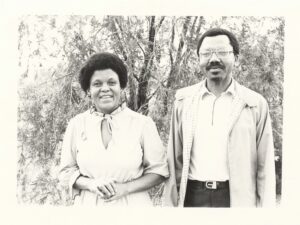
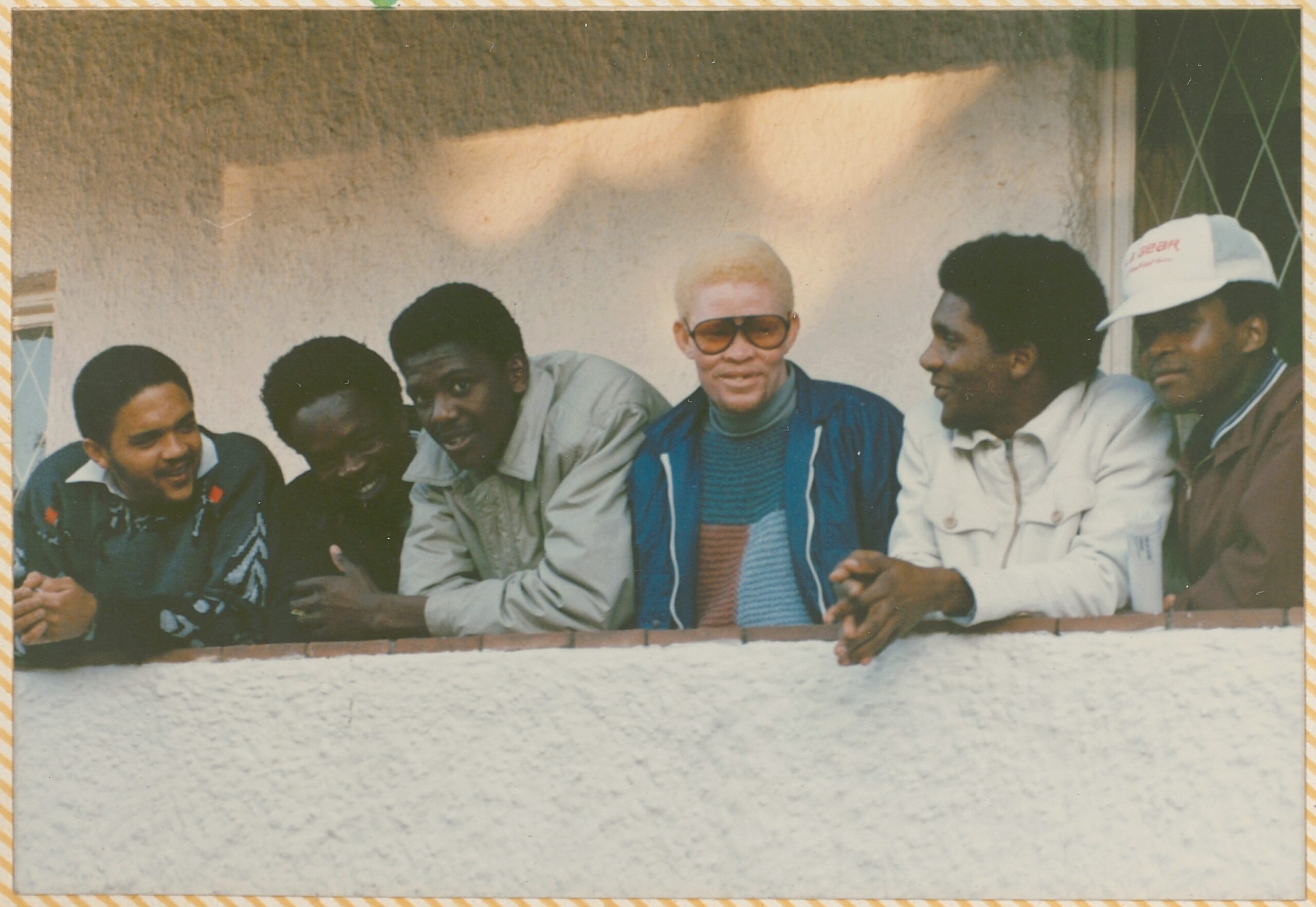
Eastern Cape Group Interview conducted with Mzukisi Mpahlwa, Hein Luiters and Khaya Matiso by Tammy-Lee Lakay and Laurence Stewart on 19 August 2024 via Zoom
-
by

But if you talk about the politics, I think all of us really were coming from the UDF in different structures of UDF, different organisation of UDF. For instance, Louise Vale and company were coming from Black Sash. I was coming from NEUSA and Jonathan would be coming from a student, a youth organisation, which was in Grahamstown. So, we were coming from different [backgrounds]. Others like Vumile were coming straight from the unions, in East London and so on. So, the people that were working in those offices were coming basically from all of, most of the UDF aligned organisations. So, we were speaking the same language. (Mzukisi, p.5)
Maybe regarding detentions, I need to mention that – yes, we’re disrupted, but at the same time, it was mainly the leaders that were detained. The junior staff were still running the offices and providing services and programs for our constituencies and so on. It was mainly the leaders that were in detention. And when they were released from prison, we started strengthening our programs and doing exactly what I was talking about. Starting seriously with policy making processes and so on. (Khaya, p.9)
My experience has always been that there was quite open communication and like the national leadership will indicate the kind of situation that the organisation is experiencing itself and find itself in at any particular time. And, SACHED was one of the organisations that displayed great leadership. Like I the women that I mentioned now with John Samuel and through leadership in terms of where the organisation is going (Hein, p,10)
Tammy-Lee: Hi, Mzu. Can, can you hear me?
Mzukisi: I was muted.
Tammy-Lee: No problem. Khaya said he is on the road and can join soon. Hein said he is only able to join in 10 minutes and Laurence is changing devices. So, what we’re going to do is we’re going to start sort of with a personal interview. Just about you and your experience. Is that okay?
Mzukisi: Yes.
Tammy-Lee: Wonderful. I’m Tammy Lee and I’m the Cape Town assistant for the SACHED archiving project. So, the purpose of the interview is to sort of gauge group experiences and sort of to bring SACHED people back together because usually what happens everyone is they’re like, “oh my gosh, I haven’t seen that one in so long”. So, it’s always great to bring everyone together to get that sort of collective experience. Tell me about you, where are you from? And, how did you come to join SACHED?
Mzukisi: Well, I’m from the Eastern Cape in a small town which used to be called Grahamstown, but now it is a municipality called Makana Municipality. I was in detention from 1986 to 1988. And then when I got out of detention, I was recruited by Jonathan Godden. Went to an interview, and then I was then appointed to be one of the staff members of SACHED Trust. At the time, the head of SACHED in Grahamstown was Louise Vale. That’s how I joined SACHED.
Tammy-Lee: Wow. So, can I ask why were you in detention?
Mzukisi: I was in detention because I was involved in the struggle for the liberation of people in South Africa. At the time I was with the Neusa, which is the National Education Union of South Africa. I was teaching in Pedi in 1985, and then I went to Grahamstown because I was harassed by the Ciskei police at the time, and I got expelled where I was teaching. So, I went back to Grahamstown where I started to revive – to start the structure of Neusa. I organized teachers there in ‘86 to come and join Neusa. And then I was obviously part of the UDF structures and then I got arrested in December of ‘86. Then I came out in March of ‘88.
Tammy-Lee: Incredible. Tell me Mzu, what projects were you working on at SACHED?
Mzukisi: I was under the Turret [Correspondence College] TCC. There were a number of programs. There was a program of [the libraries] I was responsible for taking the libraries. We used to have mobile libraries where we’re putting educational and political bookshelves in that library. And then we would take it to different places in in the Eastern Cape, and they would be kept in somebody’s house, and then the comrades and everybody else in the community would borrow the book there and read it and then return it after reading the book. So, it was it was called a mobile library. And then when the comrades have finished reading the books, then we’ll replenish the books take the old ones and then put in new ones or fresh ones and then so it happened like that. So, we used to load those on a bakkie and then take them from one town to other. So that was one program, but the other program was to assist comrades with their matric, who wanted to finish off their metric with the distance education. [We would] provide them with books, provide them with the lecturers.
I was responsible for setting up those structures of those comrades in the towns in what was then called the Albany region. So, I was responsible for that program. Of course, there were many other programs like distance education support program, the DUSSPRO, which was for people that were at a post-matric who wanted to complete a degree. That was a different program. But I was responsible, I was employed under the Turret one.
Tammy-Lee: I’m very familiar with Turret because I’m doing my MA on Speak Magazine and Sheila Jolobe used to also work at Turret. I got to talk to her.
Mzukisi: Yes, I remember Sheila, yes.
Tammy-Lee: Really? Wow. So, can I ask, what kind of materials – you said educational, so was it like books? What kind of materials were you stocking?
Mzukisi: It was mainly books. Some of the books were books that were prescribed by the various institutions. And some of them obviously were the alternative material so that we can broaden people’s understanding. So, it was mainly books, as far as I know, magazines as well. I know that the [unclear name of title, “Whip”?] was also one of them which was very popular. So, it was mainly political material and also of course, educational material for exams. Then there was also another program, which I think was also a product of SACHED Trust, which was based in Cape Town, which was called Khanya College, where a number of other people went there to study for their postgraduate, simply because they were not allowed in the government departments because of their involvement in the struggle. So, there were quite a number of programs that SACHED was doing at the time to help people to complete their education – broadly, beyond just the comrades that were activists, UDF activists.
Tammy-Lee: So, my next question is, how long were you with SACHED?
Mzukisi: I joined SACHED in 1988 and then I left SACHED in 1994, six years to be exact. I was involved in the local government negotiating forum, which was a precursor to the transitional local government, the TLCs, transitional local councils, which started in 1994. Then I got involved in those negotiations for the establishment of local government and then I joined the local government, the TLC at the time. Eventually after the elections in 1995, I was appointed as a mayor of Grahamstown municipality.
Tammy-Lee: Wow, so that’s quite a leap? [laughs]
Mzukisi: Yeah, yeah.
Tammy-Lee: Um, so my next question is, so you spent a long time at SACHED and a very interesting role, you know, the mobile libraries. I haven’t spoken to anyone who’s worked on that, so I love it. Tell me what would you say was the culture of the Eastern Cape Centre?
Mzukisi: Whoa, it’s an interesting question because I don’t think after I left SACHED, there was any other employment that could come anywhere closer to the culture that I experienced in SACHED Trust. We were a non-racial group of people. We had whites, quite a few of them. We had coloureds, quite a few of them. We had Africans, we have even an Indian guy. So, I’m talking Grahamstown now, I’m not talking SACHED nationally. The culture was, was a very democratic culture, if I may use one word to describe it. And where we had meetings and everybody else had to participate from the cleaner, to a librarian, to practitioners like ourselves, to managers. Everybody, we just had a meeting with everybody and to discuss everything about the program and the institution and everything else. We all felt like equals even though we had bosses and, subordinates and all of that, but the culture was so, so democratic and also so vibrant. SACHED Trust was a centre of political activism in Grahamstown. Any activist from any political background, whether ANC, UDF, whether PAC, they would never go to town without going via SACHED trust because there was a lot of vibrancy there. There were discussions and it was so vibrant. That’s why it was easy for the security police to harass us and arrest almost all of us that worked in SACHED to detention without trial from Louise Vale right down, Jonathan Godden, all of us, literally all of us. I think the only people that were saved were cleaners and maybe librarians but the rest of us because we’re all very active in our organisations and all of us almost, as I said, got detained without a trial during the state of emergency of 1986.
That’s how I could describe the culture. It was a very democratic, very egalitarian, if you like, culture and comrades. Really, the unity that we have there was just out of this world. I’ve never had any other workplace that comes anywhere closer to the kind of culture that was in [SACHED]. But of course, as well, apart from that, there was also a lot of discipline in terms of the assigned work you had to do, and you also had to account for the work. So, it was not like a free for all, you know, you had to account when you were given a task. You were to report, you have to write reports, you have to present reports, you have to discuss. So, there was accountability as well, beyond just the comradely arrangement or atmosphere, but there was also strong accountability.
[End]
Eastern Cape Group Interview Part Two conducted with Hein Luiters, Mzukisi Mpahlwa and Khaya Matiso by Tammy-Lee Lakay and Laurence Stewart on 19 August 2024 via Zoom
Hein: Oh, thank you. My name is Hein Luiters. I’m originally from Willowmore, and then I studied in Port Elizabeth at the Dower College of Education. I then graduated there and started working briefly at the SA Council of Churches before I then joined the SA Committee for Higher Education in 1990. I had been part-time lecturing at SACHED for some time in the late ‘80s and then in high school program, distance learning program. And then I started working full-time from around March or April in 1990. And after SACHED closed, I became employed in the Department of Education to work on the adult education system and then afterwards moved to the Office of the Premier where we worked in the human resource development field, and then eventually became director of that and completed my work there in end of February 2024. That is briefly, I think.
Tammy-Lee: Fantastic. Thank you, Hein. I just wanted to ask what projects did you work on for SACHED?
Hein: In SACHED I was employed in the Labor and Community component or division, LACOM as it was called. I worked in the PE office and also worked with the colleagues in the East London and national offices respectively.
Tammy-Lee: Fantastic. Thank you so much, Hein. I’m going to check with Khaya if he can speak up. Hi, Khaya.
Khaya: Hello. Can you hear me?
Tammy-Lee: I can. Welcome.
Khaya: Apologies, colleagues. Apologies. There’s noise here. I’m in the Eastern Cape and I’m traveling. I just stopped somewhere in a shop, so there’s music here. But I heard what Hein was talking about.
Tammy-Lee: Fantastic. Can you give us brief introduction to Khaya Matiso? Who is Khaya and how did you come to join SACHED?
Khaya: It was 1990. I joined SACHED as an employee of TCC, Turret Correspondence College, as a coordinator in the Eastern Cape. I was based in PE, reporting to Sheila at that time. After a year or two, I was appointed as a centre manager or centre coordinator. And then after a year or two, again, I was appointed as a national researcher in a new project called ASECA reporting to Louise Vale until I was retrenched.
Tammy-Lee: Wow, amazing. Thank you so much, Khaya. So, I have Mzu’s bit from earlier so I’m going to just jump into my Eastern Cape questions. All right. So, my first question is: can you guys tell me about the SACHED Eastern Cape office, maybe about the politics of SACHED Eastern Cape? Anybody?
Khaya: Maybe I should get out of this venue.
Hein: Maybe just briefly, I think we basically had three offices of SACHED in the Eastern Cape. The one in Port Elizabeth, the one in then Grahamstown, and the one in East London. If you now describe the Eastern Cape as it is today, that time Eastern Cape was mainly PE Grahamstown and East London was like the border office.
Tammy-Lee: Oh, wow. I’m always fascinated by the way South Africa was sort of mapped out because I always think I learned about nine provinces at school.
Mzukisi: Mzu, what about you? What can you say about the politics of the Eastern Cape? Three offices, essentially.
Mzukisi: As Hein has mentioned, there were three offices and each office was basically doing their main programs. As Hein has already mentioned, the East London program was more on the labour side of things. As much as the PE one was also there. And it’s understandable that was the case because those were the offices where they were located within factories. So, those comrades were working with the unions in particular with programs that were targeting the unions and the workers specifically. Grahamstown was more of the distance education program, DUSSPRO the Turret, TCC, which was targeting the matriculants, people that want to complete their matric via alternative education.
So that’s basically the content of the three offices. But if you talk about the politics, I think all of us really were coming from the UDF in different structures of UDF, different organisation of UDF. For instance, Louise Vale and company were coming from Black Sash. I was coming from NEUSA and Jonathan would be coming from a student, a youth organisation, which was in Grahamstown. So, we were coming from different [backgrounds]. Others like Vumile were coming straight from the unions, in East London and so on. So, the people that were working in those offices were coming basically from all of, most of the UDF aligned organisations. So, we were speaking the same language.
We had the same vision, same views. And although we had very robust discussions in terms of the programs that we’re having. There were a lot of discussions that were happening there. As I said in, in almost all of those offices, without exception, the nature, the culture of those offices was that of a democratic culture. We had meetings. And in the meetings, it’s not like the meeting of managers alone and then meeting of staff alone and all of that. If there are issues to be discussed, everybody is in the same room because we were not many in those offices. From the sweeper, cleaner, librarian, manager, it will be just one meeting and we’ll discuss and take a decision democratically and implement it and then we have to account obviously the accounting structure.
So, I’ll say that I don’t remember any of those offices where we had something like factions and people aligned to that one and that one, not speaking to that one. It was in a very friendly environment, but of course with the robust discussions, politically, ideologically and otherwise. That’s how I can say my experience of SACHED Trust.
Tammy-Lee: Fantastic.
Hein: Just to add maybe to Mzu is that as he was saying from the UDF, but we were all in the anti-apartheid movement or the mass democratic movement as Matiso would call it. And all of our programs were aligned to alternatives to the then system and how our discussions will then centre around those kinds of interventions that we have to conceptualise which resulted afterwards in ASECA and adult education programs and so forth that basically looked at how do we look at alternatives to the system. And obviously the anti-apartheid movement and views was very strong in uniting all of us and then afterwards coming up with alternative systems to make sure that that there will be new policies in place. And so, policy debates were very central to our discussions. Development of leadership at the union level and community-based structures and then also looking at the alternative education system that should be introduced later on. So, participation in research programs and so forth became very fundamental in SACHED.
Tammy-Lee: Thank you. Khaya, if you’re still with us, what can you say…
Khaya Matiso: I can just add a few comments. I agree with both Mzu and Hein in terms of our political background during that time. I think on top of our agenda as SACHED leadership at that time was the removal of apartheid. Yes, we were focusing on education, transforming the education system. But generally, there was a common agenda, broadly speaking. The removal of the apartheid system. So, that alone was the glue. That alone brought us together most of the time. But secondly, very important, remember we’re working with our progressive partners outside SACHED. For example, the trade union movement. We have programs for unions, training unions in many aspects. And at the same time, we’re testing alternative educational programs, alternative methodologies, distance education, and all those things. Practically, anyway, we’re working with progressive forces, anti-Apartheid forces at SACHED at that time.
But maybe my last comment is that there was a commitment to test alternative educational systems. That’s why we had programs, ASECA, TCC. We were also supporting UNISA students, for example. Those programs, because we’re testing alternative educational systems and alternative educational methods. Everything that we were doing, we were saying, if you remove apartheid, what is it that will replace apartheid? Can we test it immediately? And so, all our programs, they were conceptualised and implemented in a way to test a new way of doing things, a new philosophy of education, new methodologies, new management styles, new everything. So, in a way we were testing. I think that was perhaps the best from SACHED. We’re not just talking about destroying the apartheid system. We’re also talking about testing alternative educational systems. I think I just want to add those few points. But I fully agree with my comrades.
Tammy-Lee: Fantastic. I feel you all answered it brilliantly. Thank you. My next question is about the relationship between centres. So, I know back in the day, South Africa looked very different. There were three centres in what we call Eastern Cape. But did you guys sort of, engage with other centres and what was that like?
Khaya: Are you talking about SACHED centres?
Tammy-Lee: Yes.
Khaya: What’s the question again? There’s noise this side.
Tammy-Lee: Oh, sorry. What was the relationship, between Eastern Cape and other centres?
Khaya: Oh, yeah. Remember in terms of the structure of SACHED, one, in the Eastern Cape there was a centre in Grahamstown and East London and PE, but at the same time there were many national workshops, there were many national meetings and we had one line of accountability, that is the SACHED leadership. So, although we had many centres throughout the country, in Durban, Johannesburg, Cape Town and so on, but national gatherings, there were many of them. Because, we had some few resources to encourage national discussions. We had national policies. Our programs, such as ASECA, for example, was a national program, forcing us to meet nationally. The training of unions was a national program. Assisting UNISA students was a national program, the list is long. So, most of our programs and our activities were national in nature but obviously it was based in different towns, different cities in the country. So, there were, in my view, plenty of opportunities to have national discussions, national debates, national coordination. I think we have plenty of that right through the year.
Mzukisi: I may just add that there was also a strong interaction between the three centres, though each centre was sort of autonomous in terms of budgets and stuff like that and programs. But there was also a lateral relationship between East London, Grahamstown and PE centres where we’d meet from time to time to discuss the common programs and agree on the way forward. So, there was a lot of collaboration between the centres. There was no competition per se but it was just more collaboration, I would argue.
Hein: Yeah, and that collaboration also programmatically in terms of programs would also have its own interaction at different stages. For instance, the unit that I was in, the program that I was in LACOM we would meet regularly with East London, where there’s a similar office with the Durban office, with PE, with Cape Town and Joburg. So, there was also those kind of interactions. And then obviously I think the element of planning at the national level around programs and ideas for interventions and funding proposals that again drew us to a national level to have a common discussion around what our priorities are, and how do we make sure that we put proposals on the table that can actually be funded.
Tammy-Lee: Thank you.
Mzukisi: Tammy, I’m afraid I’m going to have to leave because I’ve asked to be hot-spotted here. I’m not at home. So, the guys are knocking off from this office where I’m working from. So, if you don’t mind I, I would love to excuse myself but I’m available, I’m sure from five onwards and other days I’ll be at home if you have not completed your task, you can always rearrange for me either later today or tomorrow or any other time. It’s just that these guys now are knocking off.
Tammy-Lee: I understand. Thank you. I think we might have to do that, but I did get a bit more from you, so you’re free to go [laughs].
Mzukisi: Thanks comrades.
Laurence: Hi everyone. It’s Laurence here, I’m Tammy Lee’s colleague in Joburg. I’ve been listening to the interview and I just wanted to, and just hearing about like how the local politics in the Eastern Cape played out, particularly in relation to like worker politics in PE and East London and how that is where the SACHED focus was. I just want to ask about the local politics in the Eastern Cape, particularly with regards repression. And how that shaped the different experiences of Grahamstown, East London and PE offices.
Khaya: I think if I could start making comments. We had one important feature during that period was that almost all of us were coming from the United Democratic Front and from COSATU. We have that strong tradition in the mass democratic movement and we were in prison together, for example, and we’re harassed by security together, whether in Grahamstown, in PE or East London, it was more or less the same kind of political situation, we were facing the same political challenges. As far as I can recall, there was a strong emphasis or a strong trend to be influenced by general regional politics not by specific local politics like in Grahamstown or PE. The dominant political trend was that all of us were coming from the same political tradition. And secondly, all of us were facing the same political challenges.
But at the same time, remember, even within SACHED, there was a national coordinator anyway for each and every program. There was a national coordinator of TCC, there was a national coordinator of ASECA, and so on. And there was only one director, John Samuel, for example, who was our boss at that time. So, there was a lot that was national, there was a lot that was broad and general, and very few specific local politics were influencing us.
Laurence: Interesting. And Hein?
Hein: Yes, just to confirm what Khaya is saying, we had very similar political backgrounds and experiences, obviously. So, the kind of approaches were very similar and we had a very common understanding and a common commitment in terms of what it is that we want to do in the organisation both nationally and in the Eastern Cape moving forward actually.
Khaya: Maybe also add, remember colleagues during that time there was a focus on what was called people’s education for people’s power. And in SACHED, we were focusing on defining this thing, defining exactly what is meant by people’s education. And at that time, we’re talking about democratic formations such as the SRCs, for example in schools and in universities. And we were saying those formations must define the kind of education that we want. And remember again during that period, we’re approaching the period of the National Education Crisis Committee, NECC. And it’s the NECC together with us, I remember, that we were busy defining the policies now. And we’re saying, let’s start influencing national policy on education. It was SACHED Trust, the trade union movement, especially the education task force, from the unions and the policy desk of the National Education Crisis Committee, led by Professor Ihron Rensburg and so on.
[And we] started saying, let’s now have policies now around the curriculum, around university education, around technical education, around distance education, around early childhood development, the list is long. We started saying, look, let’s have policies now. We can’t just be opposed to the Apartheid education system, and then not talk about how is the system going to be replaced. So, it was SACHED, it was the union movement, especially the education desk of COSATU, and the National Education Crisis Committee that started work on the education policy desk, drafting policies and so on. So, I feel like mentioning that it was part of that period.
Laurence: Yes, Tammy Lee, you had the point on detainees. What was that point of Louise’s?
Tammy-Lee: Right. I actually spoke to Mzu about it because he was one of the you know, detainees. So according to Louise, 36 percent of detainees were employed at the Eastern Cape office. And I think we were just curious, like, how did that affect maybe, the morale of the office or how that played out in Eastern Cape? Because that’s quite a large number.
Khaya: Maybe regarding detentions, I need to mention that – yes, we’re disrupted, but at the same time, it was mainly the leaders that were detained. The junior staff were still running the offices and providing services and programs for our constituencies and so on. It was mainly the leaders that were in detention. And when they were released from prison, we started strengthening our programs and doing exactly what I was talking about. Starting seriously with policy making processes and so on. Yes, the detention, I agree it disrupted us.
Tammy-Lee: Wow. All right Hein would you like to add something?
Hein: No, maybe just to indicate, obviously after the unbanning things substantially cooled down a bit, not completely but at least cooled down a bit. And that was mainly also during that period, as Khaya was saying, around finding or looking at alternatives and speeding up the process of identifying and agreeing on possible alternatives. So, there was a number of policy processes that we participated in. And some of that resulted in, first of all, the NEPI [National Education Policy Initiative] documents. And then later on became very central in terms of the RDP program.
Tammy-Lee: Wow. Were any of you part of the NEPI? [laughs] Because I know Sheila was. Sheila and I think Shireen.
Hein: Yeah, no, that’s mainly… We didn’t all participate in those processes but obviously there was a lot of discussions around, around proposals that emerged in the NEPI programs or proposals.
Tammy-Lee: That’s amazing, I will ask again about that. My last question is so I’m doing my MA on SACHED, but through the archive and looking at Speak, which is a project that Sheila worked on. So, I just wanted to ask you as men from the Eastern Cape office, how did gender or gender dynamics play out in the Eastern Cape office?
Hein: Was there something like that?
Tammy-Lee: Sorry?
Hein: Was there, something like that? Maybe Khaya can speak better around because… Actually, the issue of gender…
Khaya: The question again please?
Hein: Gender dynamics. I think there was actually just an acceptance of everybody participating and making a contribution and appreciating the contribution in the process. I’m not sure. Maybe Khaya can speak better on that particular issue. But it’s something that we treasured very much. All voices, all participation. Like Khaya was saying earlier on or was it in Mzu… There was no separation of meetings where, you know certain people will participate. And so, the issue of class was not really, was not at all considered. As well as the issue of gender.
Tammy-Lee: Interesting. Thank you, Hein.
Khaya: Oh, yeah. Can I add something?
Tammy-Lee: Of course.
Khaya: [laughs] Remember that time, 1980s in particular and early 1990s. There was a high level of discipline, we were serious about discipline. Very serious about discipline. So, talking about the rights of women, talking about the class question, for example, those were serious discussions at that time. There were no signs of factionalism, for example. I remember there were some comrades in Cape Town, they always provoke discussions around the class question. And some of us were nationalists, putting on the agenda of the national question. That was a very good debate at that time, and that’s why we’re still friends even today, we still remember those vibrant discussions and vibrant debates around the class questions and around gender issues and so on. As far as I can remember, I don’t remember certain factions in SACHED at that time, precisely because of the high level of discipline and respect.
Hein: Yeah. And you get a number of very strong women in SACHED. You talk about Louise, Thandi Ngengebule, Jenny Glennie that really allowed everyone to participate in all the processes that unfolded in the organisation.
Tammy-Lee: Laurence, did you want to say something?
Laurence: Not really. I just wanted to ask just to go back a bit. About the relationship with the head office? I heard that there was a lot of contributions to like in open forums to the ideas and policies of SACHED, but just about the support from the head office to the Eastern Cape in these different, the three different centres – did people feel supported by the head office of SACHED or a bit isolated? Yeah, I’m just interested.
Hein: My experience has always been that there was quite open communication and like the national leadership will indicate the kind of situation that the organisation is experiencing itself and find itself in at any particular time. And, SACHED was one of the organisations that displayed great leadership. Like I the women that I mentioned now with John Samuel and through leadership in terms of where the organisation is going, how we need to put things together to attract foreign funding and most of the funding, obviously, if not all the funding was mainly foreign based. And those proposals reflected, our joint discussions and agreements. So, yes and from maybe from an office perspective, say, Khaya was a centre manager, and he can maybe speak more directly around the kind of support to the centres. But I think it has always been very positive or was positive.
Khaya: Yes, I agree with Hein colleagues. I must mention that it was not just about politics. We didn’t have only political debates in SACHED. SACHED spent a lot of time and resources training us to be future managers. Examples are there are many national training programs, training centre managers, for example. I remember we had trips to Namibia to learn more about language policy, because we’re debating language policy for a new South Africa. We had workshops on research training us to be future researchers in education. So, there are many examples of serious training. For example, I was introduced to serious strategic planning in the SACHED. Learning what strategic planning is all about. I was introduced into policy making: what is policy making? Where do we start with policy making from a progressive point of view? I was introduced to all those processes in SACHED. Potential researchers were trained in SACHED. Potential managers of the new education system were trained in SACHED. As I’ve mentioned, analysing language policy in education, we started training people on that.
I benefited from that process. So, there was a lot of national coordination on these things. And the head office assisted us, not only through resources but through really skills development and transfer of skills, so I think we were very fortunate. We were very fortunate. Thanks.
Tammy-Lee: Thank you everyone. I’m so sorry. Our time is up. But thank you so much for joining and I think I’ll possibly send an email just to get a little blurb to capture sort of if we missed anything.
[End]