Lindy Wilson SACHED, CAPE TOWN 1967-1985
-
by

Outwitting the apartheid authorities provided some of the most satisfying moments of running SACHED. By doing so, we ironically managed to define and run an educational institution that came under nobody’s auspices but our own and we grabbed that ‘freedom’ to do exactly what we wanted.
Thus, we began to transform ‘correspondence’ education in whatever manner we liked. It became known as ‘correspondence plus…’ By experimenting with creating an environment of open-ness and critical thinking in all respects we also slowly handed responsibility to the students to own their learning space, get their degrees and absorb a different kind of education and support. We came under no authority – just made use of the exams to hand – and created ways of enabling our students to meet, work together and discover one another’s lives together in a free space that defied the apartheid silos.
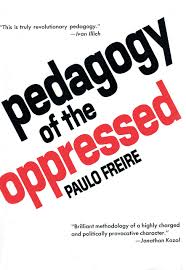
It is not insignificant that Paulo Freire’s Pedagogy of the Oppressed, written around this time, became as fine an example to us as it did for those in South America and, simultaneously, provided a text for training in the Black Consciousness Movement which was also emerging in South Africa around that time.
In late 1966, on departure from the UK to return to South Africa, I received a letter from Sean Archer asking if I might like to do a part-job of ‘Secretary’ to a fledgling NGO called SACHED. He was on the Board. I agreed.
I discovered that SACHED had started very small in three major cities of South Africa: Johannesburg, Cape Town and Durban. It was created in the heat of the protests which closed the major universities to black students. SACHED began as a gesture towards those who refused to study at the new, segregated universities built and staffed for them under apartheid’s racial categories. In Cape Town, the University of the Western Cape was created for ‘coloureds’ and was derisively immediately named the ‘Bush College’.
SACHED offered bursaries to students to study for BA degrees through London University’s External Examining Board.
A BSc (Econ) could be offered but any other science degree was out of the question given the lack of available laboratories, etc. To meet London University’s entrance requirements students first had to be upgraded from any local Matriculation passed by writing 3 Advanced-level subjects for the British General Certificate of Education, the GCE.
Dot Cleminshaw, who had nurtured the first SACHED students from 1960-1967, handed me 5 folders containing information about the five registered students. There was nowhere to meet these five names. Only white South Africans sat down together in cafés. We literally first met on street corners in the windy South-Easter. My own home was too far out of town. The Group Areas Act was in full swing and was busy removing 300 000 people who were not classified as ‘white’ who had lived in all the suburbs from the City to Simonstown for a couple of centuries and was dumping them onto the windswept Cape flats. We had fled the estate agents engaged in selling these forced-removal houses and found a house built on a previous farm.
I rented a room for SACHED in the heart of the city, cleaned and painted it and set up space for tutorials. The students received study notes for A-levels from Britzius Tutorial College, a correspondence-college in Johannesburg. I sourced our tutors mainly from the University of Cape Town, which all ‘non-white’ students were now forbidden to attend. Ironically, they got one-to-one individual attention through SACHED!
Coming from Johannesburg – I had been PA to the Editor of The Star, and later to Jim Bailey, owner of Drum magazine – I knew a good deal about politics in general and Johannesburg in particular, but absolutely nothing of the politics of the Western Cape. I was plunged headlong into its complexities and intricacies and soon discovered that some of the families of our students were at that very moment being forcibly removed from their homes.
The Teachers’ League of South Africa (TLSA) had a long-standing and respected practice of providing quality teachers in the ‘coloured’ schools to ensure that the next generation were educated. Whatever tertiary qualifications members of the TLSA achieved themselves, they were expected to return and teach in the local schools.Thus you had a Neville Alexander (who later became director of SACHED in Cape Town) returning with a doctorate from the University of Tubingen, Germany in 1961 coming back to teach at Livingstone High School; you had the writer Richard Rive, with a doctorate from Oxford University, coming back to train teachers at Hewatt Teacher Training College and many others who were mentors of our SACHED students.
Edgar Maurice, vice-president of the TLSA in the mid-fifties and 12 years as the highly regarded principal of Harold Cressy High School, was Chairperson of our local SACHED Board. He had been banned in 1961 for 5 years and had resigned his principalship in protest in 1963 as the new Coloured Affairs Dept took over.
The TLSA had a long history. It was inaugurated in 1913 in the face of the local Cape government only offering compulsory education to white pupils. By 1937 it had established a strong ‘non-collaborationist’ stance against government. In 1947 it became an affiliate of the national NEUM (Non-European Unity Movement) initiated by I.B. Tabata. ‘Non-European’ was interpreted as ‘not of Europe’. It did not mean ‘not-white’. In time the TLSA fought against the implementation of Bantu Education among many other things.
In 1967, when I began, many of the TLSA teachers had stayed on, in spite of the new Coloured Affairs Department, in the well-known, long-established coloured schools such as Trafalgar, Livingstone, Harold Cressy and South Peninsula High schools. These teachers were still pretty much in charge. Independent, politically articulate and well-educated they were more or less running the schools in spite of new Principals being appointed by the Coloured Affairs Department from 1964.
Apart from believing passionately in their responsibility for educating the next generation, the TLSA ran many extra-mural activities like film-societies and regular open discussion forums, etc. As part of their outreach the TLSA, at first with some suspicion (we still had to prove ourselves), began to send some of their best students to SACHED. Our numbers began to grow.
After a couple of years and armed with their good A-level results in the British GCE, some of these students got scholarships to universities in the UK to study full-time. Unfortunately, occasionally, unexpected barriers sometimes prevented them. The father of an outstanding student, Saliem Isaacs, who got three As in his A-Level exams, refused to let him take up a bursary and go to Oxford to do a degree in history. Saliem was devastated (so were we) but his father put his foot down saying his duties were to the family and he needed to get out and work. My intervention with his stern Moslem father was to no avail. Saliem dutifully got married and got himself a job.
As far as I recall, all of the SACHED students who studied abroad returned to South Africa after graduating. Of those who remained in Cape Town, three of them were prepared by SACHED for London University’s External BA degree. Not much advice or any form of curriculum was forthcoming from London! It was a tough call for students and tutors.
One of the three students dropped out half way but the other two graduated well. Mr. Mohammed Ajam went his own way but Zubeida Desai kept in touch and went from strength to strength first as a teacher and then as a lecturer. Later she became a Professor of Education at University of the Western Cape (once liberated) and subsequently its Dean of Education. She has written numerous articles and edited books, her key research being on the role played by the language of instruction. A model of perseverance!
In the 1970s, SACHED, Johannesburg proposed at its AGM that we offer bursaries to students who were studying through South Africa’s correspondence university, UNISA (the University of South Africa). For us in Cape Town, this spelled an immediate compromise on the quality of education offered by SACHED’s approach to tertiary education, a reason for its beginnings, and given the political climate in the Western Cape, we were initially against this move to UNISA.
At that time UNISA was still largely in the hands of apartheid-thinking professors. Ironically, though, its courses were open to all South Africans, regardless of any racial category, basically because it was
a correspondence university and students would never actually physically meet one another so, in the ‘apartheid’ context there was no danger of white South Africans being in sight of or in touch with ‘black’ South Africans. Except at SACHED.
DUSSPRO (Distance university student support programme)
The rationale for SACHED to help UNISA students was that many working students, who had no option, were already registering for degrees with UNISA (as, unknown to us at the time, were the political prisoners on Robben Island and in Pretoria Central) to help upgrade their qualifications for better jobs and salaries. SACHED’s method could help upgrade their overall educational capacity in reading, assimilation and writing skills as well as the incomparable advantage of group tutorials. We would be especially more effective in helping teachers who were registering with UNISA and were responsible for the next generation. By comparison, the London BA was a tough call.
In discussion with the tutors, many of whom scorned the bias at UNISA and its poor quality (shocking in some subjects like Anthropology), it was agreed that our SACHED tutorials were to be used as true discussion sessions where students were encouraged into far greater questioning and analytical, critical ability.
So, students subsequently applying for SACHED bursaries were informed that SACHED would ensure their passing the UNISA exams but that joining SACHED involved much more. They would be required to attend weekly tutorials in groups for each subject which would be geared to ensure that they received a far broader education than the content of the correspondence notes from UNISA. This was was really the only essential condition to retaining a bursary. After not attending for three sessions in a row, we engaged with the student personally about their reasons for not managing to do this and if it was valid we tried to solve the problem preventing them but if it was not and it persisted, the student could be dismissed.
Saturday mornings, when people were usually off work, were important times for discussing students’ problems which demanded SACHED’s full engagement with the difficult socio-economic conditions under which they were obliged to live, let alone study. These included family demands, no transport, lack of space or silence, financial needs, fear of gang violence (one very promising student was stabbed to death going home) and so forth.
Those Saturday morning discussions were one of the key support structures we gave individual students to help build their own confidence and solve what was possible in the circumstances. They were essential.
From the early 1970s, SACHED moved to the top floor of the Christian Institute building opposite Mowbray railway station and close to buses so transport was facilitated. It had several rooms to enable larger groups of tutorials. The Christian Institute housed diverse projects downstairs: SPROCAS 11, The SA Outlook, an NGO in Christian Educational Leadership Training etc. All of these groups lent us their rooms for tutorials over week-ends when our needs were greater than our number of rooms.
In 1976, immediately after the Soweto schools uprising which replicated around the country, subsequently resulting in the schools’ boycott, Eric Dyanji (if I remember correctly) approached me to ask if SACHED could provide a similar tutorial structure for school-level pupils as it did for tertiary students. The law was clear: learners were not allowed to attend group tutorials as this would then constitute a ‘school’, which would require a permit. Doing this would give the educational authorities an excuse to accuse SACHED of enticing school pupils to boycott and a chance to close it down.
TURRET
My suggestion was that the scholars set up a similar programme themselves and use SACHED in whatever way our experience would be useful. In 1969 SACHED had bought Britzius’s tuition materials for Junior Certificate and for Matric which had, over the years been transformed into Turret Correspondence College which was geared specifically for second-language learners. The boycotting students worked through these channels and created a group-learning structure for themselves. They became a part of SACHED which helped enable this in every way, offering them space to study and meet during the day as most of the tertiary tutorials began after 6pm.
We were, indeed, visited by the Bantu Education authorities who subsequently invited me to their head-quarters but we managed to fob them off by challenging them with their own platitudes that surely the Department wanted the students to go on studying until the boycott was over?
Somehow, we felt it would be harder for them to forbid group tutorials for a correspondence university providing materials for working students even though this, too, was against the law. SACHED would have meant nothing much without these so we ignored it. Many of our dedicated tutors returned year after year.
SACHED’s perspective moved with the changing political struggles in South Africa. It was essential to understand regional politics, all of which were different. New projects were begun in response to SACHED’S capacity to provide some of the materials that mattered. This aim is spelled out in the Annual Report 1970-1973:
‘Our perspective is not that of assisting the under-privileged. We wish rather to provide resources which allow for independent self-help, but nevertheless do not at the same time lose educational efficiency.’ (SACHED Trust Annual Report 1970-73: Annexure 14)*
On October 19th, 1977 I took the train to SACHED (we, ourselves, had been raided by the security police early that morning in our home along with many others). As the train approached Mowbray, I saw that the Christian Institute building was surrounded by the security police. I was greeted at the door (by my first name!) by the senior Security Police officer in charge. The Christian Institute had just been banned that morning along with its Director, Theo Kotze, as well as many other individuals countrywide and many NGOs. It became known as Black Wednesday. Every single thing was removed from the building downstairs, down to the last teaspoon. Upstairs, however, was miraculously, left untouched. SACHED was not banned; our tutorial rooms were left in-tact.
*see E.P. Nonyongo: South African Committee for Higher Education; South African History on Line.
For three months we then paid rent to the Security Police! Two or three of them would suddenly appear in the office for the rent, giving us a fright and, presumably, hoping to find us up to something nefarious. I remember on one occasion pulling down in a few seconds a whole innocuous display of Nyerere’s Ujamaa from the notice board as they walked in downstairs. It was that bad when it came to the security police!
Fortuitously, we found a suitable house nearby which SACHED bought – and later also bought the house next door to it. It had a garden and an old fig tree and we set about building an excellent library in the main room for students to study in. This was real change. The place was transformed into a much more conducive space for students and helped to give space and silence to those who lived in overcrowded conditions, many without electricity and having to study by candle-light.
PHOTOGRAPH
The SACHED house was in a ‘white’ group area. Before we bought it we walked around the neighbourhood and spoke to all the neighbours explaining what SACHED was and how it would function. They were all very positive about us getting a house in their street, Church Street, Mowbray. Not so, the local educational authorities who, soon after we moved in, dropped by for a visit. They then called me to their offices and proceeded to walk me round giving me a talk on how much they were doing and then asking me why we were breaking the law.
Of course I denied this. I agreed that the house was in a white Group Area but pointed out that the neighbours had welcomed us and that SACHED’s National Board (which was deliberately just over 50% ‘white’) meant that the house was ‘owned’ by a majority-white organisation. Surely, we asked them, they wouldn’t object to the fact that we were helping adult, working students to become better qualified?
Outwitting the apartheid authorities provided some of the most satisfying moments of running SACHED. By doing so, we ironically managed to define and run an educational institution that came under nobody’s auspices but our own and we grabbed that ‘freedom’ to do exactly what we wanted.
Thus, we began to transform ‘correspondence’ education in whatever manner we liked. It became known as ‘correspondence plus…’ By experimenting with creating an environment of open-ness and critical thinking in all respects we also slowly handed responsibility to the students to own their learning space, get their degrees and absorb a different kind of education and support. We came under no authority – just made use of the exams to hand – and created ways of enabling our students to meet, work together and discover one another’s lives together in a free space that defied the apartheid silos.
As Johannesburg predicted, including UNISA students immediately opened SACHED up to a much wider, much more diverse group of people: factory students, workers, domestic workers, social workers, teachers in Junior and secondary schools, principals of schools, Xhosa-speakers from Langa, Gugulethu and Nyanga.
From 1964 Bantu-education authorities encouraged rote-learning. Questioning or taking initiative was suppressed, classes were too big and teachers too few. One of our brightest UNISA student/teachers admitted to me years later that she had been intimidated at first at SACHED as she had never been asked a question in her life as a pupil: tabular rasa, she explained, graphically demonstrating content being poured down her throat without a word in reply! She felt that she didn’t have a single opinion to offer but then began to discover that she had quite a few.
*E.P. Nonyongo: SACommittee for Higher Education by E.P. Nonyongo (SA History on Line)
To begin with there was still a handful of excellent teachers (and Principals) in the older black schools who had taught for years before Bantu Education was thrust upon them: Langa High School and I.D. Mkize for example, but as the years went on the new low levels of segregated teacher-training facilities affected the quality of teachers and pupils throughout the country. This drove the incentive for SACHED to later create a project of teacher-training.
Being a tutor at SACHED was sometimes a steep learning curve and often frustrating. As stated, many were sourced from the University of Cape Town and were used to students of a common age just out of school and with a reasonably high level of skills. At SACHED, tutors dealt with adult groups spanning a spectrum of different ages, gender and occupations all at very different levels of learning, not to mention major language differences. Most of the students were employed and arrived for tutorials tired after a full working day.
Tutors were encouraged to make an effort to get to know their students and to listen carefully before making easy, general assumptions. It is not insignificant that Paulo Freire’s Pedagogy of the Oppressed, written around this time, became as fine an example to us as it did for those in South America and, simultaneously, provided a text for training in the Black Consciousness Movement which was also emerging in South Africa around that time.
Students were encouraged to open up, to think critically and even dispute and criticise the curriculum from their point of view and also to learn to work together, supporting one another by meeting in groups outside of tutorials. This group-sharing proved to be one of the most effective learning practices which built student confidence and solidarity.
The change to UNISA compounded SACHED’s problems as our numbers grew rapidly. Problems encountered were closer to the reality of the needs of the majority and we attempted to address them. Once South Africa became a democracy, universities found themselves having to create whole new departments – even sometimes requiring a student to do a whole extra full-year’s study – to counter the damage of segregated school education and apartheid’s carefully-measured, restrictive, inferior curriculum for black students.
From the 1970s we asked students to contribute something towards their bursaries, however small, to prevent dependency or an assumption that ‘all will be provided for’. This was discussed when they were interviewed, their conditions assessed and their subsequent contribution monitored monthly. Every student, however poor, had to contribute something to SACHED. The lowest amount was R5 a month. Everybody contributed according to their income and circumstances. This scheme was wonderfully handled by our star PA, Sheila Sides, whose input to the running, filing and monthly administrative rhythm of SACHED was incomparable.
It took about 6 – 8 years of part-time study for our Bursary students to graduate. Some of them came back to help as tutors. Others were employed and trained as members of staff as new projects emerged. Gradually they participated and took over the responsibility and the running of student affairs at SACHED. It became their own Centre. Graduates were the role-models for initiating new students each year. At night the students were in charge of the building and individuals were appointed to ensure it was cleaned up and safely locked up by 10pm.
Many of our teachers upgraded their teaching posts by graduating with degrees. Some outstanding students emerged to take leadership positions in the Social Sciences, Psychology, as Librarians, and at all levels of education. To mention a few that come to mind: two became professors and authors (Bill Nasson and Zubeida Desai); two became principals of schools; Abigail Tukulu became an inspector of schools in the E. Cape; Nontobeko Moletsane created a national outreach programme of impressive community projects, The Trust for Christian Outreach and Education (TCOE), working in the Eastern Cape, Kwa-Zulu Natal and Phalaborwa; Sindi Magona, with a UNISA Honours degree in Xhosa, did a Masters at Columbia University in New York, stayed on and worked there for the United Nations on the Xhosa language and Xhosa radio programmes for many years before returning to South Africa. She is now one of South Africa’s best known novelists. We also had a couple of poets in our midst.
On the whole SACHED students didn’t fail subjects very often. A few inevitably dropped out each year. At the beginning of each year, there was always a spy placed in our midst whom the students usually detected quite quickly. They were then confronted and dismissed although apparently on one occasion one of them escaped being detected and was only recognised by a student in his final examination room!
At the end of each year we attempted to criticise and evaluate ourselves, our methods and why some things had failed. Each year, while I was Director, I had the sense that we were only just beginning to understand what we were doing as we became more and more conscious of attempting to deal with the complex socio-economic structures our students were grappling with; always the sense of a beginning, always taking a new step forward. That was the inspiration.
I worked at SACHED from 1967 – 1985, at first on my own for several years and then employed our excellent Administrative Secretary, Sheila Sides, who stayed on with Neville Alexander for an untold record of dedication to SACHED.
In 1980 John Samuel was appointed national Director in Johannesburg. This was the best thing that could have happened. John was original, easy to work with and made a great difference in absorbing tensions and embracing the whole organisation. He greatly encouraged national co-operation in his understanding of regional differences and in his laid-back manner of directing, working with his inherited, talented group of staff: Jennie Glennie, Helene Perold, Sheila Sisulu… to name only a few.
With John came a new era. New projects took off under his aegis: teacher training, media studies, a publishing unit produced excellent books (Read Well, Write Well), LACOM (administrative skills for emerging Trade Unions), the People’s College – an educational supplement with different sections, formal, informal and merely informative which was published in the Week-end World newspaper*. Another supplement called Learning Post and finally, Khanya College.
*Unfortunately, the Week-end World was banned on Black Wednesday, October 19th, 1977. However, the wide distribution capacity of a newspaper was a perfect vehicle for SACHED’s educational courses so just under a year after the banning, SACHED persisted with a 4-page supplement called Learning Post distributed in the Sunday Post. SACHED, Cape Town, helped to prepare a series of articles on the history of Africa, a first when Sunday Post, too, was closed down in 1980. We then pursued it as a Course.
In Cape Town I persuaded Neville Alexander to join SACHED in 1980 and persuaded him again to take over from me as Director in 1985 (not quite sure of this date). I had met Neville a decade earlier when he had just been released as a political prisoner from Robben Island, where he had served 10 years in the special section with Nelson Mandela, Walter Sisulu, Govan Mbeki and many others. In 1975 he came to our house to consult with my husband, Francis, about a chapter Francis had written on Farming in Monica Wilson and Leonard Thompson’s Oxford History of South Africa, which the political prisoners had read and discussed. Neville was still banned so he met Francis alone in one room and then he met me alone in another room, at which point we discovered some amazing common ground. The political prisoners had also studied through UNISA, tutoring one another doing hard labour in the Robben Island quarries, digging and breaking stone.
Neville became a supporter of what we were doing and after his 5-year banning order ended he joined SACHED in 1980 in an informal way and then became more and more involved as a staff member. We worked together for about 5 years after which he agreed to become Director of the Cape Town Centre.
Neville was, without doubt, the most dynamic, inspiring person I have ever worked with and his presence at SACHED enhanced our lives and challenged our discussions. Moreover, he was always scrupulously on time. If he was to be 5 minutes late, he would phone and say so! In 1986, he, Fikile Bam and Kwedi Mkhalipi agreed to work with me and together we made the first documentary film ever produced about being political prisoners on Robben Island. Robben Island Our University opened the Weekly Mail Festival in 1987. The censors only allowed one screening. LINK
Was SACHED effective? We always asked this question at the end of each year. Effective in what way?
On looking back, SACHED in Cape Town provided a safe space for students to achieve what was being denied them. It provided a growing and inclusive community of people of all ages, sexes and from all the classified-by-apartheid sections of the population (+ we even had a smattering of white students) who might never have met. It was a place of lively discussion and debate between people from very different backgrounds, not only in tutorials but in wider circles outside, after-hours. For the first time ‘coloured’ students went into African townships; for the first time African students learnt about fasting and Ramadan, about the devastating Group Areas Act in the very process of removing 300 000 people from their rightful homes, 60 000 from District Six where some of our students’ families had lived for generations.
The tertiary education model SACHED provided of good tutors upgrading students with a poor educational background, discovering talent obscured by that system, helping to train students’ minds, insisting on their participation in asking questions and on presenting at tutorials provided a different style of education and gradually built confidence and ensured their personal sacrifice and efforts were worth it, the tutors themselves also on a learning curve.
SACHED was an interim intervention in an impossible era when people found themselves caught in the vortex of the actual implementation of apartheid’s determination to separate and destroy, to segregate and classify all levels of education according to skin-color.
Over the 25 years of its existence, SACHED was a kind-of small-scale rescue operation with strong principles expressed against the government. It was an attempt, with few resources, to pursue equal education in so far as it was possible.
One of the most important things I learned was how long it takes to enable an NGO of this kind to grow and develop – 10 years minimum. I was there for 18 years so I can vouch for this and rejoice that SACHED in Cape Town was gradually handed over to the role-models it had helped create.
- Lindy Wilson
SACHED CAPE TOWN Director
1967 – 1985
(February 19, 2022)