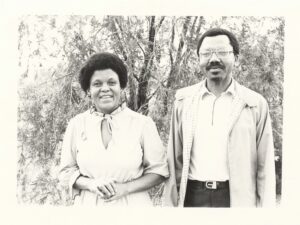
Interview with Shireen Motala, 03 April 2024
-
by

I think all of us in those days were trying to work in things that were relevant and created relevance and provided community change. So, I think, you know, that was the pull to SACHED. And obviously there was a whole community of people who were there already who were working at SACHED. So, it was sort of an attractive place where we could do both our activism, continue my work with the trade unions through LACOM. I think our whole intention was around alternatives in education. Not even thinking about what a future education system would look like, but really providing some opportunities to engage in community-based learning through whatever vehicle SACHED allowed us. Remember, it was quite a repressive time. So, the spaces in which you could do things and write things and meet in were extremely limited.
Laurence Stewart: Just to start chronologically, see if that also might [it] sometimes helps with fitting things in, but it doesn’t always… In of course, in as much detail as you like. Perhaps you could just tell me about your early life, your parents, where you grew up, some of your schooling and influences.
Shireen Motala: Okay, sure. So, I grew up in Pietermaritzburg in a very sort of politically active family. So, a lot of the starting points were there. My father was Involved in both the Congress movement in India where he qualified as a doctor in the late 1940s and then came back and right into the throes of, you know, the ANC and what was going. This was sort of in the early ‘40s and early ‘50s. And in so many ways he was a, without sort of sounding like I’m name dropping, he was a contemporary of Sisulu and Mandela. So, they were all very, they were close friends. And then the next I suppose was the treason trial and all that. So anyway, that’s just by way of context. So, my growing up was, you know, very much father in and out of prison, you know, bannings, etcetera. So that sort of set the stage for, I suppose what my life would look like in the future. But it was a fairly exciting time if it was a repressive time. I schooled in Pietermaritzburg. I went to St. Anthonys Primary school and then went to [unclear word: sounds like Essop or Raceop] High, in high school and then went to UDW [university of Durban Westville] where I did a BA majoring in drama and sociology. And in those days the drama department was one of the few departments that was more sort of open to new ideas and doing interesting readings and books and things; in contrast sociology was really just so conservative.
I don’t know if I learned a lot at Westville, but certainly it was an important seminal time in terms of, you know, there was a black consciousness movement that was emerging. There was also the Congress movement that was emerging at that time. This was sort of in the mid-seventies. Went to UCT then and did an honours in sociology. I think it was also quite influential in my development. Then went to Warwick [University] and did a masters with Martin Legassick. So, I think it was all sort of a trajectory towards looking at both sort of worker movements, trade union movements, contributions to mass struggle. And then, so at that stage I was very interested in workers and workers movements and trade unions. I then came back from England and worked at FOSATU with Alec Irwin and a whole group of people, Jay Naidoo and others in those days. And then somehow, almost by – worked, had a stint – sorry, this is a very long story. You can see I’m old, so, there’s a lot of things to say! Then had a stint at the Institute of Race Relations.
[10:00 Minutes]
And then somehow in the very early nineties ended up at Wits at the Education Policy Unit. And essentially that’s where I stayed for about 15 years. That was quite an interesting time. This was just before you know, democracy in South Africa. So, you know, it was an exciting time to be at the EPUs who saw themselves as very much establishing policy for democratic governance. So yeah, I stayed there for a long time, worked in education policy, worked with Linda Chisholm, Salim Valley, and a whole lot of other people. And then about 10 years ago, I moved to UJ to work in postgraduate studies, and at the moment I have a research chair in teaching and learning. I have a SARCHI research chair in teaching and learning at UJ. Yeah, so I think sort of activism has always been part of my makeup and what I do, but obviously in the last maybe 20 years, it’s very much been directed at sort of academic activism if you can describe it in that way. Oh, so now I missed out SACHED! [laughs] That was interesting. So, I’m just trying to think of the trajectory of things. I think after I left Race Relations, I then went to SACHED. I wasn’t there for very long. I was there for only about two-years and I worked in LACOM, which was the labour and community structure. And I think I brought there my experience of working in the unions, because I worked in the education section of FOSATU. So, you know, all those issues around mundane things like minute taking to training shop stewards, but sort of local level grassroots organising experience. That’s essentially what I did and I continued that work with the unions, but now through a different organisational form, yeah.
Laurence Stewart: So just about your move into – so you, you seem to be having, you seem to have been involved in unions and then you went to race relations. Was there anything particular which prompted that quite a sharp change? And I assume you were doing education at Race Relations?
Shireen Motala: No, I mean it was like we were a group of people who just sort of moved around, there were like a group of young, active, progressive people and at that time Race Relations did that, I’m sorry, I haven’t got the trajectory right, I’ll have to send you my CV but Race Relations did an annual report, a yearbook, which is actually a really valuable thing, I don’t have it on my shelf at the moment. But they produced an annual report, which was basically a compilation of activities in the year. I don’t know if you’ve ever seen it.
Laurence Stewart: I haven’t.
Shireen Motala: It was very good in those days. I’ll tell you why. It did things like it recorded all the students’ uprisings. It recorded deaths in detention. It recorded detentions. So, basically what it did was it worked from government records and newspaper cuttings and the media to sort of provide a picture of the… And in those days where things were quite repressive, I’m talking about the ‘80s now, it was quite it was quite an important sort of activity.
And again, there were a group of us who moved into Race Relations and saw it as an opportunity to do something good. One of the books I did there, which has got to come under a lot of attention, is something called Deaths in Detention. And I recently I’ve had all sorts of police commanders and others phoning me to say, you know, what do you know about this? And essentially, we just did it from newspapers and all and what we knew. So yeah, it was quite a sharp shift, I think. Yeah, just to so I think it was the geography of it. So, when I came back from England, I was in very fascinated and excited to work with the trade unions because my master’s has been on mass struggles in South Africa with Martin Legassick. And obviously there was – so I was in KZN then, did a little bit of work at the university there, but essentially worked in the trade unions with a whole group of people there. And then I wanted to move to Johannesburg.
[15:00 Minutes]
I’m not sure why, but anyway, at that time I moved to Johannesburg and that’s where the, you know, Race Relations two or three years started, but I will send you my CV, which has a better trajectory of things. And then moved into LACOM for two years, I think, and then moved to WITS.
Laurence Stewart: Do you have a, do you have a date when you moved to SACHED? Do you remember?
Shireen Motala: It was, I will send you my CV. It’s all there. I think it was in the I’m just trying to think. I think it was around the mid ‘80s. Yeah, the mid ‘80s. And yeah, I mean Enver Motala is my cousin. And so, there were a whole lot of like, you know, there was a whole community of people, you know, John Pampallis was in the Maritzburg, sorry now I am getting confused that was in the EPUs… So, I think it was in the mid ‘80s, but I will send you the CV so you can see the actual dates.
Laurence Stewart: Yeah. So, you were based at SACHED in Johannesburg. What was the… Did you have a particular… Did SACHED draw you in? Or was it just a job that, that kind of fits some of your skills?
Shireen Motala: Well, I think all of us in those days were trying to work in things that were relevant and created relevance and provided community change. So, I think, you know, that was the pull to SACHED. And obviously there was a whole community of people who were there already who were working at SACHED. So, it was sort of an attractive place where we could do both our activism, continue my work with the trade unions through LACOM. You know and I think our whole intention was around alternatives in education. Not even thinking about what a future education system would look like, but really providing some opportunities to engage in community-based learning through whatever vehicle SACHED allowed us. Remember, it was quite a repressive time. So, the spaces in which you could do things and write things and meet in were extremely limited.
Laurence Stewart: And what were your responsibilities while at SACHED?
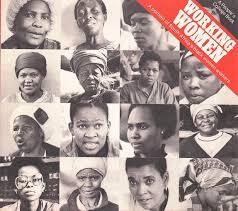
Shireen Motala: So, my responsibilities were essentially to continue the work with the trade unions and do similar work that I was doing because I worked in the FOSATU Education Desk. So, it was similar sort of work. It was working, I worked mainly on the union side in terms of helping build trade unions, train the shop stewards, work with local organisers and provide them with support, expose them to whatever literature there was that, they were that, you know, that could be. So, a lot of it was around developing manuals and then actually doing the training. I also, you know, I wrote a few booklets and things, which I think were pretty important in those days. Don’t have the copies of them. But one of the projects I did work on, which I remember now very clearly, was the work with Leslie Lawson. We did a book on women in trade unions. So, yeah, so it was a way in, it was a way of sort of working with communities.
Laurence Stewart: Yeah. Did you, was there any specific ideas that SACHED had about education which you incorporated into some of your work, the way in which you worked with workers?
Shireen Motala: So, I think it was about you know, the very grassroots of: how do you get an organisation going? How do you keep a union efficient? Financially able? How do you equip people who might come with lower levels of education with skills? So, it was about, I suppose, establishing some sort of alternatives in terms of how you did things, but also very strongly looking at the transfer of skills and how were you equipping people so that they could participate in all the structures within these huge trade unions and federations
[20:00 Minutes]
so that their, their voices were heard and acknowledged. Yeah, so I think it was, it was very much around that. I think it was also sort of the heyday of the NECC, so you know, parallel to that there was a whole move around people’s education and alternatives and what would that mean. So, it was, I can’t describe it. It was, I wouldn’t say it was low level work, but it was very practical, practically driven work around the development of booklets and then training a group of unionists in terms of how to manage things. How do you manage your finances? How do you manage meetings? So, I think it also maybe fit into the narrative in those days about what the purpose of unions were and some of the criticism that came up around FOSATU that you know, it was very workerist and apolitical almost, but I think given the times we you know, there was no time to do sort of political mobilisation. It was really yeah, just trying to work with work with communities and unions in order to equip them with some fundamental skills in order to allow them to work in democratic structures.
Laurence Stewart: And what were the unions that you worked with? Was it…?
Shireen Motala: So, we worked with MAWU, which was the Metal and Allied Workers Union. We worked with GAWU, which was the Glass and Allied Workers Union. I can’t remember the name of the food one, but there was a sweet food something that we worked with. I had to come from a very strong – strong is an incorrect word, but I had come from a fairly intense time of working, for example, with Jay Naidoo in Pietermaritzburg, and organising unions in Escort the food unions, Nestle and others. So, in some ways, the mentorship of Alec Irwin, Naidoo, John Makhatini, whoever was there in the leadership at that time, still sort of influenced you know, how we did things. There was a sense of some coordinated structure between… I think we all had our, political affiliations and while mine from a family perspective was within the Congress movement. At that time, I did work much more within I suppose whatever the worker movements were saying and doing. In LACOM, we had a you know, really nice…
I worked with Judy Favish, Madni Halim, who has passed away, there was a really good, strong community of sort of progressive, some of us had all come from… Judy had I think done a masters as well in England. We’d all come with an aim of committing and, you know, making a difference to community organisations. I think the exciting thing about being with SACHED is that obviously while we worked in LACOM, there was the broader SACHED structure. And you know, there was John Samuel, there was Enver Motala, there was Neville Alexander, there were a whole lot of sort of senior mentors who you met with, who were able to direct things. And I suppose one of my reflections about that time. It’s a bit like with the NECC, is while we developed some really good practices and developed really good alternatives in terms of how we’re working, I think the disappointment is that in the post-1990 to 1994 era, things got subsumed into preparation for governance. And a lot of the really rich experiences that we developed or whatever we did, publications, somehow got subsumed into the arms of government, which meant that a lot of that alternative working, and I just think of what was the – it was Learn and Teach, you know, there was Speak there was Work in Progress, there were a whole range of alternative opportunities to read, to reflect, which interestingly was focused very much on the community level structures.
Not on, you know, not on a journal creating debates. There was the Labour Bulletin which some of us wrote in but I think there was an expectation that somehow the NGOs, SACHED’S,
[25:00 Minutes]
the skills of LACOM would then be used in the next phase. But in fact, they didn’t. They just sort of disappeared into this notebook which was which was government. Which I think… We had a chat with John Samuel, because I’m doing another project with Linda Chisholm on the NECC, and that was one of the… Well, he said a few more things, but that was one of the criticisms he made. So, I’m working on another project on the NECC with Linda and a few other colleagues at UJ, and so yeah, there’s a bit of overlap between, but that’s very much focused on NECC and what we’ve, we’ve done about 20 interviews and we’re doing a publication. She was, Linda was very impressed with this project by the way. But we’re doing it on our own, we have absolutely no funding. We’re doing it like as academics trying to put together a book basically.
Laurence Stewart: I did go to her talk on the NECC.
Shireen Motala: Sorry?
Laurence Stewart: I did go to Linda’s talk on the funding of the NECC.
Shireen Motala: Yeah. So, I think it was a rich time because there were a lot of there were different organisations and entities, you know, trying to look at what an alternative education dispensation would look like. I think the attraction of SACHED also was that it was a broad church, so you didn’t – sorry, church might not be the correct word – but it did allow somebody like myself, who was, you know, most probably accused of being a workerist, but at the same time having some Congress affiliations, there was Neville Alexander and Enver, closer with the NEUM [correct acronym?] but in some ways there was a sense of common purpose. So, you know, it wasn’t a bit like the cabalist Congress movements where you were excluded if you didn’t follow a particular line. And I think that was certainly one of the big attractions of SACHED, that it did allow you to develop and argue and debate and discuss outside of acknowledging whatever your political affiliation was, yeah.
Laurence Stewart: Could you could you expand a bit on some of the debates? Like what were the debates within LACOM or within the broader organisation?
Shireen Motala: I think the big debate, sorry, my mind is rusty. It was a very long time ago. I think it was very much around what the alternative education system would look like. And how one would prepare for that. I think a very strong impetus was that the formal education system clearly couldn’t capture everybody in terms of their needs. So, the issues of adult literacy, adult learning which have sort of disappeared now were very much on the agenda. And I mean, if I reflect now and look at the failure of the PSED [post-school education] system, how poorly post school… You know, in some ways those opportunities for learning were provided by entities like SACHED but I’m not sure where one goes to, short of going to some private courses, you know has those sort of opportunities for learning. So, I think there was a lot of debate and discussion on alternative educations on what sorts of reading materials were appropriate. And a lot of discussions on sort of adult learning, or youth who hadn’t completed schooling and where they would fit into you know, yeah. So, you know, SACHED also had Khanya College, so that was like another avenue for young people to follow through in terms of post-school learning. Yeah, sorry my mind is not very clear.
Laurence Stewart: It’s ok. I just wanted to find out a bit about some of the – sorry It’s actually going back to what you were talking about a couple of minutes ago – about the kind of some of the theoretical underpinnings of the way in which you taught in SACHED. What was, was it like a Freirean perspective or what was the overriding?
Shireen Motala: Freire was, yeah. Freire was absolutely influential. I think, and particularly my friend Judy Favish, I think that was the main driving set of discussions and debates. I think the others that were not, were not in terms of teaching and learning as such,
[30:00 Minutes]
but the other sort of very influential theorists in those days were, you know, the use of Gramsci’s work, or Hannah Arendt obviously Marx so there were very strong influences, but some of that took us into the debates of the very well-used Marxist, you know [unclear words]. Arendt is about the world. It’s all about theorising the world. I can’t get it properly, but you know, it’s all about theorising, but it’s about change. About how do you change the world… I think Gramsci was attractive because we were all in that sort of space of who we were and the issue of intellectuals and who they were was a big issue.
You know, the debates around public intellectuals and organic intellectuals. And you can imagine that within the union movement and within the community movements like the NECC in those days, the issue of organic intellectuals was a big thing. So, I think those were some of the big influences of how we thought, how we thought. I think there was also a big debate about public intellectuals and how we saw our role. And it was a very sort of uneasy role because we all saw ourselves as activists, but in some ways we were also, had come from sort of fairly strong, developed academic backgrounds, and we all tried to be sort of research activists and academic activists. But within universities, when I got to Wits, I mean, certainly the space was not there to do that type of activism because you were then governed by university rules, as you know, you’ve got to produce your journal articles and do your thesis and do all sorts of things. So, I think the main thing about SACHED and LACOM is it provided the space to think, to reflect, to read to engage in a safe sort of space when things were quite repressive.
Laurence Stewart: Yeah. Interesting reflection. You mentioned, and this is just a slight change, but you also mentioned SACHED was a broad church in some ways. But were there any tensions within LACOM or between LACOM and the broader structure or even just about your, even though it was quite accepting with some of the perspective, with some of like Congress perspective…
Shireen Motala: Yeah. I think it must’ve been. I was a very young person then and I was not really involved in the leadership, but I think there were, you know, fairly intense debates, discussions and likely to be some tensions. I mean, Enver and John Samuel came from a very specific type of background. And then there were others who were sort of more mainstream and then I can’t remember if there were many who were sort of more closely allied to the Congress movement. But you know, I think that’s the issue about the pre-1994 moment, is that everybody had a common cause. It was about dismantling apartheid and working towards alternatives. So, I think for that moment, even if there were tensions and I’m sure there’s much more if you speak to John, he’ll tell you a lot more about this – even of the tensions of him working with ANC in exile and what their expectations were and what they were doing, what John and others were doing. So, I think those tensions politically existed throughout I was a bit far removed you know, to know the actual details of it.
I mean, a comment that John made when we met him the other day online, just a very brief interview because we’re following up on some of the NECC stuff. Was he said, “everybody makes a point that pre-1994 everybody was working to get rid of apartheid”. But he said in the sort of 1990 to 1994 era, he feels as though people should have negotiated much harder around what the alternatives would be. And he was using the example of the RDP and GEAR and others and how suddenly things got, you know, we didn’t push hard enough for more progressive ideas to take root. And so, we got into this sort of compromise situation of accepting what is rather than what could be. And I thought that was a telling
[35:00 Minutes]
moment on SACHED, LACOM, the NECC. How we dealt with the transition to democratic governance, the expectations of the post-apartheid education system, how, you know, for all intents and purposes, adult literacy has gone out of the window. Non-formal schooling doesn’t exist, as far as I know.
You know, we’re so preoccupied with getting schools working and universities functional, that in some ways, I think, that huge historical role that SACHED and LACOM played in terms of non-formal education has just never been replaced. Obviously, there was a funding dimension to this that as things got subsumed into government, funders then preferred giving money to provincial departments or to the national, rather than supporting alternative structures. So, I think it is a hugely, I think it is quite – in reflection – it is quite, I think there are always mistakes along the way and I certainly think the absence of an of a strong non-formal education sector is a huge limitation in South Africa in terms of how we want to provide meaningful opportunities for young people either in further education or in the labour market.
Laurence Stewart: I just want to go back a bit to your own personal relation with SACHED. So, you had initially been working in unions and done worker education. And then after you went into education policy into the Education Policy Unit. So, maybe just with those two points and then thinking about SACHED in between what were the ways in which you see SACHED contributing to your own growth?
Shireen Motala: I mean, I think there was a bit of a trajectory for me. Because you know, it was, so I think I straddled sort of, I don’t know how young people do it nowadays, but you know, straddling sort of activism and academic work and somehow trying to make the both speak to each other. And I think for me the work on my own research is very much on equity and funding and social justice issues, highly influenced by Nancy Fraser, John Rawls, you know, a whole lot of theorists in that way. But I think that if – I think one of the biggest challenges in academia is that we’re so distanced from the reality. We write, you know, about how things should be, but we actually don’t go and investigate in depth about, what’s going on in communities, or whoever we’re investigating.
So, I think for me, having that experience, both in the trade unions… Race Relations was an opportunity to hone my skills in terms of writing, although it is a very specific type of writing, but it was an important writing opportunity. Descriptive stats, descriptive things. And then, you know, working in SACHED and LACOM I think really shaped, you know, continued with the trajectory of working within sort of social justice, equity educational alternatives. And when I got to the EPU at Wits, I think those experiences really helped me understand because then for the next couple of years, we just worked on education policy and providing alternatives and looking at legislation and providing critiques of legislation. And we did something called the, one of the important publications we did in the EPU – this I’m talking very much between like 1992 to 1994 when I did… 1996, 1997, 1998 – was something called the Quarterly Review of Education and Training. So, it was like a quarterly review of what went on in education and training, both in schooling, non-formal higher education, but it came out every quarter. And it was also a really rich opportunity to provide both reflection and critique on what the new democratic government was doing.
So, I think SACHED and LACOM and working with those alternatives, more importantly, also working with strong mentors like John Samuel or Enver or Neville or whoever else was there really shaped, influenced and informed, you know who I became.
[40:00 Minutes]
And in some way, suppose I wasn’t a reluctant academic, but I ended up in academia totally by default. I mean, a friend was going to England and I had just finished maternity leave with my last child and I didn’t know what to do and he said, “come for six months”, and “just hold my post at the Wits EPU”. Interestingly, I then stayed on for like 12 or 15 years after that. So, you know, our trajectories are so – my son who’s like 27 at the moment is trying, is grappling with what his next steps were and I always say to him that we didn’t know what our next steps, so we just sort of got into things and things unfolded. My own training is not in education, it’s in sociology. So, you know, but I ended up being an educator for my PhD which was on education funding and school fees in public schools in the department of education.
Laurence Stewart: You mentioned strong mentors, could you just speak just a little bit more about that? How in, how some of the people you mentioned were strong mentors or even some of your colleagues like Judy Favish or?
Shireen Motala: Yeah. So, I think working within the collective and working within a strong community of people. What they would now fashionably call at universities, “communities of practice”. COP is, it was really important in terms of my own development, in terms of learning. So, Judy came with a very strong sort of Freirean approach. So, it was not just doing the practical, it was also reading, understanding, applying what we’d learned theoretically in the practice of what we were doing. So, certainly she was quite influential. And then within the SACHED structures; I think there were people like Jenny Glennie there who are strong administrators, but that was also a big learning experience because I think if we look at what’s going on now the administrative infrastructure organisations have to be really strong and credible and transparent. You know, I watch her sort of doing what she did and she did it so excellently. And then obviously just watching sort of the rich – so while we were doing all this grassroots organising, you know, listening to Enver and Neville and John and others just discuss and debate and challenge us on what we did and how we understood things was a hugely learning experience. I think that’s difficult to find nowadays.
Laurence Stewart: Yeah. And that debate, did that kind of, was that a symbol of the culture of SACHED?
Shireen Motala: I think it was. I mean, it was often just, yeah.
Laurence Stewart: Or would you characterise it another way?
Shireen Motala: I’m not sure. Yeah, I think it was, but obviously again, I remember going to the big meetings or workshops or our own sort of conferences somewhere in the Eastern Cape and, I don’t know why Steve Tshwete was there but he was there. It was just Sheila Sisulu very influential worked closely with her. So, just listening to how things were unfolding and have an opportunity to just listen in, but also an opportunity to challenge if you didn’t quite agree. I think the thing with somebody like Enver or Neville, they came with such strong theoretical backgrounds and such informed positions that I think that in itself was a huge learning, back to the practice of what we were trying to change and do. So, I think it was a unique moment in history. I mean, I hope all of this… I hope this whole project produces a really rich volume of things. You’ve spoken to John Samuel many times.
Laurence Stewart: Well, it was, in fact, he was interviewed by Louise, and everybody wanted to interview him, so they did it.
Shireen Motala: Yeah. So, he’s still a really rich repository and I mean we’ve just interviewed him once, although I know him reasonably well. But you know, he’s still reflecting on things. So, you know, we did the NECC interview, and then he called us up and said “I have another thought” about you know what happened and how we negotiated post-1994. Maybe we did too little in terms of you know the democratic and progress maybe we gave them too much. So, I think he is still a rich resource. I think Enver is excellent because Enver has an amazing memory of the history of things. Yeah so, I would say that even if Louise has done them, there’s no harm going back and probing a little further.
[45:00 Minutes]
Laurence Stewart: Okay, I have basically completed my questions but I mean, you have reflected on some of the things that are missing in the present – which was something I wanted to ask – but also, just about while you were there, were there any particular moments that, like, a key moment that, that, that you remember like, I don’t know if there were any for you, but in terms of…
Shireen Motala: You know, from what I remember most was there were some big gatherings. I don’t know… Where all the SACHEDs would get together across the country. I remember those events reasonably well because they were so rich and you were meeting people from other provinces and there was a lot of debate and discussion. It was about like setting the strategy for the next phase of whatever we were doing. So, that I think and you know all these leading lights who came and, you know, you were a bit in awe of it, so, but that was, that stood out for me and that I remember quite clearly. I think my own, the strength of the group that we had with Judy and Madni, I can’t remember the other.
Was it Maxine Hart? I can’t remember. Maybe it was Maxine. You know, the group we had within SACHED within LACOM, who worked and evolved and tried to change things and met regularly – was I think quite influential and that I have strong and good memories of that. The last is just the, I think it was almost just before I left, that project I did with Leslie Lawson on women in trade unions. I think it was really quite influential. I was just about to have my second son. So, I remember the year very clearly. It was sort of ‘88, ‘89. So, because he was born in 89. So, you know, I remember that project as being a really important project that Leslie and I worked on women and trade unions. I don’t know where that publication is. I’d love to look at it sometime. But it was both. She was a photographer, so it was both pictorial and you know, I did the, the writing.
Laurence Stewart: Is it not called “Working Women”? It’s not called The Working Woman?
Shireen Motala: I’m not sure, but it’s got a lot of pictures.
Laurence Stewart: I have an extra copy of it. We, maybe if, I’ll send you, when I get to the archive, I can send you a picture.
Shireen Motala: Yeah, maybe you can drop it off or we can…
Laurence Stewart: Sure.
Shireen Motala: Yeah, yeah. It would be great. If you can keep a copy for me and we can sometime fetch it.
Laurence Stewart: Yes, no problem.
Shireen Motala: So, I think that was what the sort of the moments
Laurence Stewart: You mentioned just some of the things that LACOM did, and I won’t keep you much longer, don’t worry. But you mentioned some of the projects have been quite influential. Which one, which particular, or what were the ways in which you saw yourself and your team in LACOM as being influential?
Shireen Motala: Well, I think we certainly provided a very strong and very good support. So, I didn’t work on the community side at all. Madni and others worked on that. I worked on with the with unions. So, certainly in terms of providing unionists with sort of basic organisational skills I think it was quite influential and quite important. I’ve often wondered what happened subsequently, do they still do that in trade unions or whatever? Because remember you’re dealing with young people or older people who came with a fairly low level of education, but at the same time you wanted to transfer some skills and allow them to be able to participate meaningfully in their organisations. I think that was, yeah. The other big thing that always struck me, which I don’t know what there is now is the issue of reading materials. Because whatever we did you know, even though they were small booklets, I think they were quite influential in helping people read, understand, provide vehicles for learning. Which were lots of pamphlets and slogans and whatever, yeah.
Laurence Stewart: And that also links to some of the more like bottom-up perspectives and kind of, Freirean perspectives.
[50:00 Minutes]
Shireen Motala: Absolutely, yeah. I did in 19… I’m just trying to think the years are a bit messy at the moment. I think in 1985, I went to, I had a sort of British Council Fellowship, which was divided into two parts. And I went to Ruskin College in Oxford, which specifically does training for trade unionists. And that was sort of quite a rich opportunity in terms of just honing my skills and listening to what people are doing. So, there was sort of a trajectory of, you know, learning and then applying.
Laurence Stewart: Oh, so you had been in the unions then you went…
Shireen Motala: It was like a three-month course. I was in the UK in the late seventies for about two or three years. And then came back and spent some time there and then everything’s sort of thought about in terms of the family time. I got married in 1984, and then we went to England for a year.
Laurence Stewart: Ah, okay. And that’s, and then you, after this training, you went to SACHED, so perhaps it…
Shireen Motala: Yeah. So, then I did that three-month course at Ruskin College in Oxford, which was specifically for trade union related people. So that was good. I mean, the only other thing to say, which I don’t know if it’s relevant or not, but I had very young children at that time, between ‘86 and ‘89. So, without making it sound opportunistic, or say it in the wrong way, but I did have young children. So, also SACHED worked well for me. Because, I lived in Mayfair, I used to take the bus into President Street, I think every day, at like 9 o’clock, and worked at the SACHED offices there and then got home. So, I suppose from that sense, it was quite a, it was a good employer as well. You know, it acknowledged that we were mothers and had other responsibilities. And Judy and I had sort of kids who were sort of similar age. All now like in the late thirties, so.
Laurence Stewart: Okay, let me not keep you much longer. I think we allocated about an hour we’re almost there. I don’t have much more to ask if you have anything else to add.
Shireen Motala: Not at the moment. Just to say that, you know, if I do think, and if I get that transcript from Judy, I will certainly send it to you. Because I think we’re all sort of trying to brainstorm what our time LACOM was like. I’m sure she has it. She’s very efficient. But she’s been in hospital, so I’ll just wait a week or two. Or I’ll look myself and see if I have it. I think this is an incredibly important project. I think anything that captures history is so necessary in terms of how we understand where we are at. So, I think it’s a really important project. I think I hope you’re able to capture all the older people slightly older than me. You know, I think that’s really important because just capturing those histories is really important. I’m not sure whether there’s a part of the work which is sort of more archival or more traditionally, are you doing other things like looking at newspaper clips or going into the history archives or?
Laurence Stewart: Well at the moment we’re assembling archives. So, we’re trying to just create like capture all of the different kinds of SACHED archives be it administrative documents or the newspapers SACHED produced. We’re just trying to assemble an archive at the moment. Do you have any documents that you kept?
Shireen Motala: No, I don’t but I was just thinking you know, I was in… I’m involved in another project with Salim Badat which is on the history of South African universities. And we just had a meeting the other day and most of the people who were there were, you know, either historians who were studying or historians or archivists or library people. But they’re all sort of writing about this, the history of, but it was just fascinating, you know, people were going back like to the 1930s and looking at legislation and really tracking… The number of influences that got to create what became Fort Hare or whatever it was called in those days. So, I suppose assembling the archives is important, but also, SACHED existed in a historical context. So maybe…
Laurence Stewart: No, you’re right. Yeah, the project is a long-term project. It’s not just the, I mean, this year is the year we’re doing this, but it’s supposed to be a five, at least five-year project where it needs to, it needs to grow into something more, which can also speak to the present more and so on. We’ll get there.
Shireen Motala: But I think even just capturing the history is important. Because often we’ve lost sight of the history and what it meant. And nobody’s actually doing a lot of history on the recent past. So, you know, from like maybe 1970 onwards. So, I think there’s a really rich opportunity to fill that gap. And yeah, I wish you well in in this project. It sounds amazing. And more than that, I wish you well in your studies. I’m sure you’re going to make some huge waves somewhere.
Laurence Stewart: Yes, thank you Prof.
Shireen Motala: And when we meet to, when you give me the Leslie Lawson book, we’ll have a cup of coffee and chat further.
Laurence Stewart: Alright, sure thanks Prof. Thanks for the interview as well.
Shireen Motala: Thanks, I’m around. I’ll check with Judy about that transcript. And if I can find it, I’ll send it to you. But yeah, do keep in touch and let me know how it’s all going.
Laurence Stewart: Alright, thanks Prof.
Shireen Motala: Okay, bye.