Tamara Shefer LACOM Piece
-
by

Reflections on LACOM from the 1990s
Background
I joined Lacom in the Johannesburg Office in 1990 (I think January) which at the time included Judy Favish, Coco Cachalia, Mudney Halim and Gugu Ndebele (who started in her position at the same time). I transferred to the Cape Town office in early 1994, around first democratic elections time, and left in September 1994 when it became evident that Lacom was going to be closed down. Shortly after other staff, including Tony Sardien who headed up the Cape Town office then, were retrenched. I moved at this point to UWC CACE and continued my work on gender and anti-racist pedagogies for some months until I was offered a permanent position in the Psychology Department at UWC and later moved to Women’s and Gender Studies (WGS), then a programme and now a department in the Faculty of Arts and Humanities, UWC.
How I got to Lacom/Sached
I had become active in anti-apartheid struggles during the early to mid-eighties while a student at UCT, working in the NUSAS student movement and other parts of the mass democratic movement, and been a part of the UDF and UWCO as well as worked in mental health organisations like OASSSA and DPSA, counselling ex-detainees and torture survivors. I was an active member of Rape Crisis as well which had introduced me to feminist thinking particularly intersectional and postcolonial feminist approaches which I continue to work with in my university-based work today. Although I did my MA in Psychology and received a 3 year junior lecturer position at UCT I was ambivalent about an academic career and wished to do work that was with communities and around community-based and public pedagogies. I applied to two positions in Johannesburg at the beginning of 1990, one at a university and one with Sached and when offered both, it was an easy choice for me to join Lacom as I was very excited about working with women workers and engaging in grassroots educational and activist work.
Particular projects in Lacom
My job portfolio when I joined Lacom, Johannesburg was Gender researcher and trainer, I think a new position and focus which I took up for about two years, from 1990-1992. It was a time of burgeoning mobilization of women in the unions through the development of women’s sub-committees and forums and a call for women to develop separate structures to ensure that unions make demands around issues that particularly affected women workers, such as parental leave, childcare at work, women’s leadership in the unions, sexual harassment at workplaces, amongst other (see article in SPEAK in 1990, which gives some sense of this time).

In summary, I was involved in research, education and publications for and with women in labour organisations, mostly the Women’s Forums in COSATU-affiliated trade unions, including:
Commissioned research on various issues such as childcare, affirmative action, etc.;
Facilitated leadership skills workshops and the development of related learning materials;
Documented trade union and general women’s activities in journals and magazines including SPEAK, South African Labour Bulletin, AGENDA, Work in Progress (as in one example below in the South African Labour Bulletin);
Coordinated a collective publication on women in Cosatu;
Presented and participated in a range of workshops and conferences on gender and women’s issues, including a three-week study on women/gender and organisation in Canada, funded by South African Education Trust Fund and the first national Women’s Conference in Durban in 1991.

At some time in 1992, Lacom underwent some large re-organisation and my position was changed to that of Curriculum/Material Developerfor an emerging Lacom project which was the development and implementation of the Basic Course for Adult Educators (BCAE), which I undertook form 1992 – Sept 1994. The BCAE aimed to develop and carry out a basic level training course for popular educators in the trade union and civic movement in order to develop capacity within the union movement. This involved in the following:
Curriculum development and materials development;
Coordination of editing, lay-out/design and printing of the learning materials;
Facilitated pilot training courses in 1992 and 1993.
Some major highlights
There were many highlights and also many challenges related to carving out the gender project in LACOM which I also shared with Gugu Ndebele, who was active in related and other areas, and we also worked together on a number of projects such as workshops/training as in the example below.

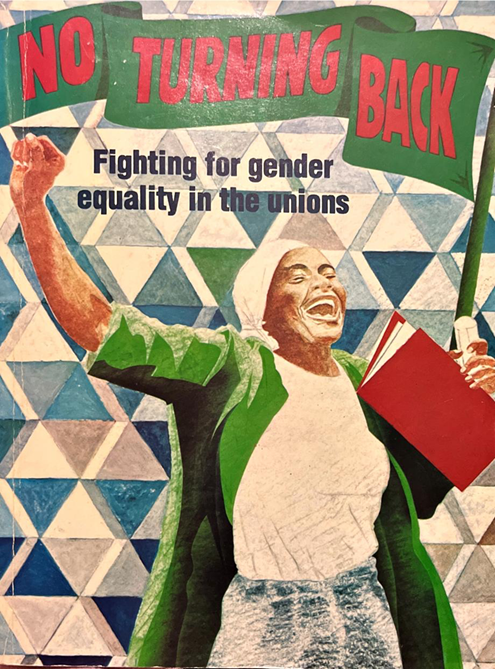
One outcome from my time with the women’s project, which I feel was a key achievement, was a collaborative book project written about women workers and their challenges and struggles in the union movement. I was so privileged to work with a group of COSATU women leaders, Joyce Kgaoli, Maggie Magubane, Bridgette Makutu and Refiloe Ndzuta from the Cosatu Wits Women’s Forum and Karen Hurt, an editor of SPEAK. The book was collectively developed with a collaborative generation of foci, chapters, as well as the title and cover design. The book was called No turning back: Fighting for gender equality in the unions and was a co-publication of Lacom (Sached), SPEAK and the COSATU Wits Women’s Forum.

Key debates, issues of contestation and challenges
Contestations and debates around representation and a critique of the representational and extractivist nature of research including gender work emerged around the time I began working at LACOM. I attended the Conference on Women and Gender in Southern Africa that was held in Durban in 1991 and a huge debate emerged therefore which felt really important for gender justice activism and scholarship. At the time, given the racial capitalist context of South Africa, many of those working on gender issues were white middle class researchers, doing research ‘on’ black, working class women. This moment shifted the imaginary with far more reflexivity developing, which is in current decolonial contexts becoming ever more important. I wrote about the conference in Work in Progress with Sybille Matthis, a visiting activist/researcher from Europe who was working closely with women’s activist organisations in SA.
Impacts on personal career and contributions to social justice efforts in SA and in educational contexts
As someone who has now worked in higher education, located in a Women’s and Gender Studies (WGS) Department at the University of the Western Cape, for nearly 30 years since I moved from Lacom to UWC (first to CACE as a gender and anti-racist educator and then to the Psychology department in a lecturing position before I began teaching in WGS), my work in Lacom in many ways has shaped my career outcomes and my commitments from an early point in returning to the university as well as in respect of reconceptualising scholarship towards social and gender justice goals. I continued to do popular educational work not only in the kinds of pedagogical practices I engaged with students at the university, but also through additional community- and organisational-based work such support groups for women, gender training and ‘mainstreaming’ workshops and curriculum, courses on postgraduate supervision, amongst others, all of which draw on the kinds of participatory, non-didactic methodologies we worked with in Sached.
My work in Lacom, and the close collaborative work with women worker leaders and trade union leaders who were taking women worker issues foreword was really inspiring. I feel that I gained a huge amount of insight about the multi layering of oppression that I had been learning about in the university but that is so much more than the words in journals and books. Witnessing the resilience of many working class women, facing so many multiple loads, and yet dedicating their lives to change, not only adding a burden but also opening up great risk to themselves given the violent state we were living in, was life changing for me and shifted my optics for ever. While I am deeply aware of the many blind spots I have, given my own situatedness, personal history and subjective material life, I see differently to how I might have seen and once certain optics are opened up they always hopefully filter what we see and what we do.
I also learned some really important, hard lessons of facing and working with and my own white and class privileges and confronting the complexities of power when doing research or education or working in collaborative ways with people across differences. I remember one particularly painful experience where I was reminded, through a direct calling out of my white privilege and ignorance, of the problematic nature of white, middle class patronage and the relations of power and privilege that ‘helping others’ is embedded in and sustains. I have taken such reflexive thinking into critiquing scholarship on young people and sexuality over the last decades that I also researched, and have indeed been writing about the way in which such research has reproduced classist, racist ‘othering’ while reinstating gender binaries, even when it sought to challenge this.
One of the most valuable lessons I learned in Lacom work was to develop alternative languages for pedagogical engagements, both oral and written. I recall that it was very difficult to learn to write and facilitate training in a more accessible vocabulary since I had been schooled in the obfuscating languages of the university. This period opened up my engagements with popular education and gender and anti-racist pedagogical work and was especially solidified through writing for the collaborative book and articles for SPEAK. Working with some of the SPEAK editors , in particular Karen Hurt through our collaboration on No Turning Back but also Shamim Meer, was a great source of mentorship for me in this respect. I also greatly valued the popular educational workshops that CACE at UWC, led by Shirley Walters, were offering on gender training at the time and that I attended during this time. Finding my voice to say things in a way that is readable across differences but that did not simplify the complexity of issues was such an achievement for me personally. Though, to be honest, this remains a challenge!
Contributions and current relevance of this work in contemporary SA
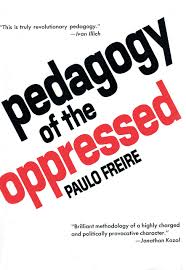
More and more in current times, I find myself and others coming back to the work of Paulo Freire, bell hooks, and other decolonial, Black feminist, anti-racist and other critical scholars that I first engaged with in and through the work I did in Lacom. bell hooks, who sadly passed away recently, wrote that ‘the classroom is the most radical space of possibility’ and I have heeded and cited these words often, and it has informed my pedagogical and research practices ever more in contemporary contexts of the university. Current decolonial student activism, notwithstanding earlier efforts to ‘transform’ has placed more urgent demands on the university to radically reconceptualise the dominating eurowestern colonial and patriarchal logics of academia. This means addressing the long project of researcher or scholars as ‘expert’ and authority over and on ‘others’ and the turn to participatory, collaborative ways of working and centering knowledges of those marginalized which were already so normative and promoted in the work of Lacom and other projects of Sached. The philosophies and praxis that were engaged during those years in working with and for change, both at interpersonal and organisational levels, is I think becoming ever more significant and being mobilized in creative and productive ways in some current contexts of education, both in institutions and the larger spaces of public and online pedagogies.
Tamara Shefer, Cape Town, June 2022