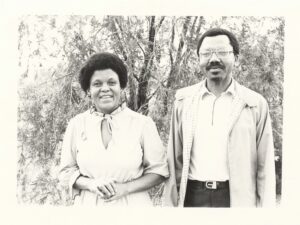
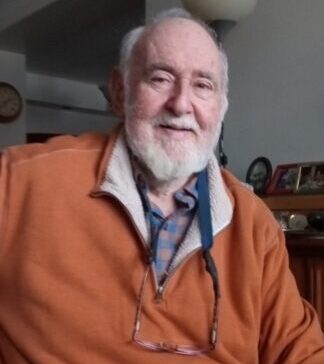
Interview with David Adler and Josie Adler, 30 11 2023
-
by

“The regions questioned the move to offer registration at UNISA which was considered an apartheid institution, a proponent of Christian National Education, especially in its teaching courses. And how could we also break the ANC-led academic boycott, the international one? Suddenly a person called Reverend Steele arrived at our offices. Reverend Steele was in fact an ANC member in the UK. He brought a message from the ANC to ask for clarification as to why are were breaking the call for an Academic, Cultural and Economic boycott? We explained our position, with emphasis on the dilemma facing students needing qualification and the possible withdrawal of the University of London from external registration of students. We also demonstrated the strength and extent of student support. The Unisa qualification was accepted in South Africa and particularly by employers and students who saw it as better than the poor quality and racial bias of the Bantustan institutions. Very conservative reasons, but you know, maybe just to say that Theo and Anne and I and some people like us had a longer vision of change in South Africa. And we never quite achieved that.” (David Adler)
Dave’s clothing at the time [in Bophuthatswana] was criticised by officials. From the 60s Dave had worn Swazi shirts and when he left teaching at King David School he stopped wearing a tie and a jacket. He wore his Swazi shirts everywhere. It emerged, when Prof Laurie Schlemmer did the evaluation of the BTUP, that people there, who would come to meetings dressed in suits, didn’t like it that Dave came wearing Swazi shirts. (JosieAdler)
Laurence Stewart: Okay and of course I just need to get consent that this can be recorded and then transcribed.
David Adler: Yes.
Josie Adler: And that Dave can see it before you make use of it.
Laurence Stewart: Yes, especially with the conversations we’ve had, no problem, yeah.
Josie Adler: Because it inhibits free talk if one’s aware that things are recorded and going to be used without being edited.
Laurence Stewart: That’s fine. I might just take a bit of time to… Hopefully I could give it by mid-December, but I’ve got a lot of transcribing to do.
Josie Adler: He hasn’t managed in two years, so [laughs]
David Adler: And I’ve got at least two years, uh, three and I’m going to die only in about two years-time, so you’ve got time.
Laurence Stewart: [laughs] Alright. Tongue in cheek. Ok, so I’m going to conduct it as a life history interview. Basically, um, asking questions with the timeline of your life and then related to SACHED where it fits in. So, I wonder David, if you could if we could just start a bit on your early life. Your parents, where you grew up, your schooling, and some of your early influences.
David Adler: Born in Johannesburg, 1941. Parents were from Lithuania. Came in about what?
Josie Adler: Thirties.
David Adler: In the thirties. He came, my father came from Lithuania to be a tailor and get married. I don’t know much about the history. If you want to know more about it, you can contact my brother, whom you probably know or know of, Taffy Adler. He has collected some more history than I have. It is rumoured that half the family in Lithuania were revolutionaries and the other half were horse traders. [laughs] The horse traders stole from and sold horses to the Nazis, to the Germans and to the Russians. The revolutionary side were Bundists- the most active aunt who was urgently dispatched to South Africa.t. She was quite active in the Communist Party in Lithuania, which is why they sent her urgently to South Africa. Here she became a strong trade union member/activist. She married Michael Harment who became the Secretary General of the Communist Party..
Josie Adler: She wasn’t Ray Alexander or Ray Simon. She was Ray Harmel. There are other Bundists.
Laurence Stewart: Ok.
David Adler: My father, also a Bundist, never became a tailor. He worked mainly as a ship and house painter, and running cafes and food shops.. His last job was a parking attendant at Wits University. We were brought up not in poverty, but not wealthy either. In Johannesburg we lived in suburbs like Judith’s Paarl, Bertrams and Troyeville.Later my parents were able to move up – to buy a house in Bezuidenhout Valley.
Josie Adler: And you spent your early years in Durban where your father was painting ships.
David Adler: So, in my first few years my father was a painter on the Durban harbour painting warships.. And then he ran his cafe in Durban and then to Johannesburg Johannesburg.
Laurence Stewart: Okay.
David Adler: I think there was no choice in my life or for my siblings other than to become politically involved. Our immediate family on the paternal side , was involved in politics, the Communist party particularly and members of the early ANC. Winnie Mandela was “my aunt” and I used to call her Auntie,” Aunt Winnie” and Nelson was Uncle, “Uncle Nelson”. It was like that.
Josie Adler: Dave’s father Sydney’s sister, Ray Harmel, was married to Michael Harmel, who was Secretary General of the Communist Party. Their daughter was my cousin Barbara Barbara. Michael became the first person to be banned and house-arrested for 24 hours per day. He and Ray went into exile.
Note : (https://www.presidency.gov.za/michael-alan-harmel-posthumous)
[05:00 Minutes]
Michael, with others in the Communist Party, had a profound, strong relationship with and influence in what became the top ANC echelons . Mandela and Winnie visited at the Weinbergs and the Harmels in Orchards, so as a youngster Dave grew up in that bed.
David Adler: It was Michael, also Helen Joseph. Another thing to mention is that Govan Mbeki tasked Michael to train Thabo and his brother, Moeletsi on Govan’s behalf. That’s written about in Mark Gevisser’s book.
David Adler. And all I’m saying is, there was no miracle in my becoming politically involved. It was breakfast, lunch and supper in the family. I attended Athlone Boys High School, which was a tough boys school. Fights in the neighbourhood and fights in the school. Fortunately, we didn’t have guns in those days but we did have knives and chains
Laurence Stewart: Just to interject – I grew up in Bez Valley.
David Adler: Oh, yeah, right.
Josie Adler: What street?
Laurence Stewart: High Avenue.
Laurence Stewart: Oh, okay. But if you just go, I know Athlone Boys… Athlone Boys very much still like that today.
David Adler: Yeah. All right. So, okay, so you know, you know the neighbourhood and you know the kind of… To move into Bez Valley, which we did, was a step up in our social status.
David Adler: When I got to university, once again, I had no choice. I was taken up by the left and became involved in that group.. Politically, I, with people like Essop Pahad and Aziz and others, created the Human Rights Society (of which I became chairperson) which was regarded as the most left wing of the campus student groups.
Laurence Stewart: What year was that?
David Adler: 1960.. I became Regional Secretary of NUSAS while Adrian Leftwich was President, then I was Vice President for International Affairs while Jonty Driver and then Maeder Osler were NUSAS Presidents.
Laurence Stewart: Ok, okay. Okay…
David Adler:
After Wits I went to the Johannesburg College of Education, where I was still a NUSAS official, and I was on the SRC at the College. I think the most important part of this is that I never got my teacher’s diploma. The reason given for its being withheld was that it was that I failed to complete the course requirements. Actually it was that I had contravened the signed contract with the Department of Education which provided that a trainee student could not publicly criticise the Department of Education or the government. . Of course, in my capacity as a NUSAS vice president, I did that so I became obliged to repay, over many years, to the government the bursary for my time at the College of Education.
[10:00 Minutes]
David Adler: I always wanted to be a teacher, it was my destiny, I was never going to be anything else.
Laurence Stewart: Yeah [laughs]
David Adler: So, yeah. I’m not going to mention Taffy or my sister or anything like that if you want the details on that…
Laurence Stewart: Unless they had any influence on perhaps your focus on education or?
Josie Adler: I think, if I may add something. His father, and in the Jewish families in and from Lithuania, the teaching is done through family. It’s social, so although, particularly boy children are supposed to go to the Jewish school, the Cheder, Dave’s father was supposed to become a rabbi, the teaching of values and of a life lens was very strong through Dave’s father. And then of course through his uncle and aunt, Michael and Ray Harmel
Josie Adler: So, you have people around you who, whose influence becomes like chicken soup. Dave’s Weltanschauung, and don’t say this anywhere, an overdose of empathy.
Laurence Stewart: Okay.
Josie Adler: In his DNA.
Laurence Stewart: Okay. You don’t want that transcribed, you say? [laughs]
Josie Adler: Well, I’m not being interviewed [laughs]
David Adler: As a consequence of not holding official teaching certification I could only teach in private schools and I was lucky enough to be supported by Professor Robert Birley (later Sir Robert Birley), an English educationalist who was headmaster of Charterhouse School, then Eton College, and an anti-apartheid campaigner. He had been in charge of the deNazification of education in the British zone of Germany after WWII. He was an inspiration and strongly motivated many in South Africa, like Alan Paton and people in all sorts of activities as well as students, encouraging the lighting of “lots of little candles”, many diverse small projects to keep light shining through bad times. Prof. Birley arranged for me to secure a post at St. Martin’s School, Rosettenville.
Josie Adler: After some years Dave took up a post at King David High School, a Jewish private school in Linksfield, teaching history and English.
[15:00 Minutes]
During this time, while I was at Wits, and a member of SAWCA (South African Work Camps Association), a multi-racial, left-leaning student group from the 50’s, maybe earlier, which collapsed under police harassment.
In the next years South African Voluntary Services (SAVS) was started at Wits by Peter Safffery (son of attorney Ruth Hayman (m.name Lazar).
While Dave was teaching at King David both he and I became volunteer chaperones to high school students in the Witwatersrand Youth Voluntary Service (WYVS) a work camp organisation Josie’s younger brother and his friends formed (modelled on the university students (multiracial) (SAWCA. WYVS high school students built classrooms on farm schools in their holidays, and worked to assemble desks in a weekends desk-building project that Dave designed and established on Mildred Canin’s farm in Kempton Park. . With support from the Dooley sisters over 4000 desks were supplied to Soweto schools. Some were still found in informal settlement schools after 2000!
Since Dave was employed at King David both the school and the Jewish Board of Education were alert and hostile, and watching us very closely. It was not very long before the Board of Education refused to allow Jewish students to participate in WYVS activities.
David Adler: Is that enough? There are always little stories.
Laurence Stewart: Yeah, it’s all good.
David Adler: One of my portfolios while in NUSAS was SACHED.
Laurence Stewart: Okay.
David Adler: SACHED had already been formed, so I’ll go back to how it was formed in a moment. I sat on the SACHED committee and continued to do so from then on. SACHED had formed an arrangement with a Johannesburg correspondence college called Britzius College. Britzius offered courses for the British O Levels and A Levels. This coincided with SACHED’s objectives- to train people for O Levels and A Levels. So that’s why I was associated with SACHED, first as the NUSAS representative in SACHED. Further SACHED students were NUSAS members
Laurence Stewart: Yeah.
David Adler: In 1958, the Extension of University Education Act was introduced, passed in 1959, which excluded blacks from attending the” open” universities. There were nationwide campus protests. Wits Senate and Council were very active in opposition to this serious attack on academic freedom and the apartheid government’s introduction of university apartheid. Marches through the streets of Johannesburg were led by the chancellor**see Note and the vice-chancellor and the Students Representative Council. Similarly protests took place at the other English-speaking universities. South Africa gained international recognition.
**Note: Wits Chancellor (from 1949) was Judge Richard Feetham (father of Anne Yates (Welsh, born Feetham). He opposed legislation prohibiting the admission of Non-White students to White tertiary institutions. He also played a leading role in the conference between senior members of the Universities of Cape Town and the Witwatersrand, Johannesburg, which led to publication of the booklet The Open Universities in South Africa (1957). He resigned from the position of Chancellor in 1961 and from the University Council two years later.
One of the responses in NUSAS was the SRC president’s meeting with academics and church people to examine what to do other than protest, and about the particular situations of black students now evicted from their places of study. NUSAS President at the time was Neville Rubin, whose name you may know. He was part of the liberal/radical left in Cape Town. In the new-SA the government awarded him The Order of Luthuli in Silver.
[20:00 Minutes]
David Adler:At this time, Richard Goldstone was the SRC President at Wits.
His proposal was that a group set up an alternative education system operating on a correspondence basis with support from academics. The aim of the project was to achieve a degree from the University of London. Those who did not have entry requirements would be coached first in the British O and A levels. (A full description of this is in The South African Committee for Higher Education (Sached) Trust by E.P.Nonyongo – herself a SACHED graduate.)
Anne Welsh, an economics lecturer at Wits University, was approached to get the project going. (See **Note above re Anne’s father, Judge Richard Feetham . Anne’s then husband, Rex Welsh, was acknowledged as South Africa’s most distinguished practising advocate As honorary secretary of the Rhodes Scholarships in South Africa he steered the abolition of the colour bar in the awarding of electees.
Two prominent Wits academics who actively supported Anne in setting up the project were Professor “Copper” Le May (politics) and Professor Etienne Marais (history). In Johannesburg, there was a strong relationship with the St Mary’s Anglican Cathedral since Anne was a strong Anglican and attended services at the Cathedral. The Cathedral was very helpful to SACHED, making available a room for students, and in time the chairman of SACHED was Archdeacon Dick Yates (Anne’s second husband, after her divorce in 1971).
Anne’s skill in managing these tensions was remarkable and necessary during the establishment and management of the SACHED regions.
In Cape Town, having its own very unique political and social climate, the maintaining of an equilibrium through all these times and projects was key. Lead people in SACHED Cape Town included Lindy Serrurier (later married to Francis Wilson, the economist), Dot Cleminshaw (later awarded The Order of Luthuli in Silver for her activism), and, after his release in 1974, Dr Neville Alexander, Robben Island political prisoner for ten years, Director of SACHED Cape Town from 1981, (later awarded The Order of Luthuli). In Natal, Anne Moore was regional director. When I was banned in 1978, Anne Moore together with Jenny Glennie (manager of SACHED Materials development Section in Johannesburg) assumed, with fantastic competence and loyalty, responsibility the role of joint directors of SACHED until John Samuel was appointed. That will come later.
International recognition of the opposition to the EUEA legislation resulted in prompt support and funding from international student organisations (primarily World University Service (WUS) and International University Exchange Fund). (See Attachment : Working with WUS in South Africa in the 60s and 70s, by David Adler). These organisations set up a fundraising project for SACHED under the title “A Candle in the Night”. SACHED funding sources increased and expanded and were sustained to fully support the many and diverse projects over the next six decades. A couple of small organisations set themselves up e.g. The Friends of SACHED, for example, in London, who were very supportive money-wise.
An occasion to remember was when I visited Anne at her home ( as the NUSAS rep to SACHED) one evening, she said, here are some people from Oxford, “from the university movement”. And they had put a bag down that was full of money. And that was from the World University Services’ support.
Laurence Stewart: Smuggled in?
David Adler: Yeah. It was smuggled. It was just brought in a bag. Ja.
Josie Adler: And then you got a telegram in later years, also in the sixties, with the message that the flowers were arriving in Swaziland. And that was from IUEF before…
David Adler: The flowers were a person – IUEF Director Lars Gunnar Eriksson, with a cheque, which I smuggled through the border to South Africa, in my shoe, between two socks. The Security Police searched Theo and me, but could only nab us with three banned books, for which we were prosecuted.
Two significant elements now emerged which continued and grew throughout the life of SACHED – the strong academic, personal and group support (in study centres- the first at the Cathedral and the British Council in town, then in Soweto – for each student to overcome the isolation inherent in correspondence education (and study at tables, with lighting), and, secondly, the conflict about the ideological premise of the programme.
The SACHED study centre system where student groups had tutoring and personal support, became recognised as a powerful model by the British sociologist Lord Michael Young, who introduced it into the Open University Planning. Later the concept was adopted by the University of South Africa (UNISA).
While there was agreement for the concept of SACHED there was contention concerning its ideological intentions. It was perceived by some as a timely and opportune moment (the Sharpeville massacre was in 1960) to build a revolutionary resistance movement. Others saw it in a developmental context, education with qualification to produce leadership and skills for a new society. This tension was present and surfaced, in projects and in regions, in different ways, from the outset to when I was banned and left my position in 1978. My understanding is that it became even stronger and more radical in the following decades..
At the time of SACHED being conceptualised and the project being set up, there were also differences of opinion among academics. Some said the idea was no good, that it was not feasible to enrol students to study O levels, A levels and British graduate degrees, that the local students wouldn’t have sufficient support to achieve these levels.
David Adler: Why I’m saying this Laurence, is because when we talk about some of the activities of SACHED and Turret College and their other projects, you’ll see that criticism about the ideologies implicit were reflected. The Bophuthatswana Teacher Upgrading Project (BTUP), for example, was attacked by SACHED regions for its perceived support for Mangope and the Bantu homelands system.
Laurence Stewart: Yeah.
David Adler: The first, central office for SACHED was Johannesburg, in two small offices in Downing Mansions, which was Corner Eloff Street and Klein Streets. Naomi Wallis followed by Maud Malaka were Anne’s assistants.iL
David Adler:NUSAS set up a tutorial system at Wits, serviced by anybody who wanted to assist black students, who came to the campus.. And I recall thatAlan Murray, the then president of the SRC, brought Thabo Mbeki to study.
[35:00 Minutes]
David Adler:
The ideological tension I have mentioned also appeared among the students at the study centres. There were radical students who wanted to SACHED students to be in a radical, activist movement, revolutionary, as small as it was, I don’t know the numbers offhand – I think Evie may talk about it in her dissertation. I There were two students, maybe their names were Ben and Abel, who knew that the committee was considering expelling them. They were trying to mobilise the students. I can’t remember how we resolved that. I was on the committee at the time and certainly spoke for student rights and that sort of stuff, but I thought it posed a danger to the organisation, which was always at the edge because of its being under state surveillance. So, my recollection is that they eventually went off to Tanzania or somewhere else….
Laurence Stewart: Yeah.
Josie Adler: I’ve just had a thought. about political tensions in SACHED, not to do with SACHED directly. In 1972 the Schlebush Commission investigated the Christian Institute, Institute of Race Relations, NUSAS, and Wilgespruit Fellowship Centre. Now, about those tensions, what Anne called “streams”, that we talk about : Race Relations said, “We’ve got nothing to hide, of course we’ll go”. After the commission the Christian Institute was banned. The commission released its 4th interim report on 12 August 1974, dealing with the National Union of South African Students (Nusas). Consequently eight NUSAS leaders were banned, Nusas and its affiliates were declared an affected organisation on 13 September, and its foreign funding was cut off. There was no longer automatic enrolment of all students and all NUSAS projects got hit.
David Adler: In order to try to protect its funds in hand, SACHED purchased large quantities of paper, which it stored at Wilgespruit Fellowship Centre (the latter having bought large quantities of car tyres with its funds in hand). Later SACHED retrieved and sold the paper (at a profit).
Josie Adler: After armed attacks began in the 1960s, the Sabotage Act was enacted, and , states of emergency, all heightening the oppression. But SACHED ‘escaped’, although not entirely. In the 1970’s several SACHED staff who were black consciousness members were subject to detention, imprisonment, banning etc. including Ishmael Mkhabela, Lybon Mabasa, George Negota and, later, Zeph Mothopeng. Dave Adler (SACHED director) and Clive Nettleton (People’s College Project director), were both banned, in May 1978. But the organisation was not banned.
The Cillie Commission on the 1976 Soweto riots reported that SACHED’s People’s College was following the ideas of Paulo Freire, the radical South American priest and that SACHED’s weekly supplements had influenced the Soweto riots. The People’s College came to an end with the banning of the World Newspaper on Black Wednesday, 19 October 1977.
[40:00 Minutes]
Laurence Stewart: And what year was that? Sorry to interrupt. What year was that? What year did you join and what year did you then take over?
(insert A. for sequence : Formation of SACHED under Anne’s direction, David Adler Nusas rep on SACHED committee, actively involved: Activities : bursaries, bursary support, inner city study centres.)
David Adler: I was on the committee from 1960 odd, 61 maybe. As I said, that was as NUSAS representative.. I taught in high school for five years, six years…
Insert B. for sequence : Formation of SACHED TRUST, about 1967, purchase of Britzius College, renamed Turret College: Activities : Expansion of bursaries, materials development, study support.
Josie Adler: You became director of SACHED, of Turret College, in1968, full- time. You and Anne formed the SACHED TRUST probably in about 1967 –
Laurence Stewart: Okay. So, you are jumping there…
David Adler: Yeah, so then Britzius College told us that it was going bankrupt. SACHED was big enough at that stage to warrant continuing, and it was going to be very difficult to replace Britzius College because of the connection to the University of London, through Wolsey Hall. They were the correspondence college in England that we worked with. And they did the University of London degrees, O levels and A levels. So, we – Anne and I, with Dr. SIMON BIESHEUVEL [check name at 43:09] Who was the head of the National Institute of Personnel Research – he had connection with the Van Leer Foundation (Holland) – van Leer dealt mainly in packaging. But they had a strong view about pre-school teaching. But, this year when we approached them, they gave us a grant for three years to set up, to buy Britzius/Turret College.
David Adler: . The trustees, I can’t remember all the names, the Chairperson,( a most interesting man), was Bill Wilson. Bill Wilson was deputy chairman of Anglo. (Bill’s obit in the London Times wrote, “For a white businessman to champion the cause of social change in South Africa during the height of apartheid it took not only courage but vision.”)
Josie Adler: He was appointed by Harry Oppenheimer’s father. He became deputy chairman; he had been a practising advocate. Now, this links again to a balance, if there’s an organisation and Bill Wilson from Anglo American is chair, you’re not going to ban or assassinate that organisation. You know – right, tensions.
David Adler: It’s a little more nuanced than that. Because Bill Wilson was not only the deputy chair of Anglo. I understood he had wanted to become a priest before he studied law and was then enlisted by Sir Ernest Oppenheimer to join Anglo. Bill was notorious for asking difficult questions. I frequently heard people say, “Where did that question come from?”, in Anglo American. He just saw things in a different way. His interests and activities were deep and wide-ranging. He came to befriend, for example, Steve Biko.
[45:00 Minutes]
David Adler: Father Aelred Stubbs was also on the first SACHED Board of Trustees. Aelred, a very close friend of Bill’s and his spiritual adviser, was a priest in the Community of the Resurrection at Rosettenville .(Note : He had been principal of the Federal Seminary in which the CR fathers trained almost all black priests for the Anglican Church of Southern Africa; when it was closed by the Group Areas Act he headed it in Alice, Eastern Cape. Here he became closely involved with Black Consciousness activists.) Anyway, the other interesting members of the Trust were, who was that Bishop? Who was the Lutheran…
A number of black bishops, if I can put it that way, accepted seats on the first SACHED board and that was very helpful because it gave us, once again, it’s trying to cover the different areas. And then we had legal people e.g. Godfrey Pitje.
(Note: Black bishops who were on the first SACHED board were : Bishop Manas Buthelezi (Lutheran), Bishop Desmond Tutu (Anglican, who had studied at the Federal Seminary), Bishop Peter Buthelezi (Catholic)
(Note : see WD (Bill) Wilson’s insight, in 1977 SACHED TRUST REPORT, about the strong consensual collaboration that was reflected in the Board of Trustees, comprising as it did a remarkable cross-section of ideologies, experience and motivations.
Josie Adler: And, in much later years, right at the end period, Moeletsi Mbeki. I’m sure people, Jenny probably has the records of who the trustees were over time. It does show that early straddling again of constituencies.
David Adler: I have to introduce a new person here, it’s Theo Derkx, D E R K X. Now Theo was brought in, brought in when Anne…
Josie Adler: Anne knew her marriage was ending, between 69 and 71. And she knew she was going to live in England. So, she is wondering, how is David Adler – notorious for his creativity and his perseverance and all sorts of things. But as you’ve already experienced…
David Adler: All over the place.
Josie Adler: Unlikely to sit down and write the definitive biography of anything. So, she looked for a “Siamese-twin” for Dave. You know, like a tree with a sapling, and you put a strong support. And who was going to be able to work with Dave in the way she’d started to work with Dave. And she found Theo Derkx and sent Dave and Theo to travel around the SACHED centres for six weeks.
David Adler: Anyway, Theo Derkx, a Dominican priest, was appointed as the SACHED director, looking after the students, while I was the director of Turret College. We established what I think is quite a unique situation because we became co-directors of the SACHED Trust. And earlier, when we bought Britzius, we retained the former owner, Oscar Britzius, as the principal of the college, and his staff..
David Adler: But now the nature of SACHED changed, because up to now we had senior students studying to do university courses. But now we decided to start looking at school level stuff as well, because we decided we had to promote alternatives to Bantu Education. This began at Turret College, which ran the correspondence route for people wanting to achieve a school level qualification. I don’t think I have to go into what Bantu education was, which…
Laurence Stewart: No, no, it’s all good.
Josie Adler: I’m going to tell you why Turret had the tortoise as its logo.
Laurence Stewart: Okay, but The Turret is 1970. That’s when it started, right?
Josie Adler: In a period after it bought Britzius College and renamed it Turret College.
David Adler: Yeah, about that time.
Josie Adler: And it’s when Theo came in, during 1970, when Anne knew that by 1970, in 1971 she was going to go to London, to England.
[50:00 Minutes]
Dave chose The Tortoise. And when asked why, he said, “Because the tortoise knows when to stick its neck out”. And when Dave got banned, we said,”Yeah?”. Ha! [laughs]
Laurence Stewart: [laughs]
Josie Adler: Now this tortoise is a turtle soup!
David Adler: [laughs] Two important things that I have to tell you about; one was, so the whole nature of Turret, of Britzius Colleges’ work changed, for two reasons. One was, we were looking to produce materials in a system that were better than Bantu Education. We spent a lot of money and a lot of time, by this stage funders were supporting the development of new materials. So, there were writers, we had full time writers in history and maths, and I can’t remember all the subjects. And the materials were really very interesting.
David Adler: So, the one change was, and, I think the materials were, were really significant. Then SACHED launched another project, the newspaper project, which I’ll talk about later. But the other important thing that Theo and I did is the change regarding the UK course. This was also strongly criticised. We knew that there weren’t too many students getting A Levels. I think, I can’t remember, we got very few. And we thought about that, and that the students were feeling frustrated. I see that Evie wrote about that in her thesis. Anyway, so we read that situation and decided that we were going to end the exclusivity of the relationship with the University of London. And at the same time offer enrolment for students with the University of South Africa (UNISA).
Laurence Stewart: Okay.
David Adler:. The regions questioned the move to offer registration at UNISA which was considered an apartheid institution, a proponent of Christian National Education, especially in its teaching courses. And how could we also break the ANC-led academic boycott, the international one? Suddenly a person called Reverend Steele arrived at our offices. Reverend Steele was in fact an ANC member in the UK. He brought a message from the ANC to ask for clarification as to why are were breaking the call for an Academic, Cultural and Economic boycott?. We explained our position, with emphasis on the the dilemma dilemma facing students needing qualification and the possible withdrawal of the University of Londom from external registration of students. We also demonstrated the strength and extent of student support..
David Adler: The Unisa qualification was accepted in South Africa and particularly by employers and students who saw it as better than the poor quality and racial bias of the Bantustan institutions. Very conservative reasons, but you know, maybe just to say that Theo and Anne and I and some people like us had a longer vision of change in South Africa. And we never quite achieved that.
[55:00 Minutes]
David Adler: But so, we held on to that and we were able to keep our international donors happy. A different range of donors also appeared, for example, MISEREOR (Note : German Catholic funder) MISEREOR was not as interested in politics as in the development of people. They saw what we were doing, that what we were doing was people’s development. And one which would be useful for the country in the future.
Josie Adler:. You have. But MISEREOR was so strongly developmental, such a developmental gestalt and Weltanschauung at that time.
David Adler: And so wealthy.
Josie Adler: I want to say something about Bill Wilson. Shortly after SACHED Trust was established and bought Britzius College, , Bill was the chair of the SACHED Trust when it nearly had to shut down when iIt found out how bankrupt Britzius was. And at that stage, many NGOs, at that stage of crisis, many NGOs, as we’ve seen, have folded very quickly. There was no way that the Deputy Chairman of Anglo American could be associated with an insolvency.. Besides, it was his own personal commitment, as Dave says, he was, connected to Steve Biko and other radical people. This exemplifies Bill, SACHED was not going to close. And he worked with the board and the two directors to work things out to keep SACHED open. So that’s a form of donation that doesn’t appear on a balance sheet.
Laurence Stewart: Yes.
David Adler: If you’re looking for an important milestone, I think the decision to go about bringing educational services was a milestone. Then, okay, so for a while we continued building up the materials to a certain size and, as I say, that became a recognisable, an important factor. The next step was, I suppose, to the next milestone, the Bophuthatswana TeacherUpgrading Project.
Laurence Stewart: And that was 1973?
David Adler: It’s in the range.
David Adler: Now once again, our thinking was firstly that Bophuthatswana was not regarded by the local black people as problematic as say Matanzima and others in Eastern Cape, Mangope was for a short time, building a reputation as a forward looking thinker. He was talking about allowing unions. Black entrepreneurs who owned land were sensing possible growth and dignity Political groups thought that they could root in and operate from Bophuthatswana. A number of politicised political people actually moved to Bophuthatswana because it was perceived as a kind of possible place from which something important could happen in South Africa. Mangope, a strong Catholic, was a regular visitor to the Dominican House to talk, interalia with Fathers Theo Derx, Albert Nolan and Hans Brenninkmeier who reported a positive view of Mangope. I can also personally reflect from my experience as Chairperson of the Audit Committee of NDA (National Development Agenct) that development programmes financed by the NDA in Bophuthatswana were successful and progressive. Unfortunately we also later discovered the “darker side” of the area and paid the penalty when our programme was shut down. Nevertheless we were able to set up a programme which went on long enough to test our materials and the methodology developed for a programme operating over a wide, rural area..
We thought of it as a way of building on the expertise and new materials we were developing.: As one of our staff said: “ it’s looking as though this country’s gonna change and we need to be able to think of situations that could be taken over by the state when we were the state”. And so, we were thinking of how to train teachers using the materials we had and the methodologies we were using. and we invited Dr. Robin Lee, formerly an English lecturer at Wits who had moved into a newly formed unit at the university that was involved in developing Technological approaches to improve educational approaches…
[01:00:00 Minutes]
David Adler: . Robin accepted our invitation to set up the Bophuthatswana Teaching Upgrading Project (BTUP). The setting up of this project , nearly split SACHED. Those who opposed it maintained that it was, supporting the government’s Bantustan ideology and system. “Doing their work for them ………….”
However, the vision of the programme as an expression of the desire to upgrade and enrich the quality of life of those disadvantaged by the South African situation……..by providing resources which allow for independent self help’ (abridged policy statement of the SACHED Trust) provided a sufficient basis for the different groups to continue working in the Trust.
“ David Adler: Note: The description of the Bophuthatswana Teacher Upgrading Programme is comprehensively covered in Evie Nonyongo’s study mentioned earlier . The study includes rationale for setting the BTUP it up and a description of its demise.
The BTUP programme was running well administratively and educationally. With hindsight there were however aspects which emerged which we didn’t recognise would have damaging consequences.
In Tlabane, the township outside Rustenburg , lived a group strongly opposed to Mangope. They were very welcoming to us and we reciprocated . This, it turned out, was interpreted as support for them. I think that was a mistake,
Josie Adler: I think it was also said that the times of the teacher tutorials conflicted with the compulsory attendance at choir practices. The choir rehearsals throughout Bophutatswana were regarded as a priority over the tutorial sessions.
Dave’s clothing at the time was criticised by officials.. From the 60s Dave had worn Swazi shirts and when he left teaching at King David School he stopped wearing a tie and a jacket. He wore his Swazi shirts everywhere. It emerged, when Prof Laurie Schlemmer did the evaluation of the BTUP, that people there, who would come to meetings dressed in suits, didn’t like it that Dave came wearing Swazi shirts.
David Adler: Professor Schlemmer’s BTUP evaluation reports this (David Adler’s Dashiki) and that I was regarded as disrespectful. Department officials, when asked by Prof Schlemmer about the nature of my being disrespectful, were told that at no meeting with them had I worn a tie.
Josie Adler: Don’t laugh, when in Rome, you do what the Romans do.
David Adler: [laughs] After that, I always, if I had to go to a place where people were expected to wear ties, I wore a tie. You know, you suddenly realise what the impact of that might have been.
Josie Adler: When did you suddenly realise that? As acting chairperson of SAQA for 15 years he never wore a tie.
Laurence Stewart: Look, I don’t wear a tie.
Josie Adler: Now, now hear me well.
David Adler: When you interview us, you always wear a tie, understand?
Laurence Stewart: [laughs]
Laurence Stewart: And then the programme was stopped – in what, in what year? Or how many years after it was established?
David Adler: About two years, three years.
Laurence Stewart: Okay.
David Adler: There were indications that the pressure for the closing of the programme might have come from the South African Government side which saw the materials as “inciting” and thought SACHED was a “Communist” group.
Laurence Stewart: Okay.
David Adler: In the Cillie Commission, about the 1976 Soweto riots , we saw a more direct connection when they banned myself and Clive Nettleton. The Cillie Commission said that, basically, that SACHED’s work had been influenced by the South American, Paulo Freire.
Laurence Stewart: Okay, yeah, yeah.
David Adler: And that, that we were fomenting revolution. But I think the fact that we were connecting with the people in Thlabane who were critical of government was more important.
One should also bear in mind that the closing of the programme seems not to have been initiated by the Bophuthatswana Government, who had been expressing satisfaction with the results of the programme. The South African Government began the closure process by refusing to give SACHED’s white staff permits to enter the homeland. This escalated until the Bophuthatswana Government closed the project. (See Evie Nonyongo’s full account.)
Note : The Cillie Commission into the riots in Soweto, 1976 reported in 1980 The Schlebusch Commission into 4 organisations was in 1972; its 4th Interim Report relating to NUSAS was published in August 1974. Dave was subpoenaed to the Schlebusch Commission, but not to the Cillie Commission. The People’s College in the Weekend World was ended when The World was banned, in October 1977.
[01:05:00]
So, the People’s College project would have coincided with evidence presented at the Cillie Commission.
David Adler: I may be wrong about that. Certainly, they seemed to think that we were a force for revolution. Lawrie Schlemmer, as I said, did an evaluation of the Bophuthatswana Teacher Upgrading Project..
Laurence Stewart: Yeah.
David Adler It may be in the SACHED archive.
David Adler: Is Lucienne Hunter still alive? Do you know?
Laurence Stewart: Lucienne Hunter, I think, died today.
Laurence Stewart: Lucienne Hunter of the Hunter Johannesburg family, eh?
David Adler: Yes.
Josie Adler: Roland, Catherine -was married to Khehla Shubane, Rosemary and Lalagay. Peter was an educationist. They came from Lesotho, and she came to work for SACHED. She and Peter were both very religious Catholics as well. So, radical religious thinkers, and Roland was in the city council, Catherine was a literacy person, wasn’t she? Rosemary became the lawyer.
David Adler:. Anyway, Lucienne, with Laurie Schlemmer, wrote the evaluation of the Bophuthatswana Teacher Upgrading Program.
Laurence Stewart: Yeah, I’ll note it and I’ll have a look.
David Adler: [laughs] Whatever the reasons we were kicked out of Bophuthatswana. I suppose the next important project which you probably have heard a lot of if you interviewed Clive. If you’ve interviewed Clive, do you need more information about the People’s College Project?
Laurence Stewart: No, you can tell me just broadly the way you’ve been telling me about other programs, yeah.
Josie Adler: Did you interview Clive?
Laurence Stewart: Yes, I have interviewed Clive, yeah.
David Adler: Did he tell you that there is a report on it.
Laurence Stewart: He sent me a Misereor report.
David Adler: Yeah.
Laurence Stewart: Yeah, yeah. He sent that to me.
David Adler: So, you’ve got that?
Laurence Stewart: Yeah, I think so. The name of it?
Josie Adler: People’s College, The World paper, The Weekend World’s educational supplement.
Laurence Stewart: No, I dunno if he sent that to me. No, I got a different document from him.
Josie Adler: It’s by Theodore Hans and Gerder Veerdag.
[01:10:00]
Laurence Stewart: He was, yes, he was telling me, yeah, he was telling me about this. He said he doesn’t know where to find a copy, but that it exists…
David Adler: [laughs] Here it is.
Josie Adler: So, now you’ve given me a job. Ah. Here you are. It’s, it’s my punishment for all my interference today is that I have to scan this for you.
Laurence Stewart: Yeah, if you like, yeah, sure.
Josie Adler: It’s probably good because it’s by Dr Theo Hanf and his colleague Gerda Vierdag. Theo Hanf is a political scientist.
Laurence Stewart: I don’t know much about him, no, I just know Clive was talking about him, yeah.
Josie Adler: MISEREOR sent him to evaluate the People’s College, which he said was the first such initiative worldwide .
Laurence Stewart: Hmm, wow.
David Adler: You’lll find that such things said in one like-minded group e.g. Theo Hanf and Lawrie Schlemmer and van Zyl Slabbert are challenged by others in different other groups. Well anyway, they were sociologists/political scientists and they were regarded as kind of middle-road..
Laurence Stewart: Yeah, yeah.
Josie Adler: How old are you?
Laurence Stewart: Oh, I’m twenty-seven.
Josie Adler: Cause when, when I turned seventy, everybody started to look the same age.
Laurence Stewart: I guess that’s what young people say about old people. So, I’m not surprised you have now flipped the opinion on us.
David Adler: [laughs] Touche.
David Adler: So, let’s just meander a little bit about the People’s College. I’m not sure where the idea first came from. Clive says it was him, and I’m very happy to agree it was him. But, the negotiations with The World newspaper were surprising. Because the editor there, Percy Qoboza, was, I suppose, he must have been black consciousness, ideologically. But he, there and then, and the paper – they were really keen, they took to the idea immediately. It didn’t take any persuading. In fact, it was their suggestion that it be called the People’s College, that rocked us. We didn’t realise that they were going to, you know, give it such a radical title. Publication in Weekend World began in 1975, first as a single page, expanding to 24 pages in 1976.
Josie Adler: Just to mention, there had been a predecessor to People’s College called Study Mail, for a short time only, which SACHED tried, in the Rand Daily Mail, where it wasn’t taken seriously and was only given like a little “recipe space”.
Laurence Stewart: What was the person’s name? Who, I’ve heard his name before. Who was from The World?…. another guy? I’ll have to look it up, but that, yeah.
[01:15:00 Minutes]
David Adler: The other guy, the person who would attend to publication and distribution, is the one who made the suggestion. And then Percy Qoboza. And they were very helpful and it did raise their circulation. Once again we faced criticism, this time from a conservative viewpoint, relating to the content of the articles. The most irate attack came from someone senior in one of our local funding organisations who had been highly supportive of us in the past. Articles by historian Luli Zampetakis about the mining industry and the trade unions were not very complimentary about the mining houses. You know, we found a complete set of copies of the supplement. It was a big thing, the supplement.
Josie Adler: It came out every week.
David Adler: Every week, hard work. Yeah, yeah.
Josie Adler: Was it a 24-page supplement?
Laurence Stewart: Mmm.
David Adler: [unclear word] addendum…
Laurence Stewart: No, so there was a… So, there was a predecessor to… Was there a predecessor to this? To this paper?
Josie Adler: Yes, it was in the Rand Daily Mail.
Laurence Stewart: Which was a 7 to 8 page?
Josie Adler: No, no, it was the size of a recipe column in the normal paper.
Laurence Stewart: Ah, sorry, after People’s College, the Learning Post was 7-8 pages. I think, that was a shorter one.
David Adler: Learning Post was afterwards, SACHED was out of it by then, along with The World newspaper..
Laurence Stewart: You were then banned, yeah. And so, you’re saying it was, it was hard, you’re saying about the process, hard work?
David Adler: Well firstly, with Clive ,with Helene and most of SACHED’s course-writing staff, worked pretty much 24-hours a day because on those kind of budgets there wasn’t money for many more….. The project also engaged organisers for arranging examinations nationally, for People’s College learners. The exams were run in conjunction with University of Witwatersrand Business School, who signed certificates for those who passed.
Josie Adler: Did Clive just join SACHED then or was he already in SACHED?
David Adler: Clive was already in SACHED, to take over the running of the bursary department from Theo. He’d previously run the Open School at the Institute of Race Relations. And Theo and I looked for him, we wanted him. If you’re looking for any detail about the students themselves, Evie’s a good person to ask, but Clive’s another good person to ask since he became responsible for the students. He moved to manage the People’s College Project and Helene Perold joined him. I don’t know if Clive ever related to you, that we got a grant from the South Africa Council of Churches when John Reese was still General Secretary.
David Adler: I think so. Anyway, they gave us a grant, a quick grant, as did the Anglo American/ De Beers.
Josie Adler: And MISEREOR also came in with support very quickly.
David Adler: We were invited to talk about it at a meeting of the community of the Christian Institute, when suddenly John Reese announced the SACHED grant, but he hadn’t told anybody else about it. Suddenly the hall emptied, following the lead of Sally Motlana, because he hadn’t told them, and who is this guy giving away their money. They returned and Clive I were able to pacify them with our answers to their questions.
David Adler: The only other time I remember getting scared by dancing protests was at a SACHED board meeting after I’d rejoined the SACHED board.
[01:20:00]
My banning had ended, and we were holding a board meeting, and Moeletsi Mbeki was chairperson, (you’ll get all the details from Jenny) and suddenly the doors were opened, and the students came in, all toyi toyi-ing. I don’t know if you’ve ever been the object of a toyi toyi.
Laurence Stewart: No, I haven’t been the object of one, no.
David Adler: It was very frightening. I was sitting next to Desmond Tutu. He took my hand and patted it. He said, it’s going to be all right. [laughs] Thank God he was there. It was very frightening.
David Adler: I’m sure that you will want to come back with questions when you have looked through this so… It kind of ends really, really quite quickly. I mean, I don’t think you want to hear about me in a later life, so we’re not going to worry about that.
Josie Adler: Dave didn’t make mention of or focus on an earlier SACHED project. The committee did the bursaries, and it extended the support with the learning centres. And also introduced the mode of elbow learning. And those carried on and later UNISA started to set up learning centres. So, it’s, you know, good ideas get copied.
David Adler: Ask Jenny about that. She was fundamental in it.
Laurence Stewart: About elbow learning?
David Adler: No, in UNISA’s learning centres, decades later.. But she wasn’t at the beginning of the learning centres with Anne.
Josie Adler: You know, people didn’t have a table, a separate table that they could sit at with their books at home, let alone a lamp. There were still night curfews I seem to remember, in the early stages of SACHED. But there were learning centres set up in different places – the British Council in Jhb, for example, gave space for a learning centre in town; in Durban the Catholic Cathedral gave space.. People could come after work and sit at a table and study. One has to remember that, the mind of how it was then, for students. Evie probably made mention of these activities, I don’t know if she’s portrayed this in what she wrote. How life was for students… The impact of SACHED on students in many different contexts. And then again in Cape Town, when people, I don’t know why Neville Alexander is coming to my mind at this point.
David Adler: Oh, yes.
Josie Adler: But he is. You know, characters, I mentioned Lindy Wilson.
David Adler: But who was the other one in Cape Town?
Josie Adler: And the man in that movement. NEUM. The very big kind of political movement in the Cape.
David Adler: Dr Morrisse.
Josie Adler: Dr. Edgar Morisse. Have you come across him in Cape Town?
Laurence Stewart: No.
David Adler: Are you actually interviewing in Cape Town?
Laurence Stewart: Yeah, I’m interviewing all people from Joburg as far as possible, yeah. But some people have moved to Cape Town although they were based in Joburg during SACHED times.
David Adler: Do you know them… Has the name Ann Moore (in Durban) come up?
Laurence Stewart: I heard about Anne Moore yesterday. I was transcribing an interview between John Samuel and Louise Vale.
David Adler: Yeah, I think Anne Moore, I don’t know if she’s still alive, she’s at the Grail.
Josie Adler: She moved from the Grail, but they’ll know where she is. And did you interview Lucienne?
[01:25:00]
Laurence Stewart: No, no, I don’t, I don’t think Lucienne was on the list. I started this in October.
Josie Adler: Whoops! That’s how life goes.
Laurence Stewart: I, yeah, there is a, there is an effort to try and interview the older people first.
David Adler: Ha! That’s a good idea.
Laurence Stewart: So, we are doing that, but unfortunately…
Josie Adler: You know, when Spielberg set up the thing, you could hardly call that a project, but he set up the Shoah (Holocaust) project to interview survivors of the Shoah, and in the first interviews in the period that it started, I think 1994-95, 60, 000 interviews were done.
Laurence Stewart: Yes, I’m five.
Josie Adler: Keep going.
David Adler: Okay, let’s just finish about some of the SACHED staff. I don’t know if Clive talked about his staff at all. There were people from a range of black consciousness groupings in SACHED. But with the start of People’s College, a particular grouping became involved. In another community learning programme of Turret College, Zeph Mothopeng, a senior PAC leader was on the staff. He was arrested again in August 1976 under the Terrorism act; his charges included inciting 16 June Soweto Uprisings. The Bethal Trial was the only secret political trial ever held in apartheid South Africa.Mothopeng was sentenced to Robben Island again where he was to serve two 15-year terms of imprisonment
David Adler: Others were Lybon Mabasa. George Negota, Ishmael Mkhabela.
Josie Adler: I worked with Ish for 20 years from the mid 80’s..
David Adler: Names of some SACHED staff are in a list I’ve made,, obviously if any names are omitted it is not by intention. Thami Mnyele now comes to mind…..with strong memories. He wasn’t in the People’s College project. He was in the production area in Turret.
Laurence Stewart: He was, he was an artist. Yeah. I think what you’re saying is about Thami Mnyele, he was an artist for MEDU.
David Adler: Yes, he was
David Adler: And the Black Consciousness people brought a different kind of complexity, complexion to the organisation – that’s not a pun… And they were, they were really, they brought a kind of tone to the place. It was very important. I don’t know if Clive mentioned that particular situation.
Josie Adler: Another person who brought another enriching dimension – it’s like the vanilla essence of SACHED, was Vesta Smith, and I’m sure people will have mentioned her to you.
Laurence Stewart: Hmm, can you tell me a bit more about her?
Josie Adler: Ma V.
Laurence Stewart: Yeah, yeah. No, I know, I know of Vesta Smith, I just don’t know her link to SACHED.
Josie Adler: Well, she worked there for many years before she worked at the Legal Resources Centre,which didn’t yet exist. Her son, William Smith worked with me in Ishmael’s organisation years later. Vesta, well, my mother had retired from being head of the French department at Kingsmead College after many years, and she now worked in the SACHED admin with Vesta. Ma Orkin they called her, Ma V and Ma Orkin, both characterful, strong outgoing personalities. Ma V was a community stalwart and ANC leader in Noordgesig; she was awarded the Order of the Baobab in Silver in 2008.
Mrs. Flucker who edited materials in Britzius College stayed carried on her work in Turret. So… These are a few of the people in the very interesting compote of a rare organisation in Johannesburg at the time. The Institute of Race Relations didn’t have that feed across so many different strata in the complex community. There was something else that was interesting. I was the wife of one of the directors.. Theo didn’t have a wife at the time. And Clive had a wife who was an anaesthetist. I worked in a commercial law firm. And Dave and Theo worked hard to level the SACHED salaries. They themselves were very underpaid.
[01:30:00]
But some staff would complain about their salaries. And they said, it’s fine for Dave and Clive to earn so little. Look at Maryke, she’s an anaesthetist and Josie is in law. They’ve got big earning wives.
David Adler: That’s what they thought.
Josie Adler: That’s what they thought. Well, in Maryke’s case it was true. So, I’m saying that the cultural, the racial, the variety of opinions -, you know, also like Mrs. Flucker, conservative white woman, hugely committed to education, coming from Britzius College, and now working in this highly energetic, diverse, multiracial and multi-mixed politically staff – very interesting.
David Adler: I’m going to finish with two anecdotes that I’m just reminded of..
Laurence Stewart: Yeah.
David Adler: The one was that at SACHED we weren’t sure whether we were going to become an ‘affected organisation’ which could not receive overseas funding.(Like NUSAS). And then money you had in hand could be seized.
David Adler: So, Josie’s mother, Ma Orkin…
Josie Adler: Eish! Dave and Clive! I was in bed with glandular fever. Dave came home from the conference he and Clive were attending at Wits.. Dave comes home from the conference at lunch time to see how I am. And there’s a knock on the door, two Special Branch police guys are there, and they hand him a banning order. And they ask where Clive Nettleton is. Dave comes back to me, I’m in bed, and he says, “I’ve been banned. I can’t go back to the conference, you better get back there and tell Clive they’re looking for him”. So, I got up, and – first I had said I’m not getting out from under this duvet until they take it (the banning order) away.. Not the duvet, the banning order. But Dave said, “You’ve got to go and tell Clive at Wits that they’re looking for him”. So, I went to Wits and I stick my head around the corner to this conference and say [whispering]” Dave’s been banned, Clive, they’re looking for you”. [laughs]. But Dave’s got another story..
David Adler: It’s interesting, just the way things go. So, Josie’s mother, she was in the finance department, when she sensed what was going on, rushed to the bank and withdrew all of SACHED’s money.
Josie Adler: She put it in her account. And she said, “Hitler got it once, he’s not getting it again”. Because she’d been denationalised as a German in 1936. So, this is now 1978. And she’s saying she’s not going to let the devils steal the money.
David Adler: Another response to the always-present kind of fear was that, in cahoots with Wilgespruit, we bought a lot of paper. Tons of it. Tons and tons. Stored it at Wilgespruit. About three years later the threat was somewhat down. We went and sold it at a huge profit. It was wonderful. Anyway, that was just a bit of light in it all. I think we should stop. Well, I mean, end of that topic, Clive and I were banned, but… Clive and me. Yeah. And other members of the staff were banned like George Negota and Ishmael Mkhabela …
Laurence Stewart: I think, yeah, I think it’s a good idea to stop there. I do have. You’ve kind of touched on a lot of the questions I had, I would have asked had you not gone through it. And I think, perhaps, let me re-listen to the interview and then come back with a few more questions. I don’t think I’ll be able to transcribe this very quickly, it’s quite a long interview. But I’ll do my best.
David Adler: We tend to be like that.
Laurence Stewart: Yeah, it’s okay [laughs]
David Adler: So, thank you very much, and I hope you get in touch. _______________________
Some of the people in SACHED to 1978
SACHED champion/founder to 1971 – Ann Yates (nee Welsh, b. Feetham) *see attachment
SACHED co- Directors – David Adler and Theo Derkx
SACHED Director – John Samuel SACHED Directors, acting -post Dave & Clive’s banning May ‘78 – Jenny Glennie and Anne Moore until appointment of John Samuel
SACHED Region – Durban -Anne Moore (Acting Director 1978…)
SACHED Durban Region – Durban : Nomathemba ….
SACHED Region – Port Elizabeth – Gavin Hartford
SACHED Region – Cape Town – Lindy Wilson, Dot Clemishaw, Dr Morisse
SACHED TRUST Board members – Vivian Hughes
SACHED TRUST Board members -Bill Wilson
SACHED TRUST Board members -Bishop Alpaheus Zulu
SACHED TRUST Board members -Bishop Desmond Tutu
SACHED TRUST Board members -Bishop Manas Buthelezi
SACHED TRUST Board members -Bishop Peter Buthelezi
SACHED TRUST Board members -David Cobbett
SACHED TRUST Board members -EP Bradlow
SACHED TRUST Board members -Godfrey Pitje
SACHED TRUST Board Members -Mike Naylor
SACHED TRUST Board members -Moeletsi Mbeki
Staff – Clive Nettleton
Staff – Dawn Margetson
Staff – Elliott Yabantu
Staff – Else Orkin
Staff – George Negota
Staff – Helene Perold
Staff – Ishmael Mkhabela
Staff – Jennie Glennie (Acting Director 1978 –)
Staff – Jill Schmidt
Staff – Joe Setloboko
Staff – Robin Lee
Staff – Thami Mnyele
Staff – Zeph Mothopeng
Staff -Andy Orkin
Staff Denise Wilkinson and daughter Duchenne ?sp
Staff -Lybon Mabaso
Staff -Mrs Flucker
Staff -Pam Christie
Staff -Taffy Adler
Staff – Thami Mnyele
Staff – Zeph Motopheng
Spies (known) – Aida Parker and Gordon Winter – General van den Bergh
Dear Laurence – Dave (and I) worked this “edit” of the interview transcript to contribute to other documents ably chronologically reported/narrated