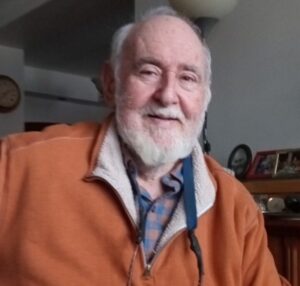
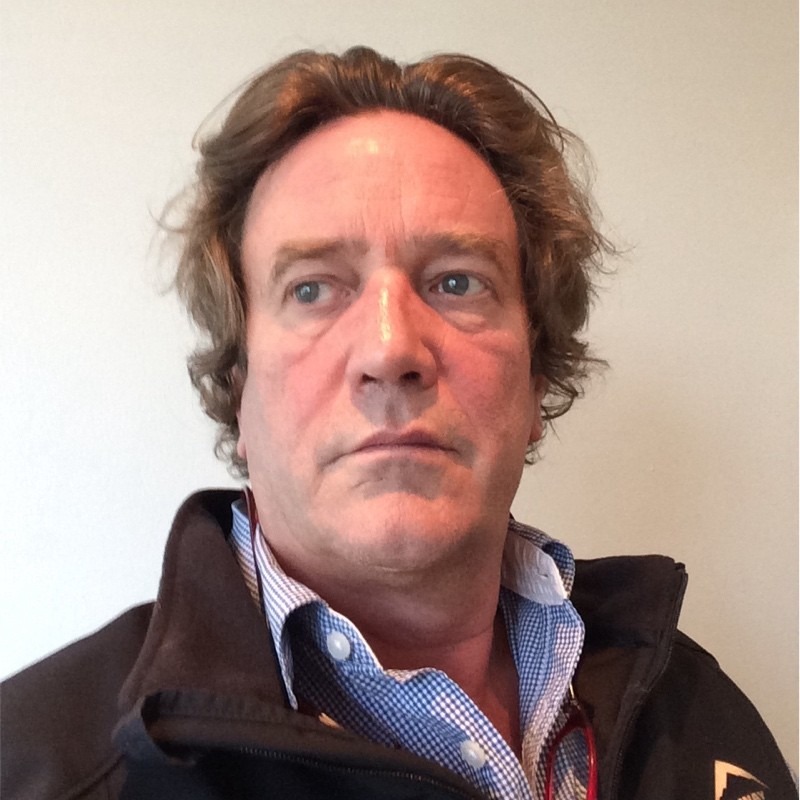
GAVIN HARTFORD: SACHED EAST LONDON BRANCH circa 1982 – 87
-
by

A personal and political story of popular alternative education and activism
We forged study circles to read and debate pertinent burning issues of the day. We analysed and organised and debated. Every word had meaning, because every word could be translated into instant action in real time. The illusive link between theory and practice felt immediate and real.
PERSONAL CONTEXT
My father had ideas about me and what I might become. He dropped little opportunities for me to explore as part of my first career steps. One was to employ me in a fish and frozen food company where he worked to do some deeply boring back-office admin functions down at the docks in Table Bay harbour. Another was to open the door for me to work as a shelf packer at a local supermarket. Yet another was to arrange for me to be a maintenance man on a cargo ship and voyage to Australia and back. That’s was it. He did his best.
None of what my father did for me came to anything close to a career step of sorts. None of it fired up my imagination to pursue greater corporate heights. My heart and mind were elsewhere. Captured, as it were, by the plight of the oppressed and exploited in our country. A story of revelation had gripped me in my free-thinking mind in my early student days. I was beholden to other, darker forces of enlightenment. Forces I kept hidden from my father. But forces that held me firmly and unambiguously to a future of all out resistance to the very foundations of my father’s narrow racist, and capitalist upbringing. These were the forces of the liberation struggle and unbeknown to my father I was already beholden to its noble cause.
Many dynamic influences merged to forge my conscious search for a socialist alternative world. But one force stood out. That was the wisdom of my lecturer and supervisor of my sociology honours dissertation, Neville Alexander. He shone a beam of moral and intellectual light at me.
As a student I gave him a room in my modest student home to hide from the apartheid security forces of terror. In return he gave me a home in SACHED Mowbray branch to tutor tertiary UNISA students. That was my first experience of SACHED: volunteering on weekends to help in tutoring other less fortunate students. It was a seminal tipping point for me. I discovered that I was useful, I could actually help others. More than that: I discovered that my inner calling was always to help others. Quietly unexpectantly, my tertiary degree had meaning, had relevance. And I was set on a new path of educational and political activism.
I didn’t stay in Mowbray though. I was searching for something more meaningful than the small cliques and clubs of the Western Cape socialist intelligentsia. I left the comfort of the so-called fairest cape in search of a more real, more desperate and more African, more all-embracing people. Something more working class and mass driven and broad based, something that pulsated and smelt of the warm heart of class struggle. I needed a real cutting edge, hotbed, home of mass struggle.
And as if the planets aligned, I watched and saw one rise up before me like a beaming beacon of light in the heaving solidarity movement to boycott Wilson Rowntree sweet products in support of dismissed workers in East London. It felt right and natural. Almost inevitable. I needed to be there at that sweet factory and on the streets on that unknown town. So I headed for the home of the sweet factory to find the dismissed workers of East London. Driven by some young and innate desire to have a meaningful life through meaningful struggle for human and labour rights.
EAST LONDON
I was twenty-four years old when I arrived with my partner and dog in the coastal town of East London in a Ford panel van. We camped out in our van at the beach behind the public ablutions for the first two months. Started the search for comrades and found them behind the Wilson Rowntree sweet factory on the edge of the city centre. Walked boldly off the streets and into the run down and over utilized offices of SAAWU, literally right behind the sweet factory.
From inside the dark and dirty SAAWU offices you could literally smell the putrid sweet scent of the boilers in the Wilson Rowntree sweet factory. It mattered not. The office was a hive of activist activity: swarming with young workers and littered with piles of scruffy union membership forms. Someone had a manual typewriter in the corner. There was the odd desk and some worn down second hand chairs. No copier in sight. No need since the office did not have electricity. It was just a hole in a wall.
Inside that hole it breathed with life. Union organizing life and youth activism life. It seemed to heave with bodies and singular dreams of liberation from the racist boers. My arrival accidentally represented a tiny drop in the ocean of the yet to be realized vision of non-racialism in action.
I was welcomed as a brother and comrade unreservedly. Got told to become a member of the East London Youth Congress and signed up instantly. I had a home. A home amongst the homeless. An activist calling amongst a seething layer of activists. Just like that.
We forged study circles to read and debate pertinent burning issues of the day. We analysed and organised and debated. Every word had meaning, because every word could be translated into instant action in real time. The illusive link between theory and practice felt immediate and real. Factory after factory was organised and mobilized behind the dismissed sweet factory workers. It felt as though everyone was thinking as one and each one was thinking for everyone. Solidarity and struggle gripped us all in an invisible, vice like unison. We were rising. Fortifying. Searching. Finding. And rising again and again.
SACHED BORN
This is the cauldron from which the SACHED East London branch was born.
We were alone and poor and at home with the disenfranchised. We had unfathomable reserves of energy in our ranks, but no resources. No centre, no office, no books or magazines or struggle t-shirts even. Everyone looked to me to provide. And I needed an income earning job and a place from which to take this raw youth activism into a culture of deep learning and studying greater resistance too. My young comrades needed a second chance, since most did not have matric as they had been banned from secondary schools because of their participation in the mass school boycotts that flowed from the river of the 1976 youth uprisings.
I reached into my Cape history and gave Neville Alexander a call. “Would SACHED be interested in opening a branch in East London?” I asked tentatively, knowing the good educational opportunities that the SACHED school in Mowbray had delivered. His answer was forthright and clear “talk to John Samuel” And that was it.
Though I had no knowledge of John, it mattered not. He treated me like a friend from day one. He advised me to survey the educational needs in the area and submit a proposal. Which I wrote immediately, drawing on the experience of countless unemployed, expelled youth about me to make the obvious case for educational support for the uneducated. And within a few months we had funding through the magical work of John Samuels and his insatiable commitment and vision to educate the uneducated, which translated into some skilled and stubborn fund-raising skills that always delivered results. Within a month or two of my submission John had secured the funds and a SACHED East London office was launched, in a strategic location to attract working class foot traffic, alongside the Southernwood railway station on the edge of the city.
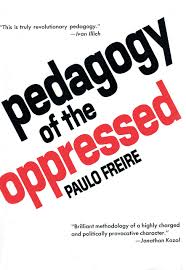
I had an income earning job as the Centre Co-ordinator and the workers and youth had a new NGO centre from which to learn and educate one another through and from their daily experience. We were organic disciples of the teachings of Paulo Freire, seeking to find our own pedagogy for the oppressed. Popular, alternative education we called it back then. Not as some theoretical construct, but rather seeing education and building consciousness as a mutually reinforcing weapon of enlightenment, a weapon of emancipation forged from the cauldron of the daily struggles and generalised into lessons to serve layer upon layer of deepening class and gender and national consciousness. Through popular education and struggle we sought to build a learning and struggle home to find light in the darkness, deepen resolve in the terror, strength in the face of fear and unremitted commitment to learn and struggle and learn again and again.
SACHED PROJECTS
We immediately set about launching SACHED projects. Our projects were the primary national SACHED projects of Turret College, Unisa tutorials and Upbeat Magazine.
In Turret College we had an already made and receptive, blacklisted student body amongst the unemployed youth had been banned from schools in the aftermath of the 1976 youth uprising. Layers and layers of black youth were still aspiring to matriculate. They were the market in which Turret College took root, with its distance learning subject-based learning manuals. We organised groups of learners around the manuals and assisted them in securing subject-based teachers to back up their private studies with face-to-face tutorial support.
And we did the same thing with the Unisa student tutorials, which were held on a Saturday morning, but were dependent on us finding tertiary level tutors on specific subjects. We managed over time to find some tertiary educated volunteers to conduct Unisa tutorial classes in a handful of Unisa subjects.
And we launched Upbeat magazine across the school network in Buffalo Flats, Duncan Village and Mdantsane. Upbeat helped us to build relationships with the schools through our magazine distribution network. And this in turn helped us find subject teachers for Turret and Unisa tutorials.
Each project leaned on and supported the other in an integrated and self-fulfilling way, the one opening doors for all the others.
ALTERNATIVE PUBLICATIONS AND STUDY GROUPS
Our SACHED centre was a resource and magazine learning and distribution centre not just for Upbeat, but also for all progressive publications at the time like South African Labour Bulletin (SALB), Learn and Teach (L&T), Work in Progress (WIP), and the NUSAS student SASPU produced “State of the Nation” newspaper. Each of these publications were displayed on the shelves of our makeshift library and we positioned ourselves as the distribution agent for all of them in East London, even at times piggy backing their distribution on the back of our efforts to distribute Upbeat magazine to local schools. Their availability our office simply meant that often young workers and students would spend days reading in our offices. Under the table you could get all sorts of socialist revolutionary literature too. It was as though the borderline lawful, popular alternative publications were the, probationary training ground, front end school for a deeper underground training in revolutionary politics.
But of our alternative, popular educational work ethos, the distribution of literature alone was never enough. That was not the time to simply drop something for readers to read and go. Whether it was Upbeat Magazine in the schools of Mdantsane and Duncan Village or a SALB journal on labour issues in the union offices or factories, always there was a level of organisation and conscious study and debate that followed a distribution of a magazine or journal. Sometimes this was successful and at others less so. But always we actively promoted study circles as a learning unit behind the distribution effort. A study circle could be made up of anywhere between three and twelve members, the lower the number the better. All members had to read a specific article and one member would be asked to present their learning from that article. Every week a new member presents. And after the presentation a debate would ensue, and all members would learn from each other through the engagement in the debate.
Popular education publications were popular precisely because they were relevant and immediate, in that they spoke to the issues of the day – from broad socio-political questions of class and race to problems of literacy or human rights or detention without trial.
Which is why for us popular education activists the act of reading and debating and fighting to change the world was a seamless continuum. We read to learn more about how to struggle more effectively against the regime and its class allies. And our struggles themselves informed the pages of the popular literature, carrying lessons of ours and other struggles across the country and the world. We were hungry to hear the ideas of others and to read their stories and learn their lessons. That was a time when we never had time to look up to leaders since we were burying our eyes in literature to learn more and burning our ears in debates on the stories of other comrades in struggle who were right there, alongside us.
ALTERNATIVE EDUCATIONAL FILMS
In addition to SACHED EL office being a resource centre for alternative publications, we initiated a film society for workers and activists to join.
Based on our previous experience of running a film society at UCT, we leveraged that experience to register and start a film society for our SACHED office. Saturday afternoons were screenings days and post screening discussions of films in the SACHED offices ran long into dusk. Every week we would hire a 16mm projector from the local East London library and rent the films through the national library film network at no cost.
Our favourite films were the films of Russian revolutionary film maker Eisenstein. We showed “1905”, “Battleship Potemkin”, “Strike” and many others. Many of these were silent movies with the occasional subtitles. But they were more than enough for us to see the images and relate the stories of the struggles of the Russian proletariat and to use those stories to debate lessons for our own struggles. It was precisely these very stories of the 1905 and 1917 Russian revolutions that formed the bedrock for our debate with young worker activists around the concepts for the characterisation of our country as one of “colonialism of a special type” and its political prognosis corollary of a “two stage theory of revolution”. Somehow the films allowed us to challenge conventional wisdoms about the relationship between class exploitation and racial oppression in a South African context.
WORKERS ADVICE OFFICE
The constant stream of workers seeking advice from our office led to the creation of a formal Workers Advice office with our SACHED offices.
Our Advice office was modelled on the Black Sash country wide network of advice offices, but with a strong labour bias. We were fortunate to recruit Joe Mati as our first advice office worker when he was left homeless through the closure of the Institute of Race Relations Masizakhe Resource Centre. Joe joined our team and set up a desk and filing cabinet to capture worker problems on file and process as many of them as possible to resolution. A stream of workers visited Joe all day long, sitting in lines before his desk, bringing their unique problems to his wise, quiet and considered demeanour.
Typically, these problems included everyday worker problems of securing UIF or workman’s compensation payments, unfair labour practices and dismissals, non-payment or underpayment of wages and so on. Sometimes it was just advice to a young worker or student on how to create a CV’s for employment or where to access technical or academic training. And as the work of the advice office grew so too did its staff and the spread of its advisory work from urban, factory struggle to rural and land struggles.
Once more funding came through, we were fortunate to secure the addition of Vangiwe Mathunjwa who took on the role of being a specialist in rural struggle, focussing on “black spot” forced removals and empowering the masses for organisation and resistance to the Bantustan puppet regimes of Ciskei and Transkei.
LACOM
Our SACHED centre was a centre of activism and struggle for workers and communities long before the declaration by SACHED national of a LACOM project. It was like the approval and creation of LACOM nationally gave legitimacy to the work we were already doing.
Labour organising work was core to our activism work from inception and through the years leading up to the formation of COSATU and beyond. In that period (circa 1982-5) the East London labour movement looked like this: the city and the west bank industrial area was captured by a wave of SAAWU inspired general unionism under the charismatic leadership of Sisa Njikelana and Thozamile Gqweta. Every shop and factory were signing up as SAAWU captured the imagination of the hungry, downtrodden, voiceless workforce. The streets of the city and industrial areas were alive with debates on strategies and tactics for the labour movement. Young worker activist circles in Mercedes Benz (then CDA) were debating the relevance of both general and industrial forms of unionism through reading the arguments for and against either form in the South African Labour Bulletin (SALB).
Whilst SAAWU general unionism was dominant in the area, an industrial union called National Automobile Allied Workers Union (NAAWU) was the officially recognised union at CDA (now Mercedes Benz). Whilst NAAWU had its roots in TUCSA, it was a founding affiliated of FOSATU, and through that affiliation it was engaged in new unity talks with non FOSATU unions to create what would later become COSATU in November 1985. It was regarded with suspicion as a “coloured led, syndicalist, conservative union” by the worker activists of East London.
However, through the SACHED initiated SALB worker activist study circle debates, the young Mercedes workers reached a crossroads in their evolution: sign up with the general union SAAWU or enter the industrial union NAAWU and take the union over and transform it from within? That was the question. There was no middle road. It was a hard choice. The popular SAAWU route was easier and more politically aligned with who we were. But the industrial unions made organisational sense, not least because of the higher level of worker controlled, factory floor organisation and our admiration for the FOSATU affiliates in this regard.
Eventually the worker debate culminated in a decision by a broad layer of CDA worker activists to join NAAWU en masse. The rest is history. NAAWU was immediately populated with an energetic and militant new worker leadership core. Study circle member and young worker militant, Mthutuzeli Tom, led the reorganisation of the factory and the takeover of the NAAWU branch committee. By his side were Nkangeni, Fikizolo, Nonyukela, Nyengana, Bakako and countless more. Over the next two decades they built NAAWU, which later merged to form NUMSA in 1987, which Mthutuzeli Tom led as its President for at least two terms of office. Such was the impact of our little SACHED resource centre and its study circles of activist groups that they spawned which went on to lead the fight to forge a new future for industrial unionism from within the heartland of SAAWU general unionism.
Our SACHED was the home not just to the intellectual and practical journey from general unionism to industrial unionism, but to the formation of new industrial unions in East London as well.
The first of these were CCAWUSA and CWIU that found an organising home in our offices prior to the launch of COSATU. When COSATU was eventually launched in November of 1985 we travelled to the congress in Durban and did everything from selling publications to decorating the hall with murals to and my wife Louise Almon designing the COSATU logo. We used the congress to build links with other workers in other unions, like the railway workers of SARHWU, the food workers of FAWU, the municipal workers of what became SAMWU, the metal workers of MAWU and so on. All the time building links and creating local organising committees for national industrial unions who did not yet have a presence in East London.
LACOM staffer and co-founder of SACHED EL with me, Vumile Danile, was the stalwart who drove much of this labour organising work. And when the newly elected COSATU national office bearers planned their inaugural trip to East London it was to Vumile that they naturally turned. He convened and chaired the first COSATU local general meeting in the East London city hall that launched the COSATU Shopstewards Council of East London before the eyes of their newly elected COSATU National Office Bearers. Not surprisingly, by the time we moved our expanding offices from Southernwood railway station to Fleet street taxi rank, we were joined in our new building by T&GWU, NUMSA, FAWU, CCAWUSA and other unions. We were, as it were, always part of that family of early founders and creators of what became the COSATU industrial unions branches of East London.
This is the context within which the formal LACOM projects were born. It was not enough to simply organise randomly along broad industrial union lines. Every union required more backbone to the organising effort. Which is where LACOM stepped in with its package of courses to teach union activists, shopstewards and officials in workshops on union administration, membership fees and records, finance management and bookkeeping for trade unions, recording minutes in shopsteward meetings and meeting procedure to entrench worker democracy and control, organising tactics and strategies.
LACOM union education work was delivered to countless unions in their formative stages in East London. But not only the unions. LACOM saw its mission as building the organising and management capacity of civics in communities and youth and women structures as well. LACOM helped these organisations fortify their offices and leaders and activists with knowledge on everything from organising strategy to how to keep records of members and manage back office finance. Through LACOM we became the trusted local educator and service provider to COSAS, Mdantsane Civics, East London Youth Congress and countless other activist formations. And when LACOM capacity expanded to include the Durban and Grahamstown SACHED branches too, we eagerly linked up with first Durban LACOM and then Grahamstown LACOM to share knowledge and resources in an effort to unite and align the footprint of the work of LACOM countrywide.
MASS RESISTANCE, STATE OF EMERGENCY REPRESSION AND TORCHED OFFICES
SACHED EL was born from the mother of the anti-apartheid capitalist resistance struggle. No doubt about that. This was the eighties. They were the days of stifling mass boycotts through which the resistance movement made their voice heard.
The patterns of resistance looked like this. Wave upon wave of resistance swept across the streets of Mdantsane, Duncan Village, Buffalo Flats and the East London. Sometimes it was students under the banner of COSAS demanding decent education and the end to Afrikaans mediums, sometimes civics and youth demanding the removal of Bantustan puppet leader controls, sometimes unions hitting the industrial heartlands with union recognition and wage strikes. Everywhere the mass of working class and poor citizens were standing up in protest after protest to be heard and to build an alternative future for themselves.
The resistance was always there. Long before our arrival. So, for example, soon after we arrived in East London in 1982, workers instituted a boycott of all busses in protest to a 5c increase in bus fares instituted by the homeland puppet owned Ciskei Transport Corporation.
This boycott led to the killing of eleven workers at Egerton station outside Mdantsane by Ciskei the armed forces under the command of its puppet leader Sebe. This was followed by consumer boycott of all consumer goods in the city. Overnight the streets of the city were deserted as the boycott took hold with its deadly grip. No-one bought a single item in town and for months on end the city was reduced to an absolute ghost town. Shops were boarded up and closed everywhere.
Everywhere, that is, except for within the hives of activity in the offices of the unions and NGOs. They continued to organise throughout the long cold months of the consumer boycott. Centres of organising were exempt, whilst all consumers survived off township spazas and consumer goods redistribution from illegal pilfering from factories. A whole secondary economy kicked in amongst the poor and the activist left during the boycott. So when my car battery died midway into the consumer boycott, the comrades supplied me with a battery for my car to keep transporting them throughout the boycott. No one cared to ask where the battery came from, since everyone knew it had been unceremoniously and secretly donated by Raylite battery workers. Those were the days when solutions to social problems arose from, and were embedded in, the ordinary rank and file battalions of resistance forces themselves.
The 1985 state of emergency bought new hardship and repression upon us all. We had of course come to know the Toyota Cressida’s, with their long radio ariels attached to the bonnets of security police cars. We ducked and dived their prying eyes as a daily past-time. The grassroots resistance to the state of emergency led to the crushing massacre of 19 people in what came to be known as the Duncan Village massacre. I missed the massacre itself because I had been captured and forced into the SADF as a war resister, which I had evaded for a long eight years since leaving school. Andile Mashele, the SACHED Lacom staffer, was captured at our offices by the security police and detained indefinitely under section 27 at this time. As was Joe Mati detained many times. Others escaped the clutches of the security police. And we all were left to pick up the pieces when the security police burnt down our offices first at Fleet street and then again at the ABC building where we had relocated our office. Nothing stopped us. Because those were the days when we said, and meant what we said, that: “bullets won’t stop us”.
Our SACHED survived all the attacks against all odds. Not just because of the determination and resilience of the activists, but also, and more fundamentally, because our SACHED and its projects were rooted in the homes and streets and factories of the masses of organised opposition forces.
THE SACHED PEOPLE
A person is indeed a person through other people. Same with an activist. You are as strong as your village, which is in turn as strong as the people that make the village and the country at large. Through the tides of resistance our people stood firm and resilient against the steel like grip of repression. Our people never wavered against the forces of repression, steadfastly holding true to the marching orders of the forces of resistance. We held each other to account behind the slogans of “each one, teach one” and “an injury to one, is an injury to all”. We grew strong and determined from an office of none to an office of eight over the period of 5-8 years years of struggle and change.
That was our SACHED. Born as an instrument of alternative, popular education. Everyone for the other. No-one alone. Rising and resolving to be the alternative world we sought to create. It is fitting in this regard, to remember, to bow our heads and raise our fists, in solidarity with the living, and in memory of the late, staff of the SACHED EL office over this period. These staffers were these forgotten soldiers of SACHED East London branch:
Gavin Hartford Narrator and EL Centre Co-ordinator
Vumile Danile Lacom activist and co-founder of SACHED EL Branch
Joe Mati Advice Office Official
Sam Nkube Lacom activist
Vangiwe Mathunjwa Advice Office Official
Andile Mashele Lacom activist
Mike Abrahams Media activist
Tiny Mati Office Administrator