BRIDGET THOMPSON: MEMORIES AND REFLECTIONS OF SACHED 1986 – 1989
-
by

History making, movie making
While I was working at SACHED a close friend said to me that after this experience I will always think like an educationist – this has proven to be true.
In my post SACHED days, I came across a simply and beautifully expressed understanding of education shared by Govan Mbeki when making a film on him. He said “some people say the Latin root of the word for education is educatum to lead but I believe it is educare to nourish”. This touches into an educational methodology which we didn’t explicitly attend to at SACHED, although most South Africans are beneficiaries of its practices: this is storytelling, rooted in the African education system of which Oom Gov was a master.
I started working for SACHED in the Audio-Visual (AV) Department in Cape Town in early 1986 with many ideas in my head about radical media and filmmaking– I’ll come back to how things unfolded at SACHED but first some background and context:
My ambition from the late 70’s early 80s as an aspirant filmmaker was to use film in a progressive, educational, transformative way, the term used then was of course revolutionary. It was hard to find examples in South Africa because populist, sectarian and liberal approaches to alternative cinema dominated but I discovered the radical Latin American and Indian film movements as well as brilliant writing on media and society in libraries. In particular a two volume collection called Communication and Class Struggle1 prepared as a reader on all media and mediums during the three years of the popular unity government in Chile as well as the radical U.S. film journal, Jump Cut. These became my professional mentors -very distant mentors because they were met on the pages of books and journals. I managed to see a few of the films mentioned in these writings at film festivals and via illegally shared video tapes2.
I came to SACHED with these dreams and some minor experience as an activist. While I was working at SACHED a close friend said to me that after this experience I will always think like an educationist – this has proven to be true.
The audiovisual department became national giving me a bird’s eye view through interaction with all 16 projects and across every centre, including participation for 3-4 years in the twice annual National Co-ordination Committee (NCC) meetings, which scrutinized plans and reports of all the alternative education projects. I also participated in the publishing editorial board which gave serious consideration to how books impacted in the educational system. For one year I overlapped with Dr Neville Alexander at SACHED in CT and was exposed to his principled and visionary leadership, as well being witness to the strength of Enver Motala’s leadership, through frequently visiting the Durban centre to do AV work. Enver’s impactful article, The role of service organisations in the struggle – provided a framework for the limits to and purpose of the work we did. I grew in collaboration with my colleagues many of whom were highly talented effective activists as well as great professionals (Oupa Lehulere, Ghairo Daniels, Jon Berndt as well as Mercia Andrews, Marcus Solomons, Rita Edwards, Bongani ? Libby Dreyer & Gareth Colman) and through work at Khanya College and interactions with supportive media literate community oriented academics: Costas Criticos in Durban, Don Pinnock in Makhanda and Jae Maingard in Johannesberg. All these experiences, as well as my prior experience as an activist in youth organisations in Cape Town where we ran educational workshops using slide tapes and videos, made me an educationist for life.
After I left SACHED at the end of 89 – in some despair that a vision of alternative media in education could not be accommodated and frustrated that funders’ demands limited deeper transformational efforts – I confronted how very much harder it was to implement these ideas outside of the ‘People’s Republic of SACHED’. This was the delightful nickname given to us by one of the drivers3 transporting us with our piles of paper from the offices in Pritchard Street to the venue of an NCC meeting.
This joking truth reflects what was noteworthy about being at SACHED, it was an immersive, experiential and reflective experience which created space for its personnel to grow through a collective praxis. Kudos to the leadership for creating that framework and holding it together in difficult times: Oupa’s endearing nicknames; Mama Jenny and Papa John capture the two central leadership figures at the time. Oupa himself became the leader of SACHED’S post 94 manifestation through Khanya College.
Another attempt to crack the nut of transformed media was in FAWO, in the late 80’s and early 90’s (Film and Allied Worker’s Organisation), where I felt I’d taken ten steps backwards from the SACHED experience because we sat in talk shops without directly implementing any alternative ideas in meaningful ways. Later I realised that FAWO served as a very useful career stepping stone for many into very well paid jobs in a media sector4 which is different now in terms of the demographic of personnel, and the varieties of mediums but still untransformed in the significant matters of form, content and majority access. (See further in my paper on Memory, History, TV and Cinema)
Sadly, until today, whilst some sectors of the media are vibrant and key to the democratic process and is used in increasingly sophisticated and insidious ways for regressive purposes (promoting racism and xenophobia in particular), there is not sufficient critique and popular awareness of media systems in our society. For example, in 68 in Paris students engaged a range of issues, crucially amongst which were the question of form, content and systems in the media and film.
Ideas developed then have had international impact and are relevant until today, yet I hardly think there was a whimper of any discussion of media systems during Fees must Fall5 Although I must recognise that the beginnings of a broader awareness of the role of symbolism in society was key to the Rhodes Must Fall process and subsequently there has been important work done to de-colonise all curricula.
So this thinking has started. There may also well be a more sophisticated understanding now of how to use media in education but concerningly I come across chillingly uninformed positions (See critiques UCT online school and Stephen Grootes on online learning)
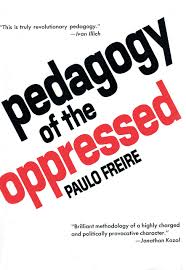
And then of course there is the question of methodology. Inspired by Ernest Mandel’s chapter on education in Late Capitalism I have come to label the media, schools and universities as knowledge broking institutions. The method of broking knowledge as a commodity is very different from the Freierian approach to education which guided us at SACHED.
In my post SACHED days, I came across a simply and beautifully expressed understanding of education shared by Govan Mbeki when making a film on him. He said “some people say the Latin root of the word for education is educatum to lead but I believe it is educare to nourish”. This touches into an educational methodology which we didn’t explicitly attend to at SACHED, although most South Africans are beneficiaries of its practices: This is storytelling, rooted in the African education system of which Oom Gov was a master.
Storytelling, oral memories and indigenous knowledge systems came to link very powerfully to my filmmaking vision. Already while I was at SACHED in 87 /88 I made An Unwritten Story for Khanya College literature studies for which I interviewed and filmed iintsomis, iimbongis and writers from the BC tradition (inter alai Farouk Asvat, Njabulo Ndebele, Mafika Gwala and others6). I also initiated an oral history project together with Khanya College History in CT which used photography taught by Omar Badsha and Roger Meintjes, a dark room built by Jon Berndt and oral recordings of interviews. 7
It was in 1990 after I’d left SACHED that I had a profound encounter with the African cinema movement, for whom orally held knowledge is a significant source and aesthetic influence. In meeting filmmakers Haile Gerima, Med Hondo, Sarah Maldoror and others, and viewing African cinema classics such as Camp de Thiaroye, Harvest 3000, Sambizanga, Sarraouinia, Touki Bouki I found my aspirational model. The approach of some of its greats became my leit motif for form, content and purpose in filmmaking. Easier dreamed than done!! That’s another story. (see African Cinema a well-kept secret another article)
Now back to SACHED:
Working at SACHED during a very particular few years in our country’s history 1986-1989
After an incomplete year at UNKAR in 1985 where I was introduced to some video production skills and techniques in the journalism department 8 I approached Francis Wilson at SALDRU to explore whether there was any work in film. I think I’d heard about the Carnegie photographic project. He referred me to Lindy Wilson at SACHED and showed me a video camera that was co-owned by SALDRU and SACHED. Lindy employed me as a kind of general factotum and I assisted her with her film on SACHED – memorably driving with her and Neville Alexander to Durban to film the National Education Crisis Committee (NECC) meeting and a meeting of the National Forum.
This trip is a story in itself: Neville’s life story as told to us in the car, the personalities at the National Forum meeting9 the huge esteem in which our hosts held Neville and the incredible Indian food they cooked for him and us, meeting Omar Badsha who supplied us with some lights for filming. The tension trying to find the venue for the National Education Crisis Committee meeting whose venue had changed due to Inkatha’s attacks. Laurence Dworkin (he was an early COVID victim) of VNS kind promise of footage copies when we ran out of battery,
Overnighting in Pietermaritzburg where the SACHED people were highly aware of and responsive to the Inkatha violence …. later they became deeply embroiled in responses to it and a special NCC meeting had to be held in Durban to discuss their choices. This was an uncomfortable undertone of SACHED national meetings. Colleagues from KZN would arrive at NCC meetings perspiring with fear and terribly distressed about their families back home – Upbeat was criticized for not publishing stories submitted from that region. In the Durban office one heard lots of impatience with the ‘cabal’.
The Durban office was in the same building as the Gandhi library and on the street below one could buy videos of Deedat …. the renowned Muslim theologian. It was a privilege to be exposed to these national historical sites/ people/processes. Sadly, I never made it to the Rainbow jazz club although Oupa never missed an opportunity to visit the record shop in Diagonal Street during lunch breaks from meetings in Johannesburg. Oupa and I also had fun at the original Brazilian coffee shop a few blocks from SACHED in Pritchard Street with its conveyor belt bringing steaming cappucino and cheese tramezzinis to us while we revisited our favourite debate about Sol Plaatje versus Dhlomo ( a fairly constructed difference but my rural sentimentality and Oupa’s urban modern proclivities lined us up in two camps with me always supporting Sol and Oupa, Dhlomo10) and did sometimes get to Jameson’s to listen to music before returning to CT on a midnight (half price) flight.
So, in a very serendipitous way at a very particular moment in our history I came to work at SACHED in the audio visual department and it touched into many enriching experiences but the central purpose of my work was very hard to fulfill. In 4 years I was never able to use the mythical SACHED/SALDRU camera and access to equipment and resources to do the work of the department was a constant problem, which we had to resolve in various ingenious ways – see further later
Lindy left after a year but had laid the basis for an audio-visual collection with photographs relating to African history and some videos. But accessing it for project use was not smooth and it needed some sorting. I suggested we make an audio-visual library and employ a librarian. Ghairo Daniels was employed and did an excellent job as audio visual librarian. She was a joy to work with. She, Oupa, Jon Berndt and I formed a tight team. Within a year of Ghairo’s employment it became possible to immediately respond to the many requests for material especially videos, and we were able to spread the contents to all the centres.
Lindy had secured 1000 dollars to buy more AV materials and I used a trip to the US to shop at the Other Cinema in London on the way back, buying useful films like Bitter Cane on Haiti and a film on Paolo Freire featuring Paolo Freire himself – it was confiscated and tampered with by customs but sufficient remained intact and useful. I also scoured local offerings and obtained ‘Two Rivers’ by Mark Newman and Eddie Wes as well as spending a good day at Wits library painstakingly reordering their disordered copy of a slide tape made to accompany the classic book Gold and Workers then had a copy made and put it on video. The effort was rewarded when Brian Williams, Electrical and Allied workers union secretary returned it after a weekend workshop saying that workers were amazed to learn about the mining roots of SA’s economy.
These small but meaningful experiences validated the work tremendously and left me up to today with a so far helpless hopeless belief in the need for a real public broadcaster to re-educate our society I still dream of drama series on the wars of resistance for example – SABC is the only public broadcaster in the world funded by advertisers! I can’t see soap powders having much interest in the 100 year war between the British and Xhosa
We hid the masters of all these purchases at UCT African studies library/ manuscripts and archives helped by Sue Ogterop and so we were able to immediately within a week respond to Jo Mati’s ( uncle of Shepi Mati ) call and replace the East London centres set of videos after they’d been confiscated in a police raid.
Another rewarding use of the AV materials was for example in Durban where LACOM had a big worker constituency and they used them in sleep-in gatherings of 1000s of workers who watched videos like The Battle for Chile filmed during the popular unity Government.
A critical person in our support network was Allan Johannes at UCT Baxter studio an unsung hero of this medium if there ever was one – typically he is not high in the UCT hierarchy not being on the academic track but I don’t think in later years any film and media studies student could have made progress without him. In those days there was no film and media studies, I’m not quite sure what UCT used the studio for then, but Allen helped us – we could be confident that unlike with commercial places where our footage could be destroyed that Allen would help us finish and we edited a number of projects with him.
But getting back to the library, I’m sure Ghairo will talk about it in more depth. It was a highly efficient well-oiled educational service. She made a catalogue (I have a copy of it) and it became a hub of all the educational work SACHED did. I was proud to have initiated that and worked with a professional like her.
A very constructive collaborator was Freddy Ogterop at the Cape Provincial Film library service who had a section in his database of all the films he planned to buy for the service after apartheid. Our approach was not to buy or make anything which could be obtained from a library and to collaborate with as many existing libraries as possible.
Jon Berndt who was multi skilled in print and AV media production and an especially skilled designer took a half day job in the AV department as he was raising his baby son, Simon, and needed to be home the other half of the day. We created the other half of his job into a trainee position which was filled by Oupa Lehulere 11– Jon taught him a variety of design and print skills and he carried the media awareness and experience of the centrality of the library as a key to educational and organisational work from those times into his work at Khanya College (KC) in the 90s and later – it featured as did Jon’s teaching at KC winter schools I attended in the 2000’s.
I learnt a lot from Ghairo, Oupa and Jon although Jon and I didn’t always see eye to eye I think our differences could be summed up in the fact that he was always concerned about the politics of form. I veered more towards concern about content – naturally a blend of awareness of the two is the way forward, nevertheless he was a powerful influence who introduced thoughtful and informed critical perspectives as well as leading the production of a number of films and posters and educating our eyes around the politics of photography
Going back to the earlier comments about how difficult transformation outside SACHED was, what was so special and unique about the AV department was that we integrated production, distribution and training. This integrated practice was at the core of the short lived but powerful workshop movement in Great Britain in the 80s declining in the early 90s 12 and of course this integration is a feature of countries which protect their market and ensure that their own cinema and own indigenous culture and values feature for example post-revolutionary Cuba (sadly declining from the 90s) and China and Korea today. Without these policies its next to impossible to express indigenous knowledge, culture and history in cinema.
Again see further in memory history tv and cinema.
Oupa and I, in a quest to understand the AV needs of each SACHED project across the three dimensions and thereby root the departments work in those needs, conducted a nation-wide survey. This was very enriching as it, a) allowed us to appreciate the different regional strengths and weaknesses b) get an in depth understanding of the educational methodology of each project and last but not least we solidified a good friendship on these trips. I think they also opened up the space for Oupa’s next steps to LACOM Durban.
I wonder if I kept the paperwork from that survey? I’ll do a search when possible it might be valuable primary material. Although I did keep some records from the films we made and the originals of others might have survived the UCT library fire.
One very small film we made scripted and directed by Oupa was on ‘democracy’ It yielded useful interviews and gave Oupa the opportunity to interview shop stewards on the East Rand. We also used interviews I’d done outside of SACHED with him and other school and community activists including Nyanisile Jack. Later Oupa and KC published the Jack interview. Again, I have to look through material to see if I still have these interviews.
The short film on democracy provides an illustration of the difficulties we had accessing equipment and fulfilling our mandate within SACHED. Lacom had asked for something on democracy so Oupa used these various interviews on different experiences of building democracy to write a script about the workers movement, the students movement and the community experiences and then staged it as a conversation/debate in a taxi. Its denouement was that accountability as practiced in the unions was key to democracy13 but – we didn’t have access to a camera – as mentioned the SACHED/ SALDRU camera was mythical. We booked equipment with CVET but at the last moment they cancelled our booking – our politics weren’t acceptable to them. They were the same people who had prevented Oupa and Dinga Sikwebu (later NUMSA education officer) from having access to equipment to shoot the conditions of migrant workers in hostels in Guguletu some years before – a critical SA experience now lost to history!
We scrambled and scrabbled to find equipment – I remember it as being tense and awful as we had a half a day’s notice of the cancellation and everything set up to shoot, finally we found something at UWC and did the short film. Still to this day a little sour ball of anger forms in my stomach at these memories of destructive territoriality within the progressive movement.14
Others who helped us with access to equipment were the Transkei University where some conscription avoiders were based and running an academic methods department. One of them, Warren Parker the originator of a useful educational concept ‘trigger videos’15 went on to exec produce a successful education TV drama series set it in the Eastern Cape. Costas Criticos was also very helpful in many instances. There was a camera in SACHED in the Joburg office but although we were the official AV department we weren’t allowed access to it as it was meant to be used only for a teacher’s training project. I didn’t understand this logic as we served the whole organisation not just the 25 teachers in this British Council funded project. It was all a bit kakfaesque but I’ve since come across so many examples of ‘equipment fetishisation.16’17 It’s really a problem of facilities being run by people who don’t understand the medium.
During my time ‘with virtually no budget, no work space, two part time co-workers and no equipment we produced the following works and did a variety of training workshops: some in making slide and tape shows (a poor person’s video) but the efforts were very much towards a simple and effective educational use of what was in the library – an approach still valuable today where online learning is so common and the integration of AV materials in learning processes is a crucial methodological question
List productions:
I presented a paper on SACHED productions at UCT African studies I’ll see if I can find it and attach it. It tried to inter alia come to terms with the discussion between me and Jon.
And we had a concluding evaluation session in Durban with academics Costas Criticos from UKZN, Don Pinnock from UNKAR and Jae Maingard from Wits who had seen us at work and reviewed our productions– it was a positive evaluation and recommended we shouldn’t close the department precisely due to our model which was unique in SA at the time but a few years later almost all of SACHED closed although Oupa took over and revitalized Khanya College . Sadly, there was not much effort made it seemed to keep records when SACHED closed. I was disappointed after all the efforts to systematize and care for materials to visit the CT office before it closed and find a lot of precious unique AV materials especially posters which we hadn’t taken to UCT had been blown to the wind
Well memory prevails and this initiative is wonderful
As an aside could we have a collection point for records and books ect ? I have bits and pieces of material I’d like to release from my personal library but would like to place it somewhere safe again although the UCT fire experience was so devastating one doesn’t know what is safe
As mentioned Oupa leveraged an almost dead Khanya College into a phenomenally impactful new life with offshoots like Jozi Book Fair, House of Movements and the Khanya winter school. This is a book if not a series of books on its own but I’d like to mention some projects of SACHED which I’ve often since thought about and feel still have applicability.
- Jean Pease’s project to work with primary school dropouts – clearly it’s still needed
- Upbeat Magazine
- Neville’s African studies course – as a society we are all so much poorer for not having a basic introduction to African history and most especially the theoretical dimensions of African history
- And the DUSSPRO model as an adjunct to UNISA studies
DUSSPRO seemed like one of the most conservative, least alternative options of the various projects run by SACHED but until today its key elements are relevant and would be highly useful in breaking some of the education logjams at tertiary level. And if it could be combined with a Khanya college, a one year immersion programme, many students could fly through tertiary studies instead of falter
And perhaps too what would be needed is a ‘committee’ that interacted with he curriculum at UNISA ( something not possible under apartheid) which could greatly enhance the offerings
As a minimum a project which replicated the following offerings of DUSSPRO would be valuable:
a meeting point Study places
Library access
tutorial support
A place to complete after dropping out of face-to-face studies
My post-SACHED experience
As a filmmaker: As mentioned it has been unbelievably hard to work towards fulfilling my dreams of transformed media and cinema. But what I have managed to do is make some documentary films as an independent and worked on some as yet unreleased feature film projects.
It has been gruelingly difficult especially financially but very rewarding – it was particularly wonderful to be asked to show some of my films in Venezuela and Colombia and Chile 18Latin America being the site of my early inspiration. Others have been shown on satellite across Africa and on all other continents. The focus in my work on memory has introduced me to knowledge held by the subjects of my films and thereby to an untold wealth of understanding about our society.
But I’ve also returned to the SACHED mold by starting an Arts education NGO in 2006
The Art and Ubuntu Trust (AUT) ( NGO/NPO 2005- 2021)
In a nutshell this organisation attempts to confront lacks in art education in SA. It’s direction has been premised on alternative education experiences not only in South Africa but also in Somalia
key contributors to AUTs work have had long experiences in alternative art education
- Peter Clarke who was a key influence until his death in 2014
- Lionel Davis with his CAP and Thupelo experience
- Ezekiel Budeli a warrior for art at FUNDA Centre (taken by COVID in 21)
- Dingan Kapa also a key coworker until his death in 2016 had started in Alex community arts and video in the 80s and retained those community sensibilities to the end
- Sokhaya Charles Nkosi schooled at Rorke’s Drift and then taught art for 30 years at Funda Centre sometimes without electricty and funding
- Abdulcadir Ahmed Said had experience in FEPACI in the Somali national adult literacy campaign in the 70s and Somali national theatre building cross tribal forms in the 80s and Italian left activism also in the 70s
and others …
AUT’s work emulates my SACHED experience in a number of respects:
We’ve built a national alternative arts education outreach focusing on peri- urban and rural areas. We’ve done art educational project planning (not yet successfully implemented ) to compensate for the fact that only 5% of SA high schools provide art at matric level and no NQF level 4 art is provide at Community education colleges A few TVET colleges provide bridging courses – There is a real crisis in visual arts and arts and culture teaching across the country
As director Ive had the negative aspects of the SACHED experience at the back of my mind as well and have sought to ensure that work is documented and preserved working strenuously to try to leverage the lessons that AUT gleans in the course of its work onto a wider government based platform – the thinking being that alternative needs to come in from the cold and impact the central structures of society. Weve not yet been successful but during the pandemic new technology provided new possibilities and we were able to run a 12 week series of webinars based around short education films (trigger videos) on Arts and Culture themes which had a rivetted weekly audience participating in a unique national conversation about form and content and indigenous knowledge in the arts.
In sum the lessons I learned at SACHED remain relevant for me and I believe are useful for our society up to today